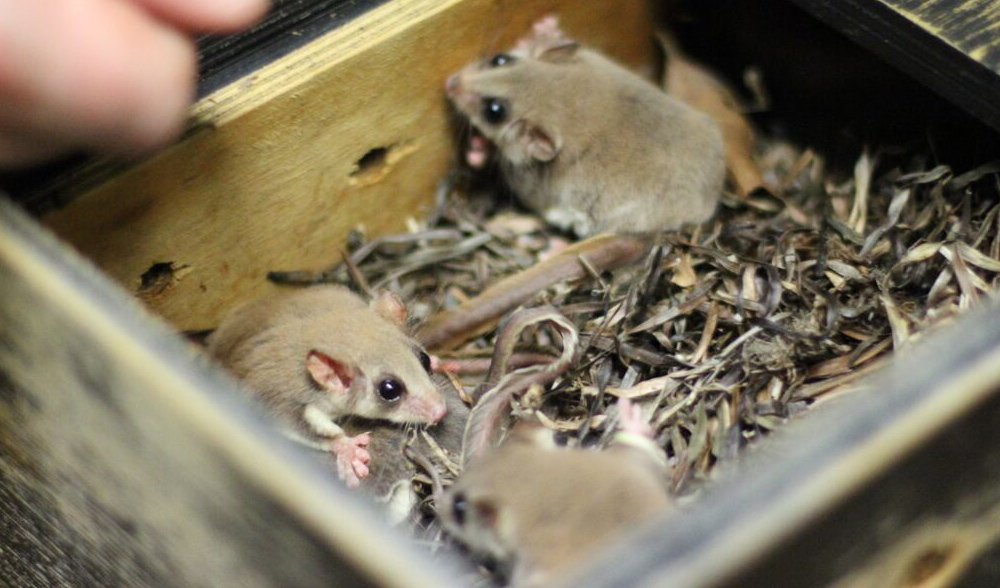
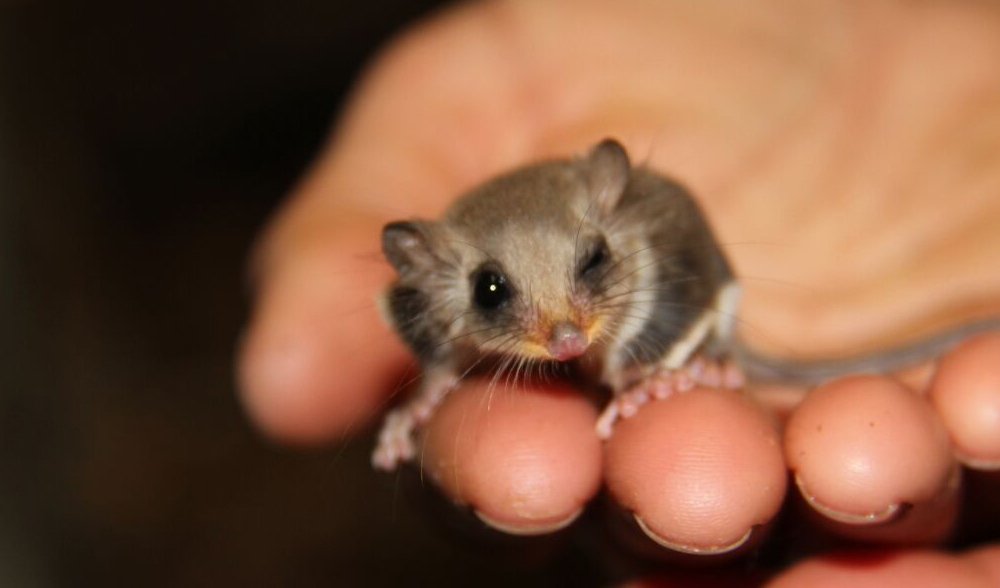
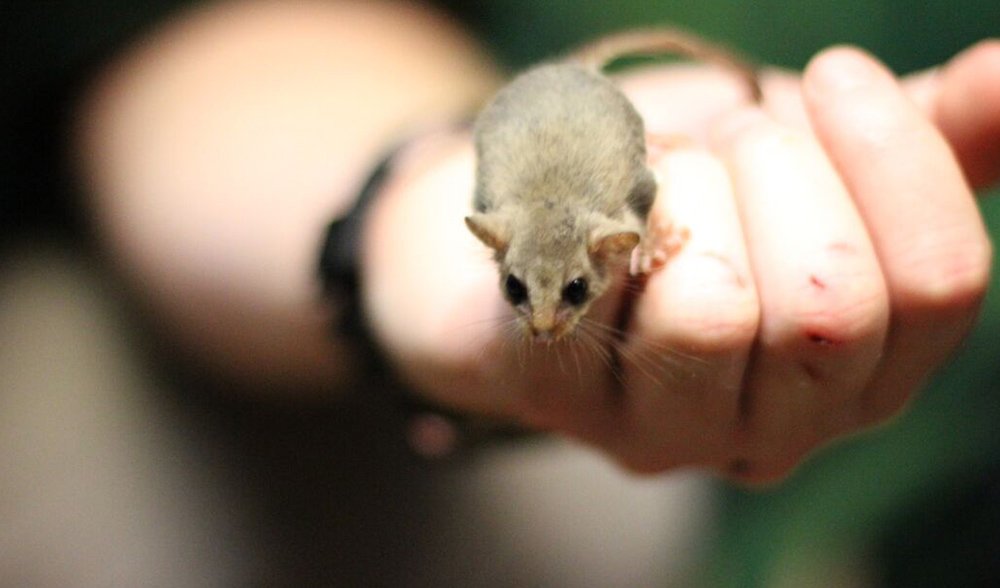
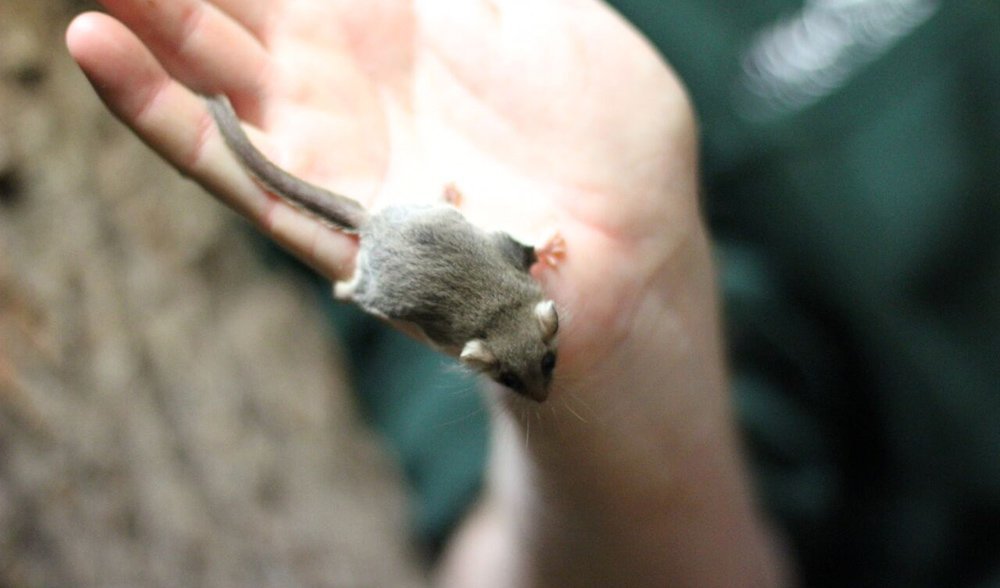
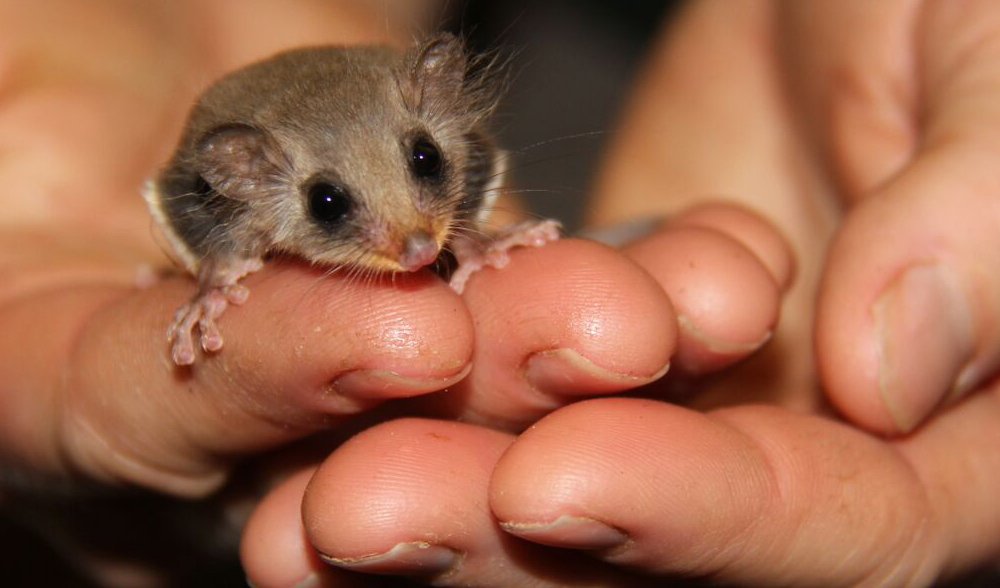
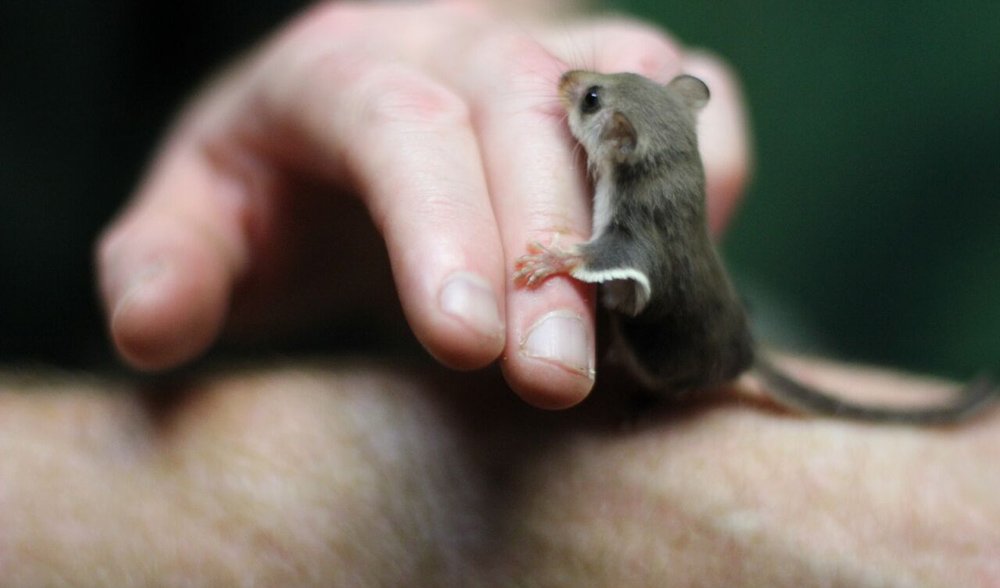
Feather tail glider joeys are left in a communal nest by their mothers, who share the burden of caring for them.
Photo Credit: Madeleine Smitham
Feather tail gliders are carried around Taronga Zoo in a purpose built briefcase!
Photo Credit: Madeleine Smitham
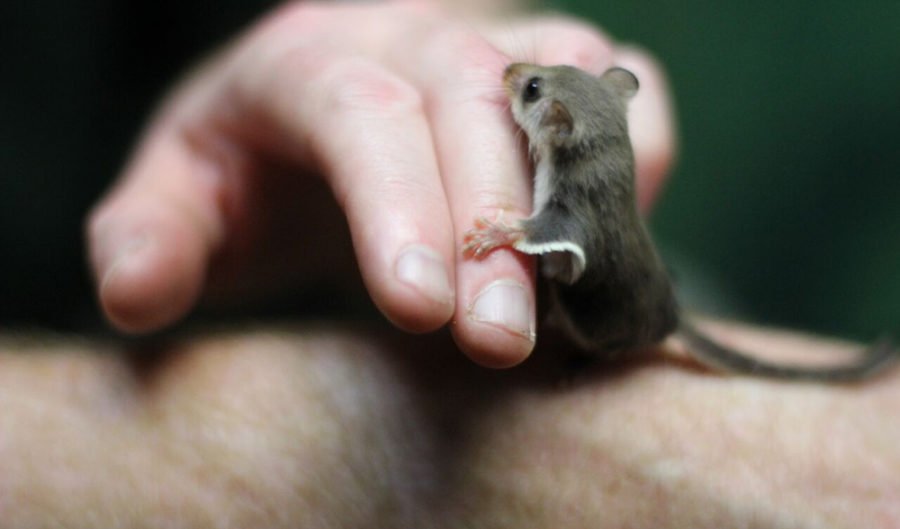
The feather tail glider joey winks for the camera. His feet have large serrated pads on each toe.
Photo Credit: Madeleine Smitham
The feather tail glider is most active at night and rarely descends from the treetops. On the ground floor it is vulnerable to predators.
Photo Credit: Madeleine Smitham
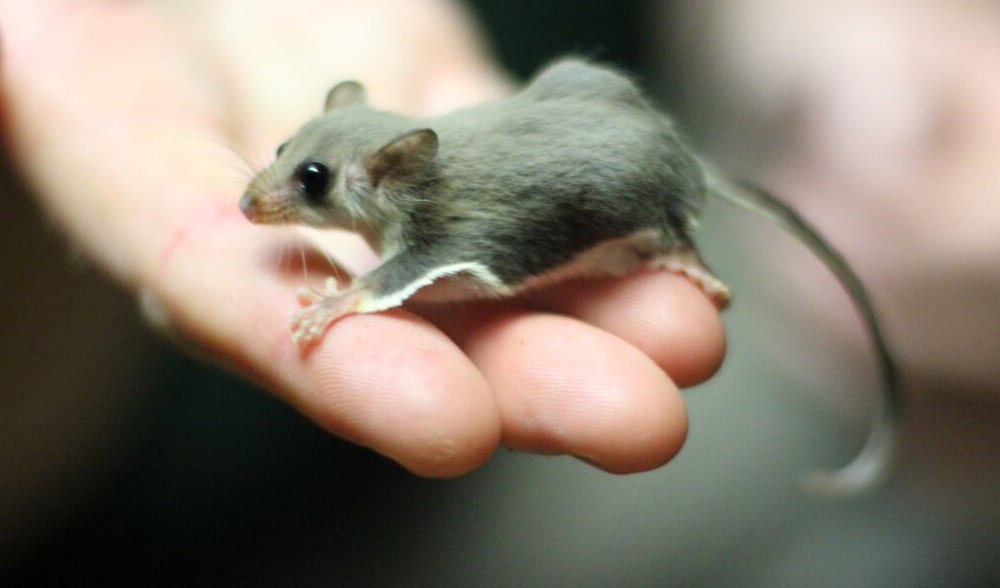
The feather tail glider has a membrane between its elbows and knees that allow it to glide distances up to 25 metres.
Photo Credit: Madeleine Smitham
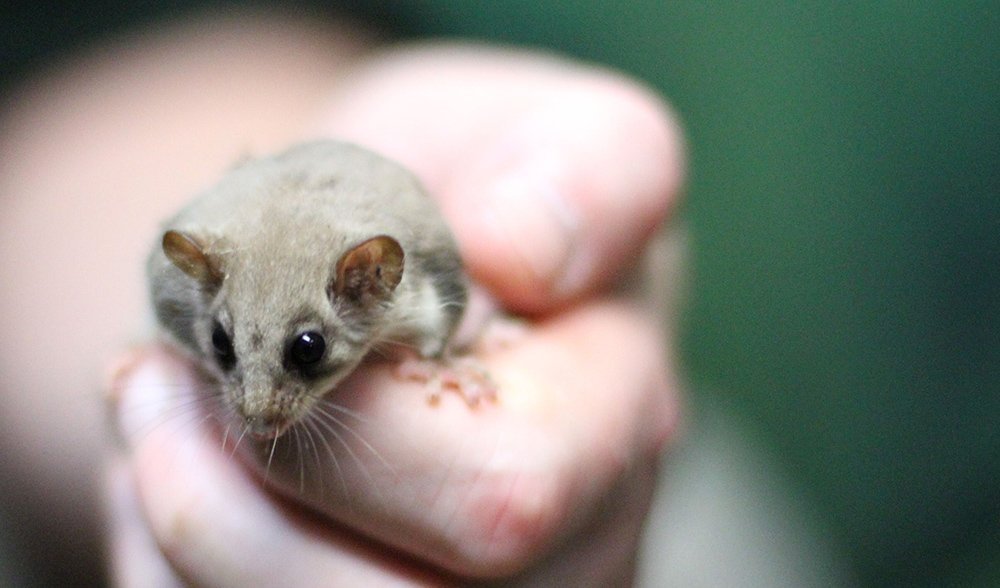
The feather-tail glider has large eyes to allow for nocturnal binocular vision, an important feature when gliding and climbing well above the ground.
Photo Credit: Madeleine Smitham
The feather-tail glider is named for the hairs that grow horizontally from its tail, like feathers.
Photo Credit: Madeleine Smitham
These feather-tail glider joeys are only a few cms smaller than they will be at their full adult size. Adult feather tail gliders on average weigh only 10-14g.
These feather-tail glider joeys are only a few centimeters smaller than they will be at their full adult size. Adult feather tail gliders on average weigh only 10-14g.
Seven tiny feather-tail glider joeys have left their nesting boxes, eager to explore their Taronga Zoo exhibit. Part of the world’s smallest gliding marsupial, these little joeys are only half the size of a grain of rice at birth, but grow to about one centimeter long before leaving their mother’s pouch. The joeys were discovered in the Taronga Zoo nest boxes recently, and are estimated to be 13 or 14 weeks old.