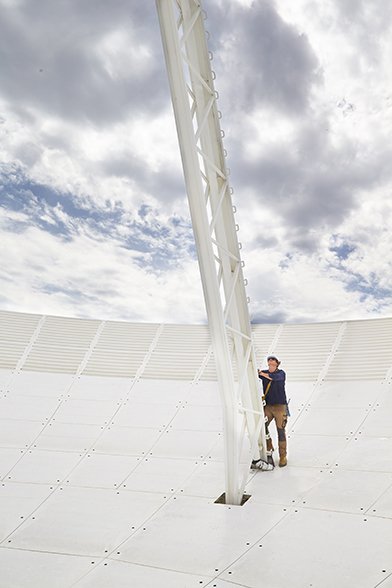
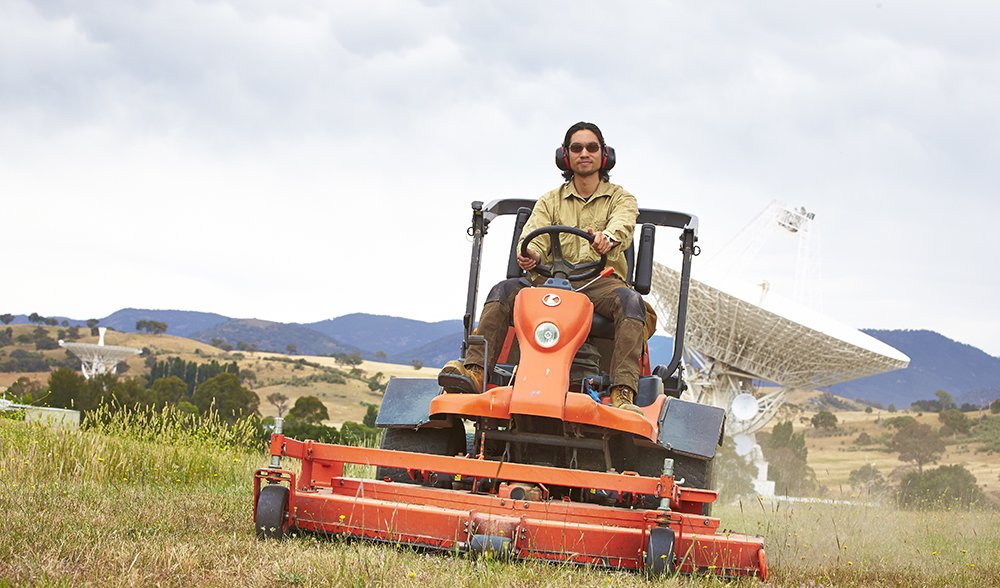
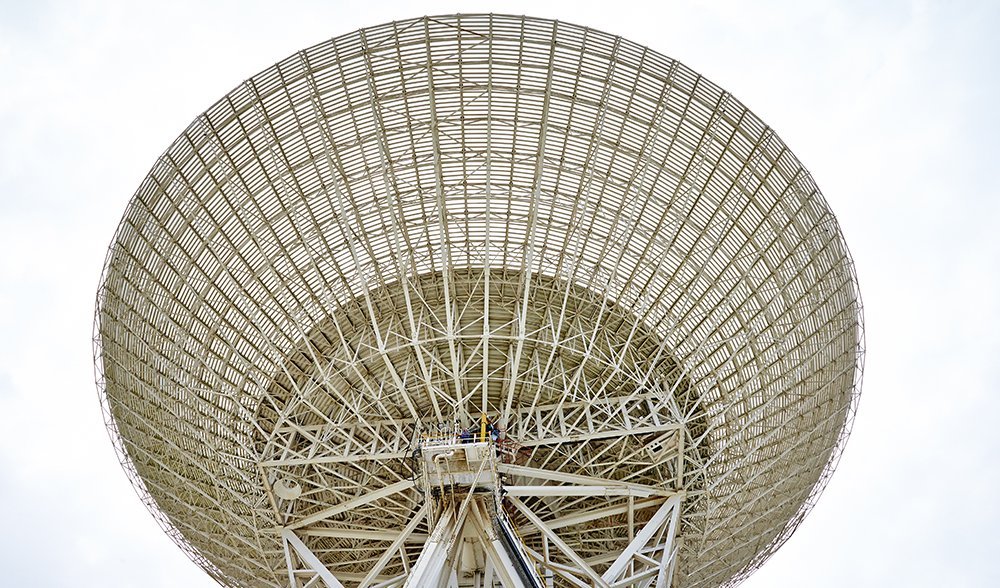
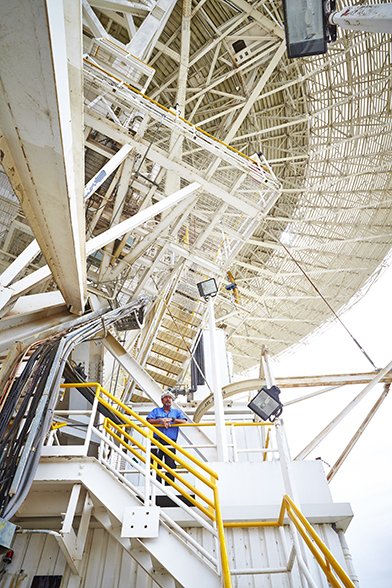
Brendan Wright is a trainee technician in electronic systems. One of the perks of his job are the checks and repairs that require strolling across the white dishes – such as the 70m-wide DSS43.
Photo Credit: Phil Castleton
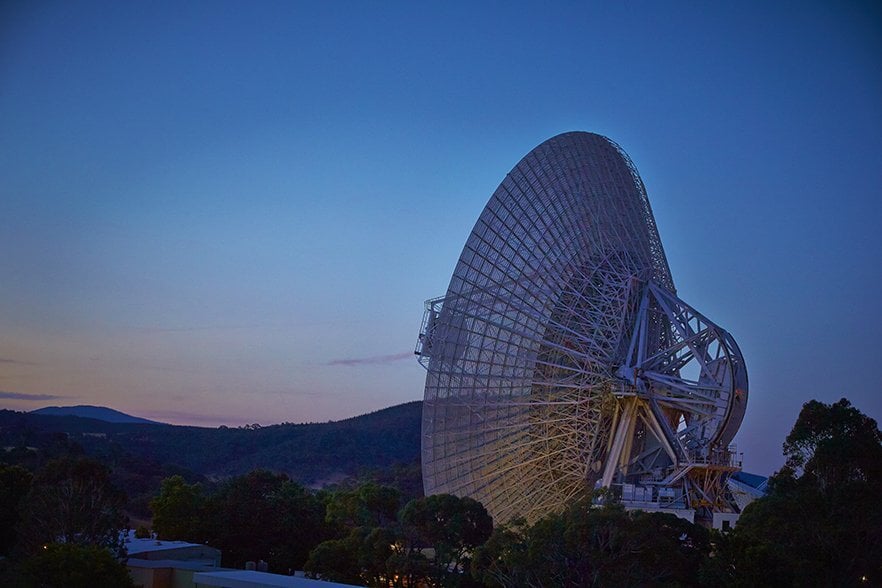
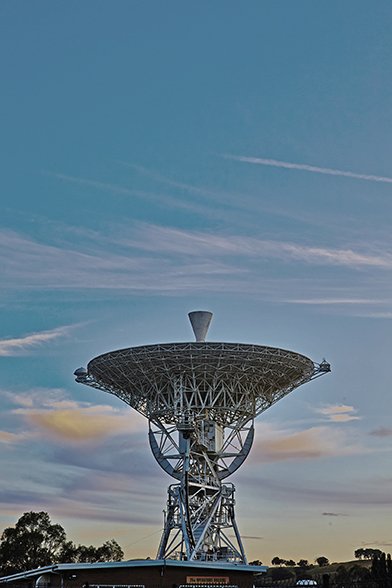
In 1988 the Complex increased its capacity to hear the far-ranging Voyager probes – which today send back information from interstellar space beyond our Solar System – by upgrading the biggest dish by 6m, making it 70m wide. It’s the largest steerable antenna in the Southern Hemisphere, and one of the biggest in the world.
Photo Credit: Phil Castleton
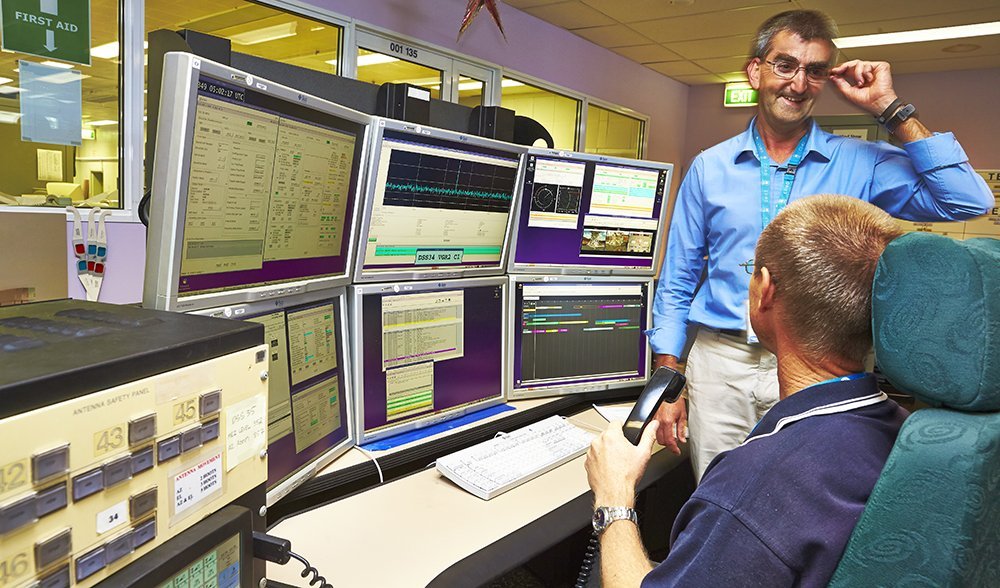
Terry Neuendorf (standing) and Malcolm Greig (seated) are part of the team that track deep space craft for the CSIRO and NASA. People who work here tend to count their stay in decades, the unique nature of their work keeping people interested for longer periods than is typical today.
Photo Credit: Phil Castleton
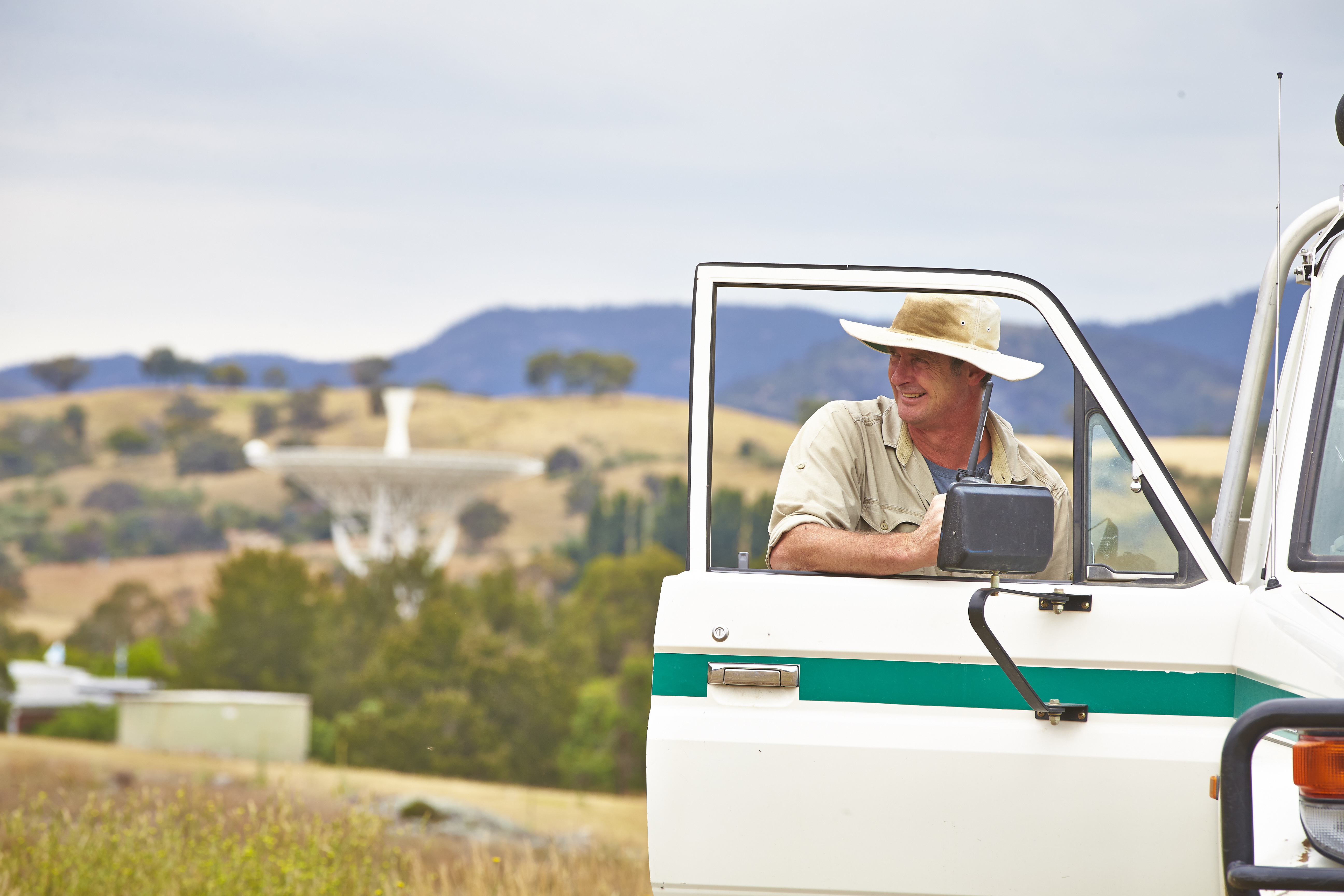
Graydon Gaunt’s job is to help look after the very terrestrial surrounds of the CDSCC.
Photo Credit: Phil Castleton
Deep Space Station 46 is a26m-wide dish from the old Honeysuckle Creek Tracking Station. Now decommissioned, it is famous for receiving the telecast of the 1969 Moon landing.
Photo Credit: Phil Castleton
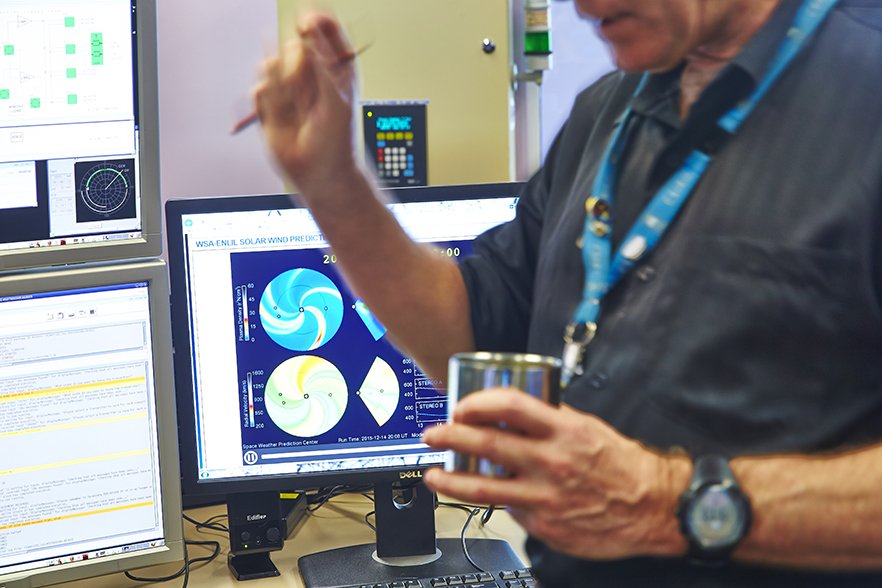
Link controller Ian ‘Radar’ Middleton explains that the colourful, swirling mass on the computer scrren represents the Sun’s sudden release of built-up magnetic energy, known as a solar flare. A slight worry to NASA, Ian says, is that a sizeable solar flare can damage power lines here on Earth. That’s why a team is tracking three probes that monitor the flares.
Photo Credit: Phil Castleton
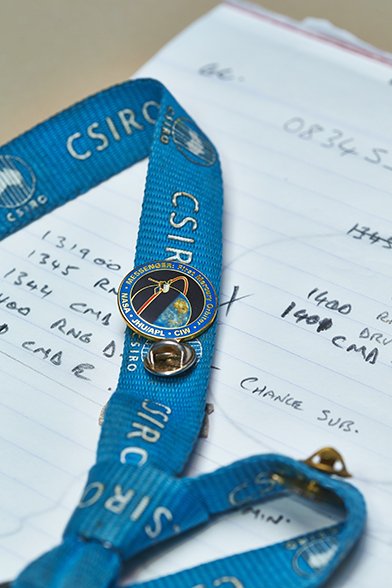
A pin on one of the staff’s lanyards is a memory of MESSENGER, a space craft launched in 2004 destined for Mercury. MESSENGER was the first spacecraft to orbit Mercury and did so from 2011 to 2015.
Photo Credit: Phil Castleton
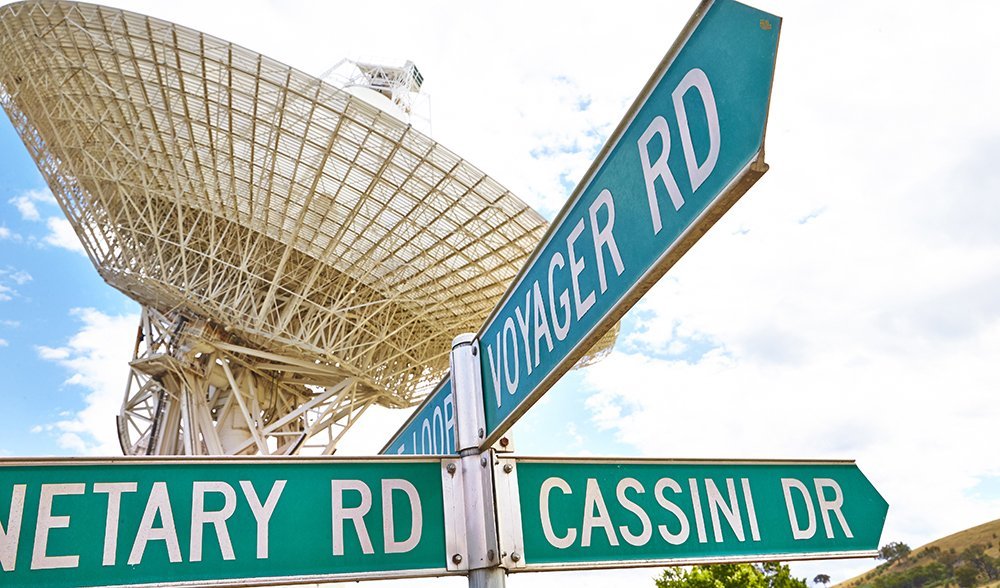
Names of roads at the CDSCC are all space themed. Cassini Drive for example is named after the Cassini space craft that is currently orbiting Saturn. Voyager road is named after the Voyager probes, two of which are currently exploring interstellar space beyond our Solar System.
Photo Credit: Phil Castleton
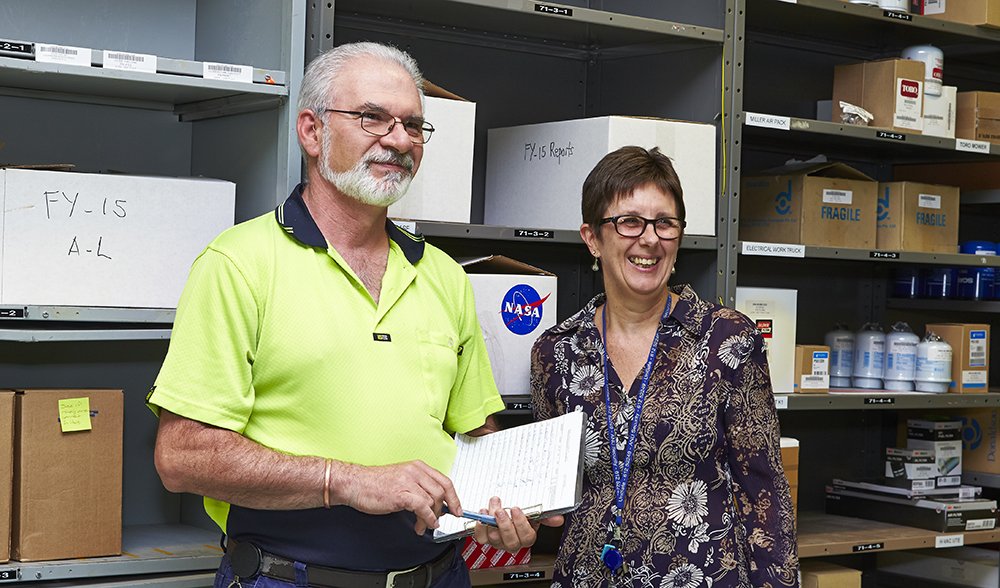
Nick Daskalakis (left) is a logistics officer at the CDSCC. It’s his job to manage the complex handling and storage of much of the sensitive equipment used at the site. Here, he chats to support services manager Kerry Fereday.
Photo Credit: Phil Castleton
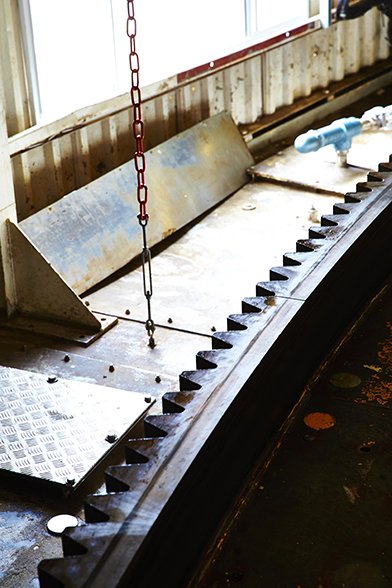
The big 70m-wide dish at the CDSCC requires enormous cogs to turn the 4000t structure.
Photo Credit: Phil Castleton
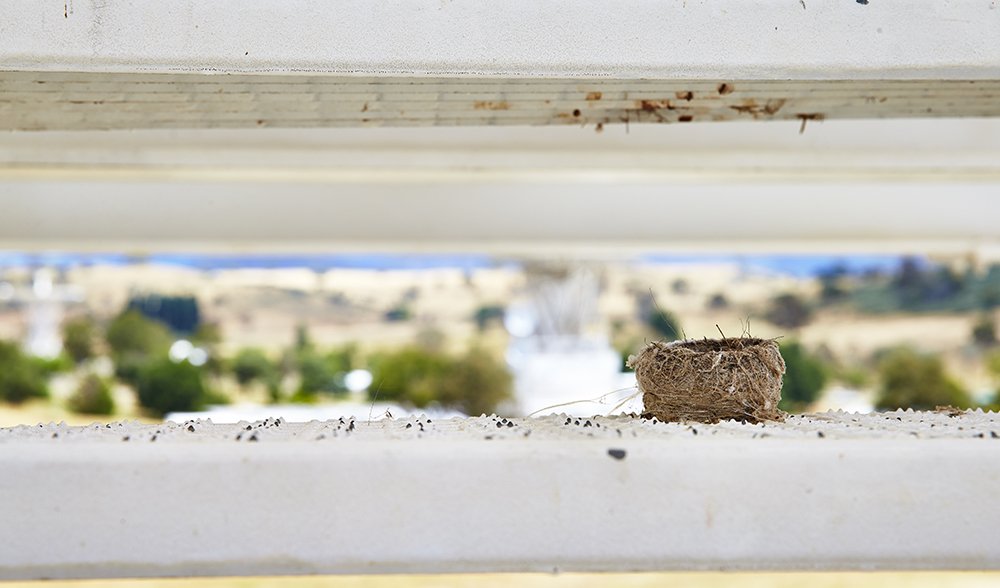
Fearless local birds often build homes on the dish structures, but have to build their nests a little deeper as the movement of the dishes rolls the eggs around inside them.
Photo Credit: Phil Castleton
David Lorimer is responsible for maintaining the CDSCC’s natural setting, which is surrounded by national park and shielded from interference by a natural valley.
Photo Credit: Phil Castleton
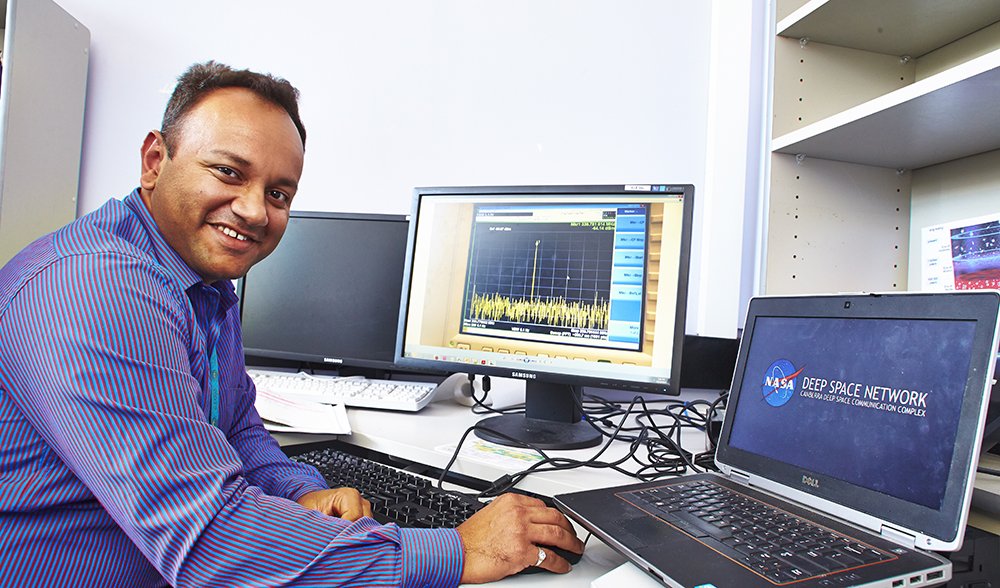
Our mobile phones are contributing to ‘noise’ that is proving to be a growing headache for the CDSCC. Ashish Soni, a digital systems engineer, says it’s getting harder to make sure interference doesn’t scramble information. “It’s a very challenging task given that the distances we deal with are in billions of kilometres and taking into account the terrestrial noise,” he says. “At the moment, for example, most mobile phone communication operates very near to some frequencies we use.” Mobiles and wi-fi must be switched off while on site and the hills around CDSCC provide some protection, but terrestrial noise is increasing.
Photo Credit: Phil Castleton
This huge dish is now more than 40 years old it’s probably the biggest single antenna – Australia will ever have. In the next 10 years it will be replaced by smaller, more flexible arrays – a cluster of closely spaced smaller, linked antennas.
Photo Credit: Phil Castleton
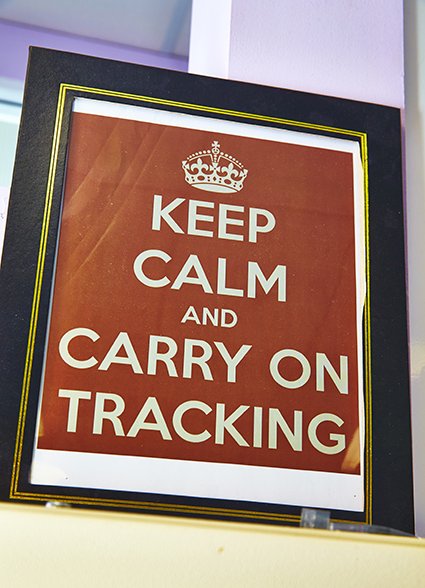
The mood in operations is cheerful. Four teams of four link operators and a shift supervisor work in 12-hours shifts to ensure that people are working on tracking and signalling around the clock.
Photo Credit: Phil Castleton
Tony Ross is a 36-year veteran of the CDSCC. Until his recent retirement, Tony was part of the 40-strong engineering and technical teams that keep the dishes functioning.
Six antennas huddle on the grassy 147ha site at Paddys River in the Tidbinbilla Valley, just under an hour’s drive from Canberra. One is a landscape-dwarfing dish as wide as a 22-story building is tall. Dotted around are three working 34m dishes and one under construction. The CDSCC is owned by NASA, but it is run through the innovation centre at the Jet Propulsion Laboratory in Pasadena, California, as well as by the CSIRO. It is one of three deep-space tracking stations in NASA’s Deep Space Network (DSN) – the others are in Goldstone, California, and Madrid, Spain. The tracking stations are strategically placed around the globe, so that, as the Earth rotates, they can stay in touch with interplanetary spacecraft 24 hours a day. The DSN provides the vital link to the spacecraft of many nations travelling between the planets and beyond.