When birds became cool
This is an edited extract from the book (Be)wilder: Journeys in Nature, by Darryl Jones, available now in bookstores nationally and online.
Ned McGowan is no environmentalist. “Look, I’m no farken greenie!” he says for the third time, just to be sure. And loud enough that everyone in this noisy beer garden hears him clearly.
He slams his VB down on the wooden tabletop and glares around at the blokes at the next table, daring anyone to say a word. Eyes averted, the conversations resume, perhaps a little quieter than previously. I’m beginning to wonder why I’m here, whether this was a mistake.
Ned leans ominously towards me, fixes me in a fierce stare and then says something I would never have expected.
I was back in my hometown, Wagga Wagga, passing through on my way to a conference in Brisbane. The trip was going to be too brief to see anyone except my parents. Or so I thought. My father had run into his friend Ned at the local shopping centre a few days before. When Dad mentioned I was arriving shortly, Ned became uncharacteristically keen to meet me. “I’ve got something to tell him. It might be important.” He wouldn’t elaborate, so they had agreed that when I arrived, we should go straight to the local pub on the way from the airport. He’d be waiting in the beer garden.
I knew Ned more by reputation than acquaintance. He was one of those ex-farmers who had settled unhappily into town after a lifetime on the land. He and Winnie, his wife of almost 60 years, had the rest of their lives planned out in detail: cruises, plays, trips to the Sydney Opera House and interstate visits to see the grandkids. Ned had been more or less happy to go along with whatever Winnie had in mind. But only a few months after moving into their tiny flat in the suburbs of Wagga, Winnie had succumbed to pancreatic cancer. It was all over in a few terrible weeks. For the first time in his life, Ned found himself alone and completely unprepared. Winnie had taken care of every aspect of their lives. He was bereft. He became morose and agitated. Dad was one of the few old friends who put up with him.
In what seemed like a spur-of-the-moment decision, Ned sold the flat and purchased a “useless rocky hill” a short distance out of town. He moved into the large shed on the site and became something of a recluse. The only time he came into town was on Friday afternoons, when he purchased a few groceries before he settled into the Blamey’s beer garden. That’s where we found him, impatiently awaiting our arrival.
We join Ned at the rough wooden table. After only a perfunctory handshake, he leans towards me with that intense stare. “Have you seen my Facebook today?” he says.
Taking my open-mouthed facial expression – correctly – as a ‘no’, Ned picks up his phone, muttering quietly (“Farken fat thumbs…”) as he searches for something. “Found it. Here. Look,” he says, showing me the screen, his face alight with a crooked grin. “Not very clear, but you can make it out.”
The image is dark and out of focus, but there, on the leafy ground, is a small plump bird with long spindly legs and a fierce, defiant expression.
“Is that a —”
“White-browed scrubwren. Yep. Howsabout that!” Ned looks back at his phone, beaming. “Never thought I got them out at my place. It’s pretty dry and rocky. But the Callistemon hedges I planted a few years back seemed to have done the trick. Gives the little birds somewhere to hide. Yeah, I got soldier birds. Noisy farken miners! They’re everywhere. Not much we can do about that, except give some shelter for the little ones they always chase. And I’ve been dealing with the cats. You should come out and see for yourself. Bring the old man. We might get him interested yet!”
Ned McGowan is probably the least likely convert to birdwatching I’ve yet to encounter. He’d been a traditional farmer, focused on wheat, canola and fat lambs. Some birds – ravens, birds of prey, bee-eaters – he regarded as harmful vermin that needed to be “actively discouraged” (in other words, shot). A very small few were “good”, meaning useful. For example, the ibis that turned up when grasshoppers were plentiful. And owls, which consumed mice and rats. Most birds, however, were irrelevant to farm-related output and were therefore ignored. A farmer has plenty to worry about without needing to think about the merely ‘pretty’ or ‘interesting’.
Yet, here he is, excited about scrubwrens!
Later, when we eventually get home and Mum’s long-delayed tea and Anzacs have been produced, it’s Dad who surprises me with a plausible explanation. “When Winnie died, Ned went downhill fast. He argued and complained, saw only the bad side of everything. Most of his old mates gave up on him, which only made things worse.”
But something happened. He slowed down and started to notice things around him. Reptiles, butterflies and, of course, birds. There were always plenty around the spring-fed creek near the shed, the only reliable water on the place. It took a while, but he changed. The birds were busy getting on with their lives. Maybe he should do the same.
“Yes, birds!” Ned told Dad, in strict confidence (he didn’t want anyone to think he had gone soft). “I hadn’t taken any notice of them before. They just didn’t figure in my life. But they can teach us, they can. They didn’t mope and whinge. Life’s too short to be negative. They taught me a lesson. Give me a kick up the bum! ‘Pick yourself up, you stupid old bugger, and do something useful.’”
“He’s a lot happier,” Dad continues. “Got stuck into planting hedges of native shrubs – a tough job in that dry, rocky country. I was relieved to see him recover so well, but now he never shuts up about his bloody birds!”
Dad is no psychologist, and he’s certainly not much of a philosopher, but he has a point. When people have the chance to stop and take a look around, sometimes they see things they were too busy and preoccupied to notice before. Like birds.
A COVID response
Life. It never stops. Until it does.
During COVID, people almost everywhere on the planet were locked down. The severity varied but most people experienced some degree of imposed restriction on their movements. This lasted from a few to many months. In some cases, people were seriously constrained for years.
Roads were deserted. Trains stopped running. Planes were grounded. When some movement was eventually allowed, it was limited to the immediate vicinity.
The world became local. The focus was on the nearby and close-up. When you walk rather than drive, you have time to think and observe. Everyone became explorers of their immediate patch. Remarkable and mundane discoveries were made daily.
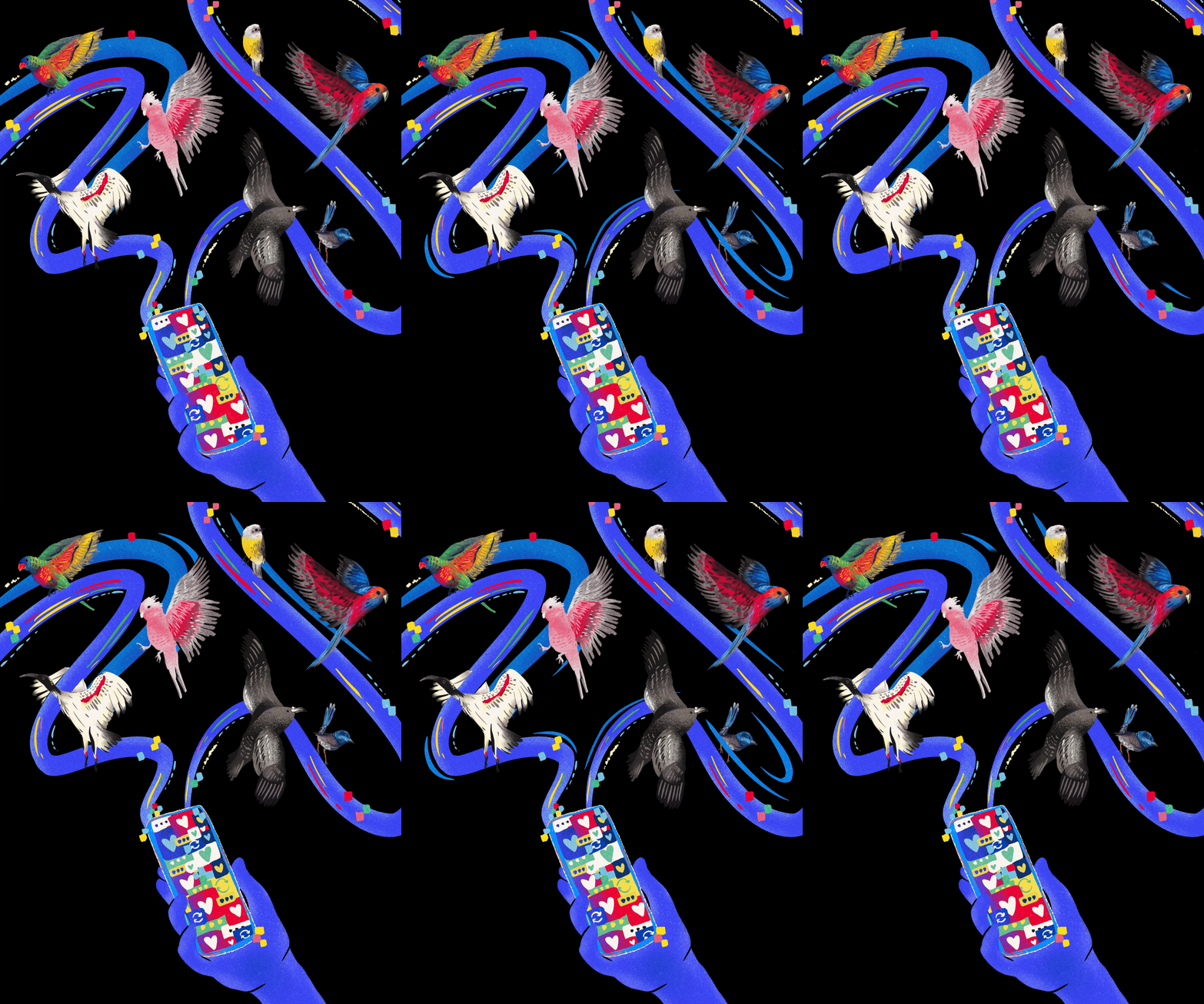
people became obsessed with birds during COVID lockdowns.
And one of the biggest discoveries? Birds! They seemed to be everywhere. Had they always been there, but we were all too busy to notice? Certainly, in the absence of vehicles, planes and trains, the world was much quieter. Perhaps for the first time in their lives, people heard and appreciated birdsong. It was ubiquitous. And delightful. People realised that some birds had gorgeous voices. Other were loud and outrageous. Or just strange. They had been there the whole time, but no one had noticed.
And just like that, the world became obsessed with birds. It was a genuinely global phenomenon. Internet searches for bird-related topics reached astronomic levels. Sales of binoculars and field guides surged. Bird feeders and seed mixes sold out. Neighbours swapped sightings and argued about identifications. Bird blogs, chat sites and social media groups exploded. At least it was something to think about other than deadly viruses.
The reasons underlying this COVID-generated worldwide fascination with birds are still being discussed. There are a lot of potential influences, but one seems particularly pertinent: the birds were carrying on as though there was no pandemic. They weren’t cowering in fear or hoarding toilet paper. They were out and about, just like always, being beautiful, oblivious, independent. They seemed to be making a statement: life continues, hope is possible.
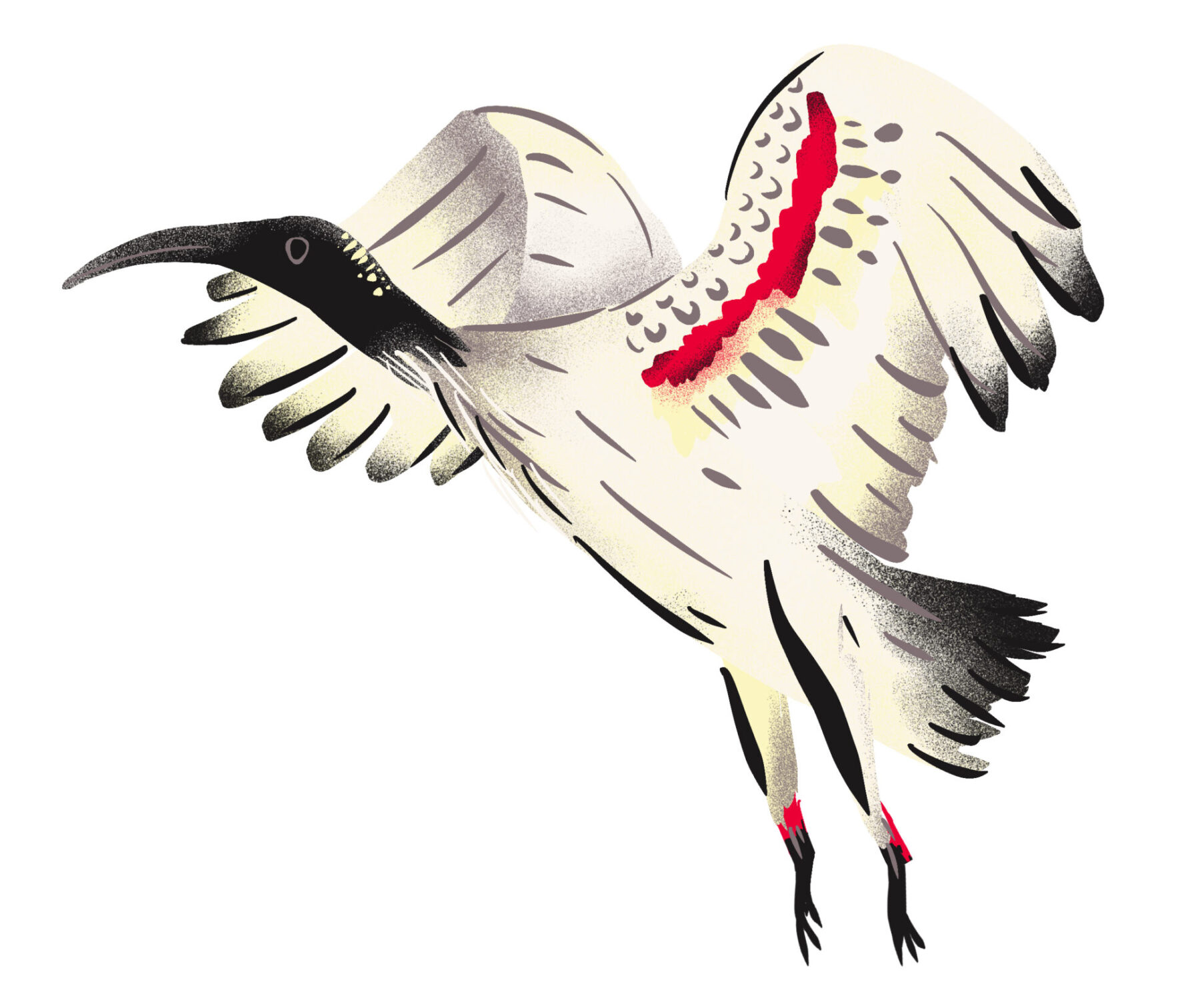
Everyone had their own reasons for enjoying birds. Some watched birds simply to pass the time. For others, the beauty of even familiar species can inspire jaw-dropping awe. The first time someone focuses their binoculars on a rainbow lorikeet can be a life-changing experience. Seeing the intricacy of the feathers and their vibrant colours can change one’s appreciation of even commonplace birds in an instant.
Fascinated by birdlife
The lights in the auditorium darken. The enormous screen comes to life, displaying a satellite image of Australia and the scattering of islands directly to the north.
I’m in Brisbane for the biannual Australasian Ornithological Congress. Some of the biggest names in bird science and conversation have turned up to this session, eager to hear about the latest developments in eBird, the flagship program of the Cornell Lab of Ornithology.
“I’ve picked a bird familiar to many of you – the eastern koel,” says Chris Wood, eBird’s director. “Let’s see what happens when we roll progressively through all of the location records for a whole year.”
Blue dots appear on the satellite image. Each dot represents the location of an eastern koel observation uploaded onto eBird. From June to August – winter in the Southern Hemisphere – Papua New Guinea is mottled blue almost everywhere; these are koels hanging out in the tropical rainforest during the non-breeding season. At that time of the year, there are none in Australia. The entire continent is blank.
As the animation moves into late August, a dramatic change occurs. A wave of blue suddenly forms and moves south and begins to trickle, then flood, into Australia. Starting at Cape York, the closest point to Papua New Guinea, the wave of blue flows steadily all the way down the east coast as far as Victoria. By the end of January, the transfer is complete: not a single koel remains in Papua New Guinea, while about half of Australia is now red, indicating that they were breeding when the record was made. It’s a spectacular presentation, made possible by the 86,149 eastern koel observations uploaded to eBird.
“You know what I find astonishing about this data?” Chris continues. “It’s that the so-called experts, the professional researchers and consultants and full-time birders, people like us, provided a trivial proportion of all this data. Almost all of it was submitted by ordinary birders dedicating their time to recording birds wherever they are and submitting them. People like this.”
The map vanishes and a TikTok video begins. A rapidly changing gallery of young people appears. Moving to the beat of the soundtrack, they talk enthusiastically about bird identification. With staccato editing and pulsating music, kids as young as 10 rave about the Merlin Bird ID app, how to use it and what makes it so cool.
“These people should be our target audience,” Chris says. “Not copies of us, pale and stale. We need to be engaging everyone to enjoy their birds. And if we do it properly, they may start to embrace nature. It might be the most important thing we can do.”
In 2002 a small team at the Cornell Lab of Ornithology launched eBird so birders could store their records in a central location. Twenty years later, more than 1.3 billion records had been received from more than 820,000 participants globally. The amount of information now available on species from all over the world is almost impossible to comprehend. Already, hundreds of studies utilising this data have been published (and listed on the eBird website under ‘Science’), providing details on bird behaviour and movements – for example, the surprising movements of birds into the massive new cities in China, where parks are established before the people move in. On the other hand, the data is showing in sobering detail how the abundance of many species is changing, almost always downwards.
As the animations of the koel migrations demonstrated, the level of detail now available is extraordinary. And yes, fancy technology has enabled stunning visual presentations, while supercomputers search for patterns and anomalies. But it’s important to remember that all of this is only possible because untrained, ordinary folks from literally every country in the world have been willing to sign up and send in their sightings. eBird is now by far the biggest citizen science project ever undertaken.
But you have to ask: why? Why are so many people enthusiastically participating in something that most of them are unlikely to use themselves? Although the eBird database is available, for free, to anyone with a legitimate reason to use it, it’s mainly academics, researchers, professional ornithologists, environmental scientists and consultants who do so.
Not Dawn Muir, who just returned from ‘her’ patch, a small wetland she visits every Thursday morning, early. “If I’m lucky, I’ll finish my rounds just before book club. If I’m late, it’s because I’ve seen something unusual. I always tell the girls the highlights, even though they mock me. But Clare, our youngest member, asked last week whether she could come and see what it’s all about. You never know what might happen!”