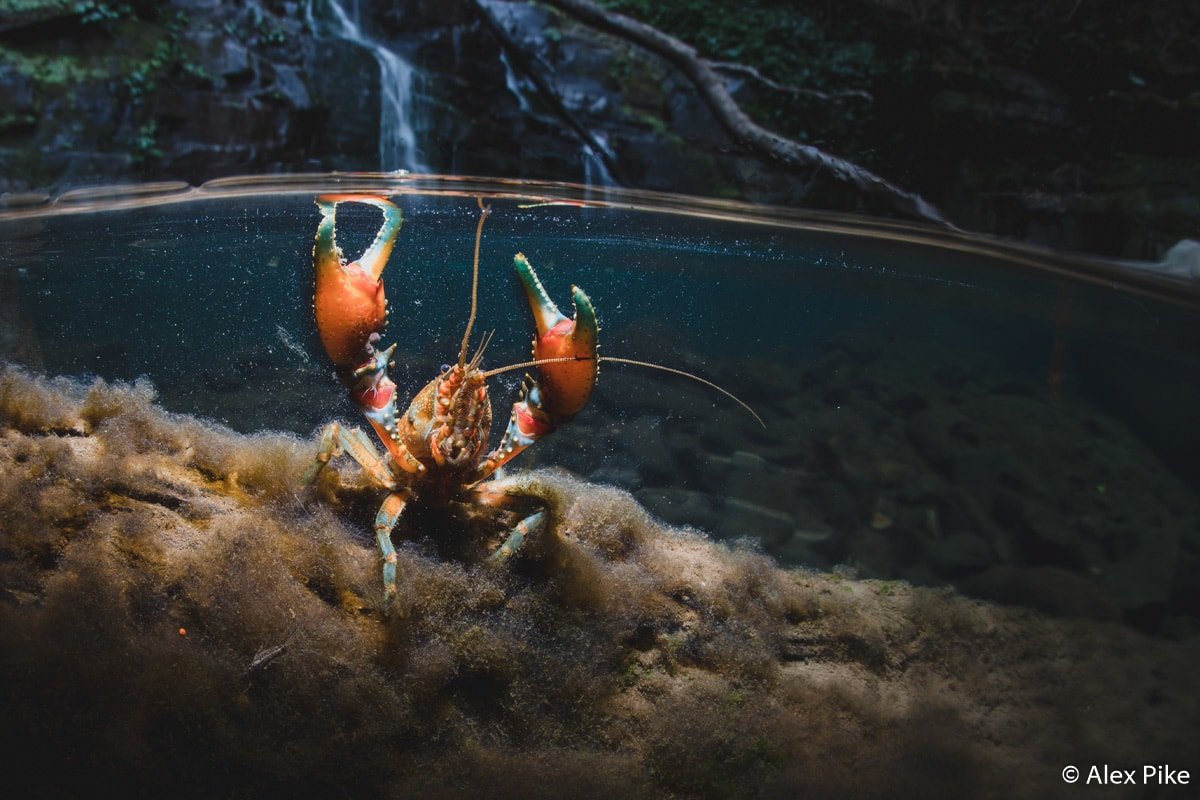

The southern hairy crayfish is one of the many amazing freshwater crayfish
species found in eastern Australia. This vibrant species is found in only 50km of streams along the Illawarra escarpment and is almost completely unknown to the general public – a situation shared by many of our freshwater crayfish.
Macquarie Rivulet, Macquarie Pass, New South Wales
Canon EOS 5D Mk IV, Canon 15mm f2.8 fisheye, 0.3, f/14, ISO 320, Ikelite DS-160 strobe, handheld, Ikelite 200DL underwater housing
Photo Credit: Alex Pike, New South Wales
THE GUARDIAN
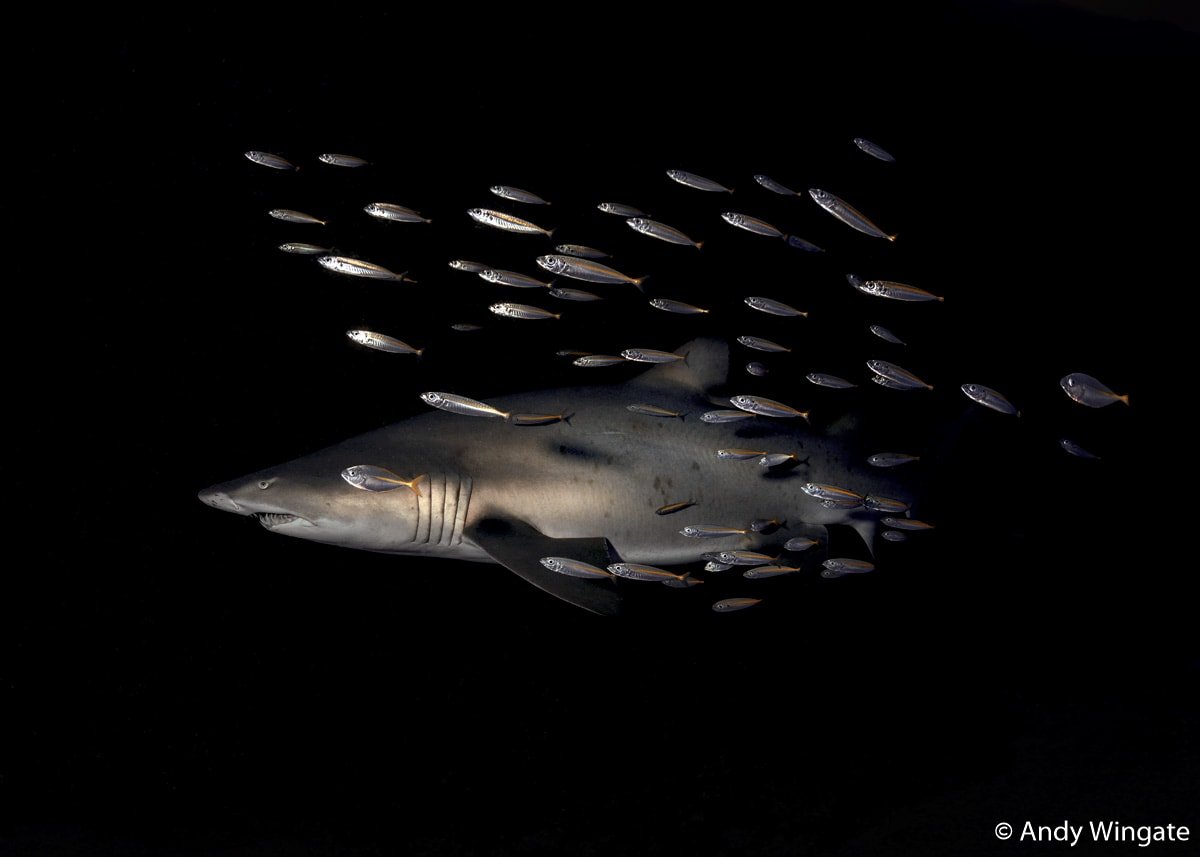
GREY NURSE SHARK Carcharias taurus
STATUS: VULNERABLE
The grey nurse shark (Carcharias taurus) glides in from the darkness of the reef gutters accompanied by schooling fish seeking protection, not from humankind, but from their natural predators. Listed as vulnerable by the IUCN, Australia’s Environment Protection and Biodiversity Conservation Act lists the east-coast population of Carcharias taurus as critically endangered.
Nine Mile Reef, New South Wales Queensland border
Nikon D810, Tokina DX 10–17mm fisheye, 1/125, f/8, ISO 160, two YS250 PROs strobes
Photo Credit: Andy Wingate, Queensland
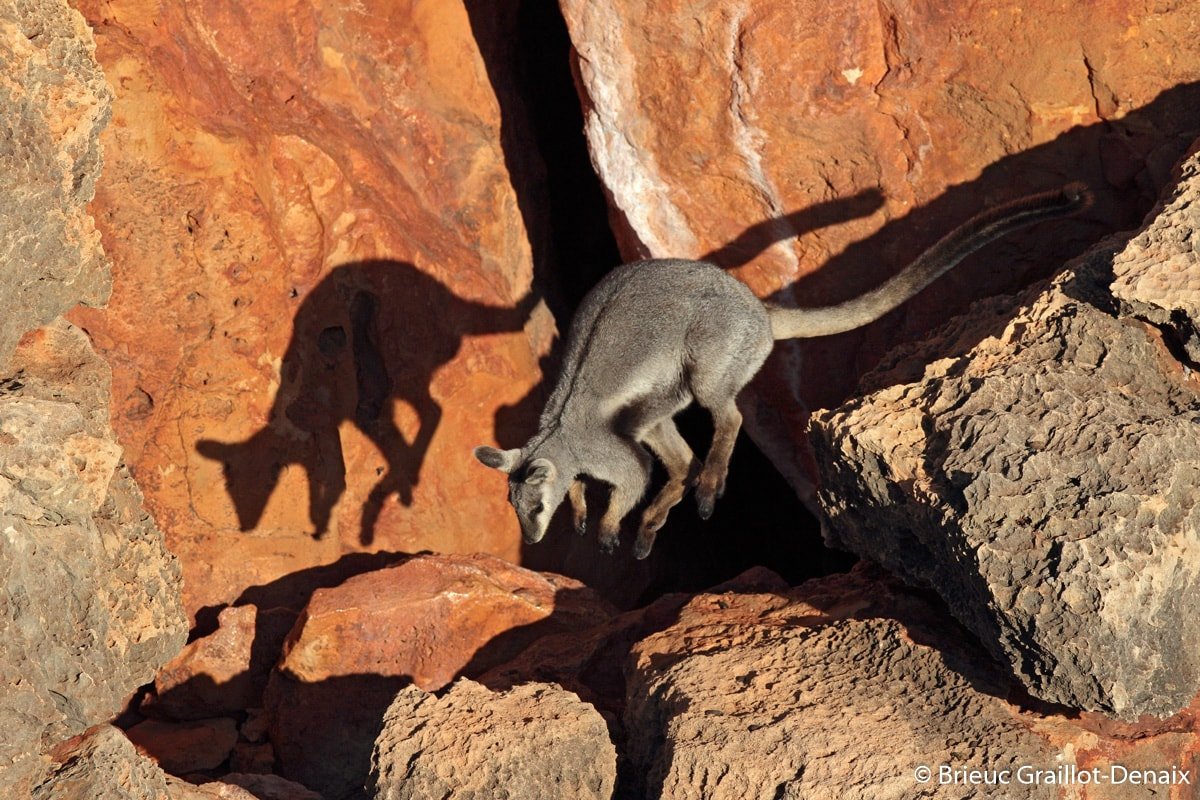
DOUBLE JUMP
BLACK-FOOTED ROCK-WALLABY Petrogale lateralis
STATUS: VULNERABLE
Black-footed rock-wallabies live on rocky cliffs where they spend the day resting in the shadow of rock holes and come out at the end of the afternoon to feed. When they leave
their hiding places, they move along the cliff, jumping from one rock to another. With the low sun at the end of afternoon, its shadow seems to jump too.
Cape Range National Park, Western
Australia
Canon EOS 7D Mk II, 300mm f2.8 L IS USM, 1/3200, f/5.6, ISO 400, tripod
Photo Credit: Brieuc Graillot-Denaix, France
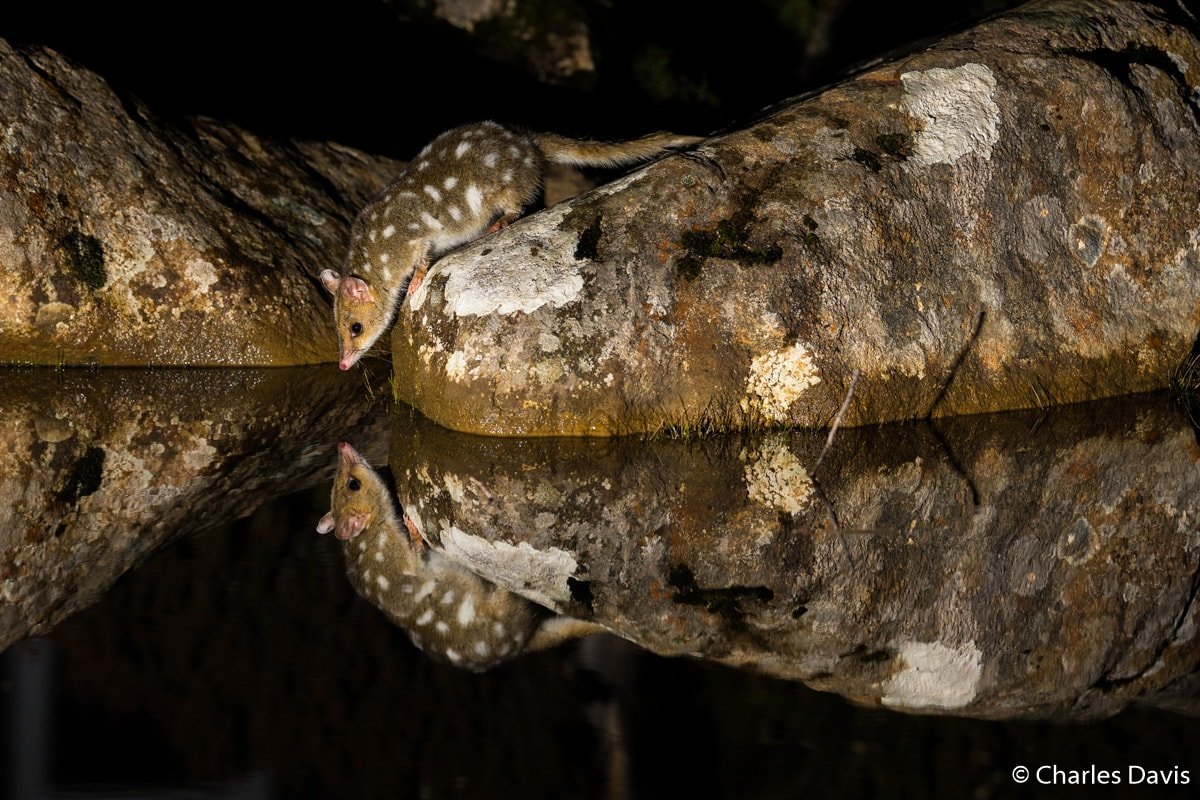
QUOLL REFLECTIONS
EASTERN QUOLL Dasyurus viverrinus
STATUS: ENDANGERED
Once night fell, high up the mountain near an old hut, a young eastern quoll came out, bouncing around the campsite. It didn’t look at us at all. After following it for about two hours, it came close to this pool for a drink. I used a single flash off-camera, off centre and down low to get the reflection I needed.
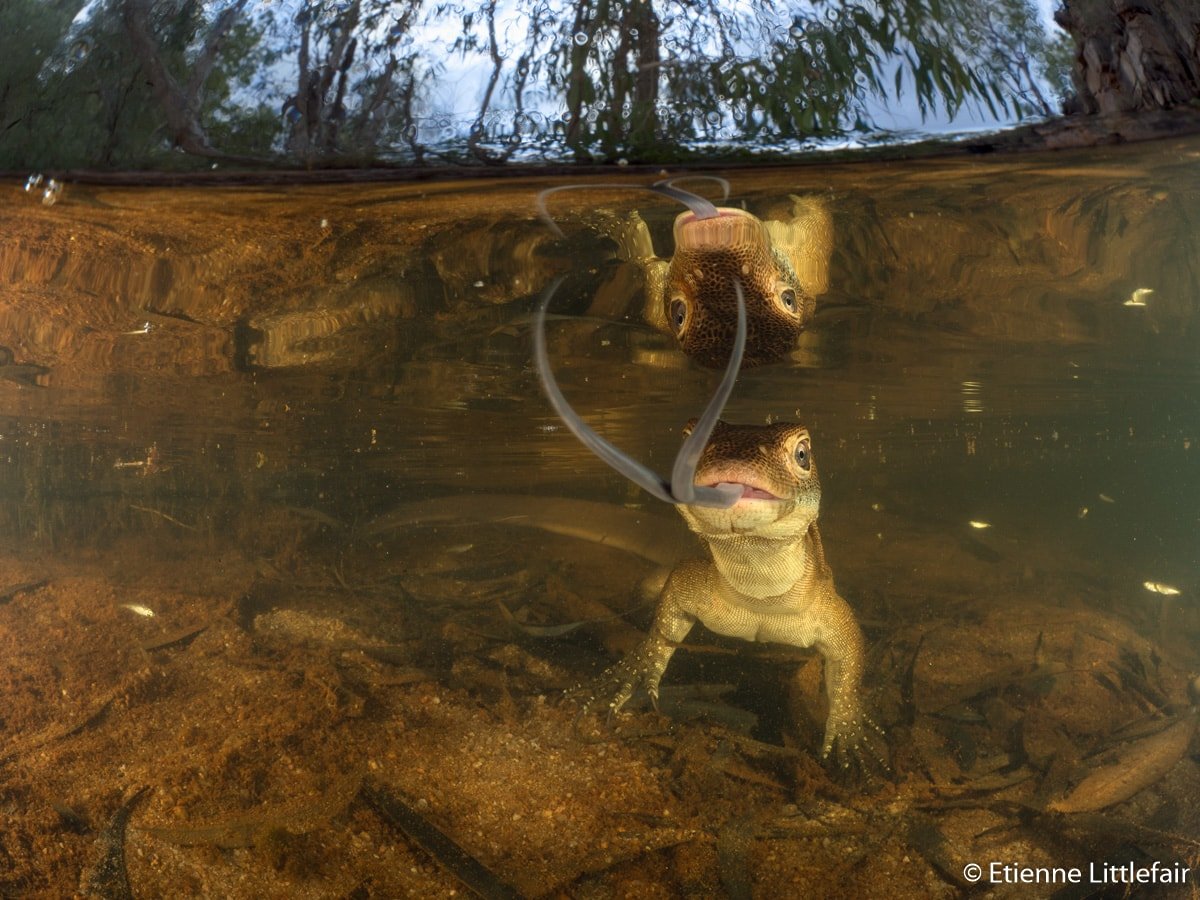
Mertens’ water monitors are highly inquisitive. This extremely bold specimen ostentatiously approached
me to investigate the good-looking lizard in my dome port while I observed another nearby pair engaged in courtship – sadly for him he was staring at his own reflection, not the mate of his dreams.
Adelaide River, Northern Territory
Olympus OMD EM-1 Mk II, Olympus
8mm f1.8, 1/125, f/11, ISO 64, two Sea & Sea YS-D2 strobes, manual flash output, handheld, Nauticam underwater housing
STATUS: ENDANGERED
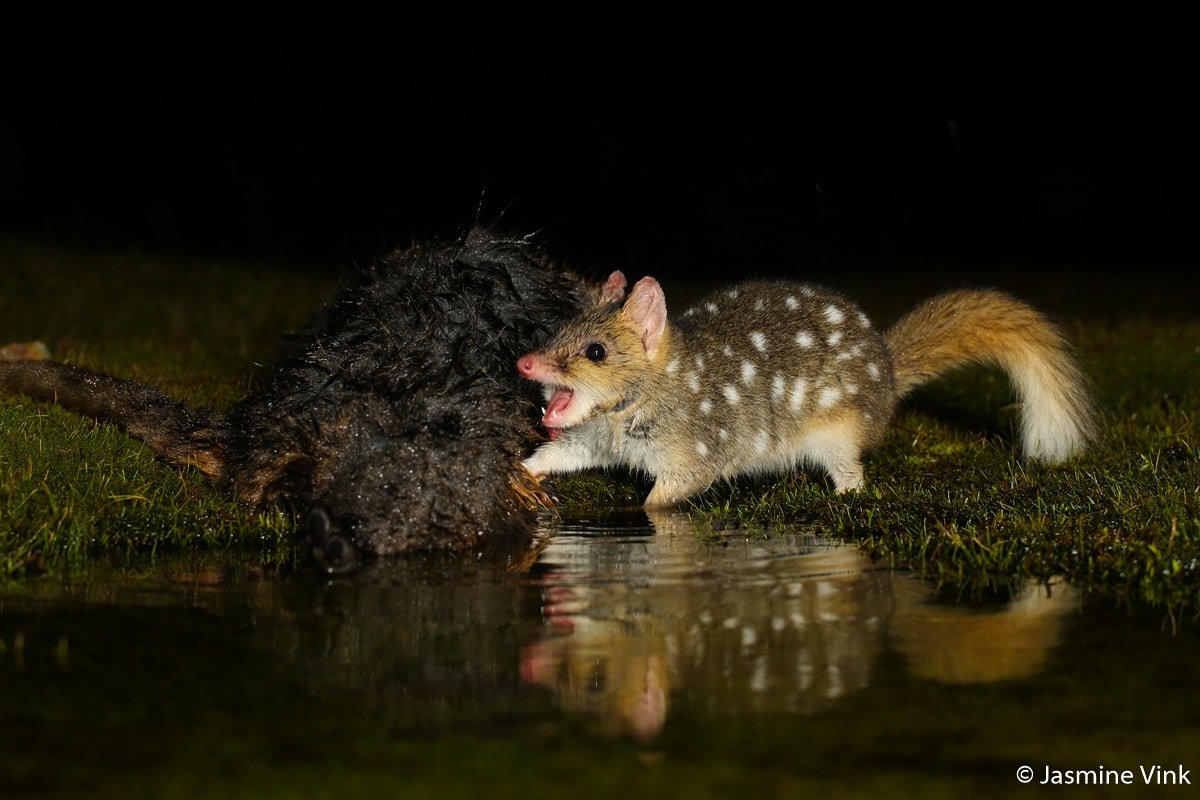
We came across this eastern quoll (Dasyurus viverrinus) feeding on a road-hit pademelon in Tasmania. Once widespread throughout southern Australia, there are now no remaining natural populations on the mainland. They are classified as an endangered species as their populations are continuing to fall dramatically.
Cradle Mountain, Tasmania
Canon EOS 5D Mk III, EF100mm f2.8 L macro IS USM, 1/100, f/7.1, ISO 400, off-camera flash
Photo Credit: Jasmine Vink, Brisbane, Queensland
SPOT THE DIFFERENCE
ZEBRA SHARK Stegostoma fasciatum
WHALE SHARK Rhincodon typus
STATUSES: ENDANGERED
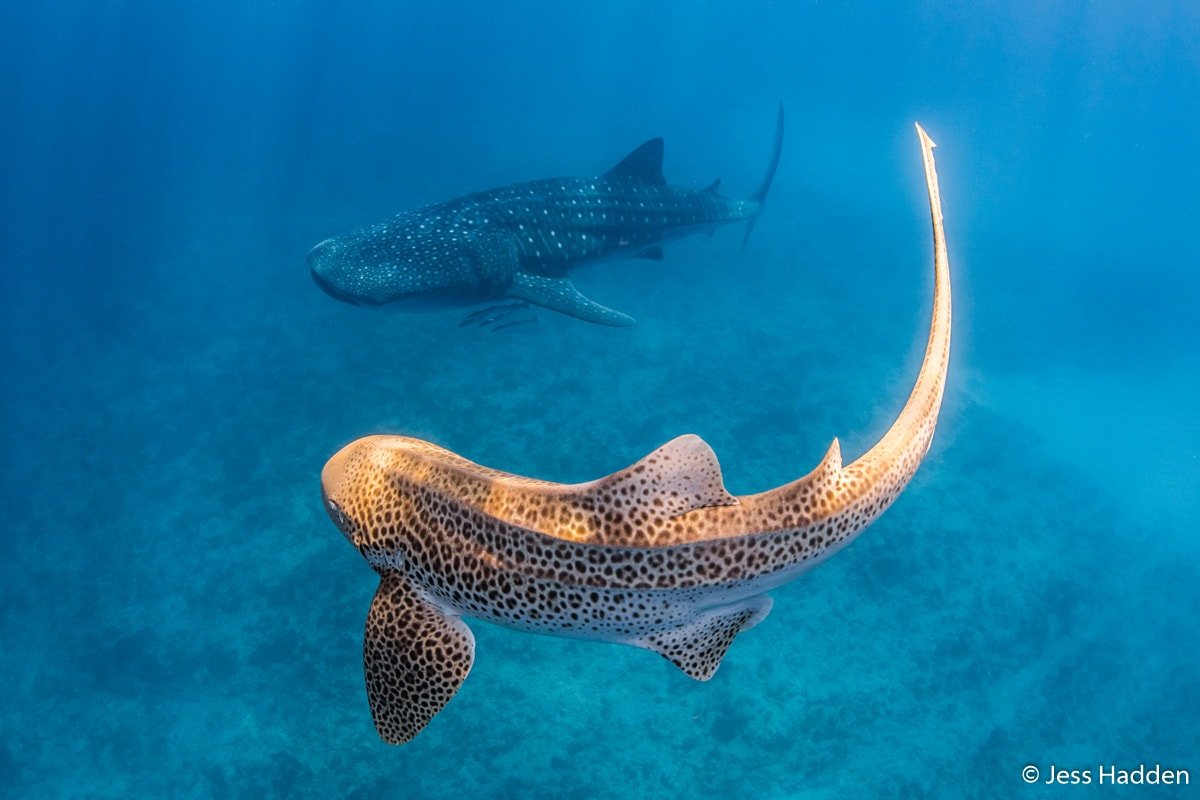
I have spent years photographing the whale sharks on Ningaloo Reef but never have I had an encounter quite as unique as this. A whale shark accompanied by a zebra shark with the most spectacular spot pattern. Coincidentally, these two spotted sharks are both carpet sharks.
Ningaloo Reef, Western Australia
Nikon D810, Sigma 15mm 1:2.8 EX DG fisheye, 1/160, f/9, ISO 160, Nauticam NA-D810 underwater housing and 6-inch glass dome
Photo Credit: Jess Hadden, Western Australia
PLAYFUL PRACTICE
AUSTRALIAN SEA LION Neophoca cinerea
STATUS: ENDANGERED
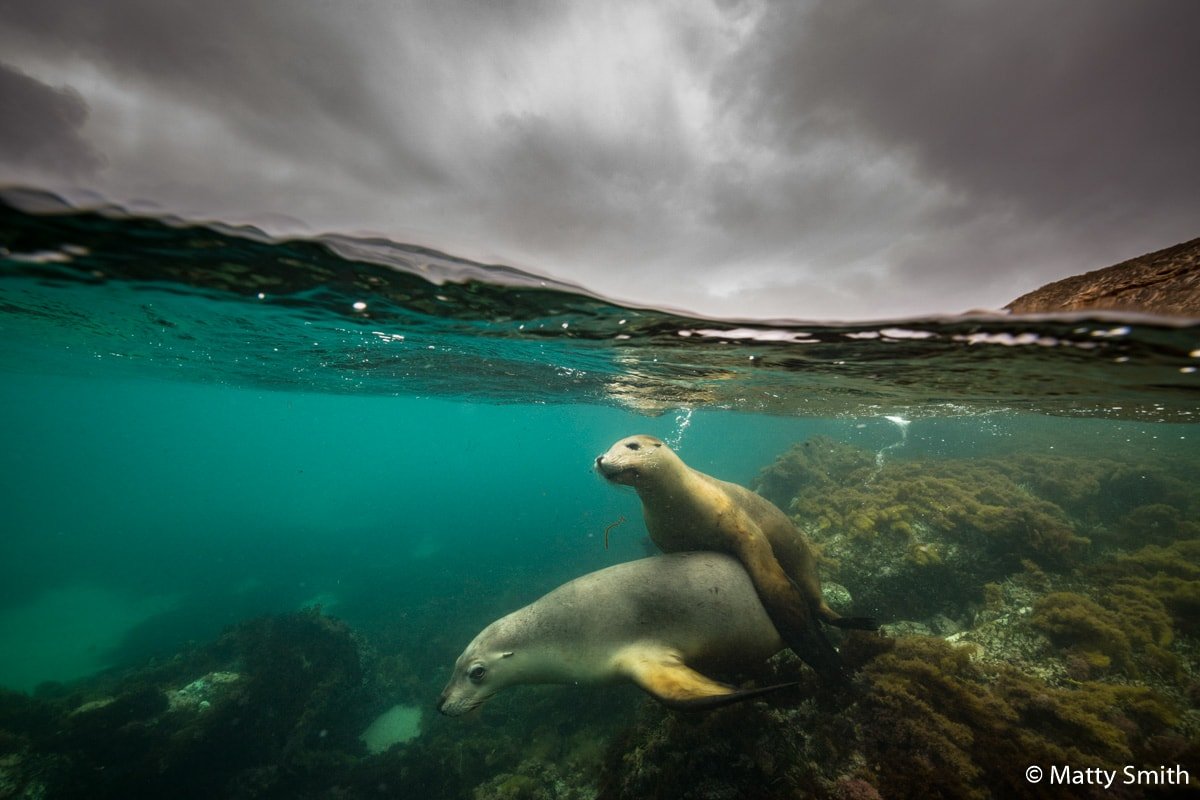
For half an hour or so I watched these
two sub-adult Australian sea lions chase each other. They were playfully fighting and mimicking breeding and generally showing off to the camera in their practice of becoming adults!
Hopkins Island, South Australia
Nikon D850, Nikon 14–24mm f2.8, 1/250, f/11, ISO 400, two INON Z240 strobes, Aquatica AD850 underwater housing, homemade lens dome port
Photo Credit: Matty Smith, New South Wales
JUST HANGING ON
GREY-HEADED FLYING-FOX Pteropus poliocephalus
STATUS: VULNERABLE
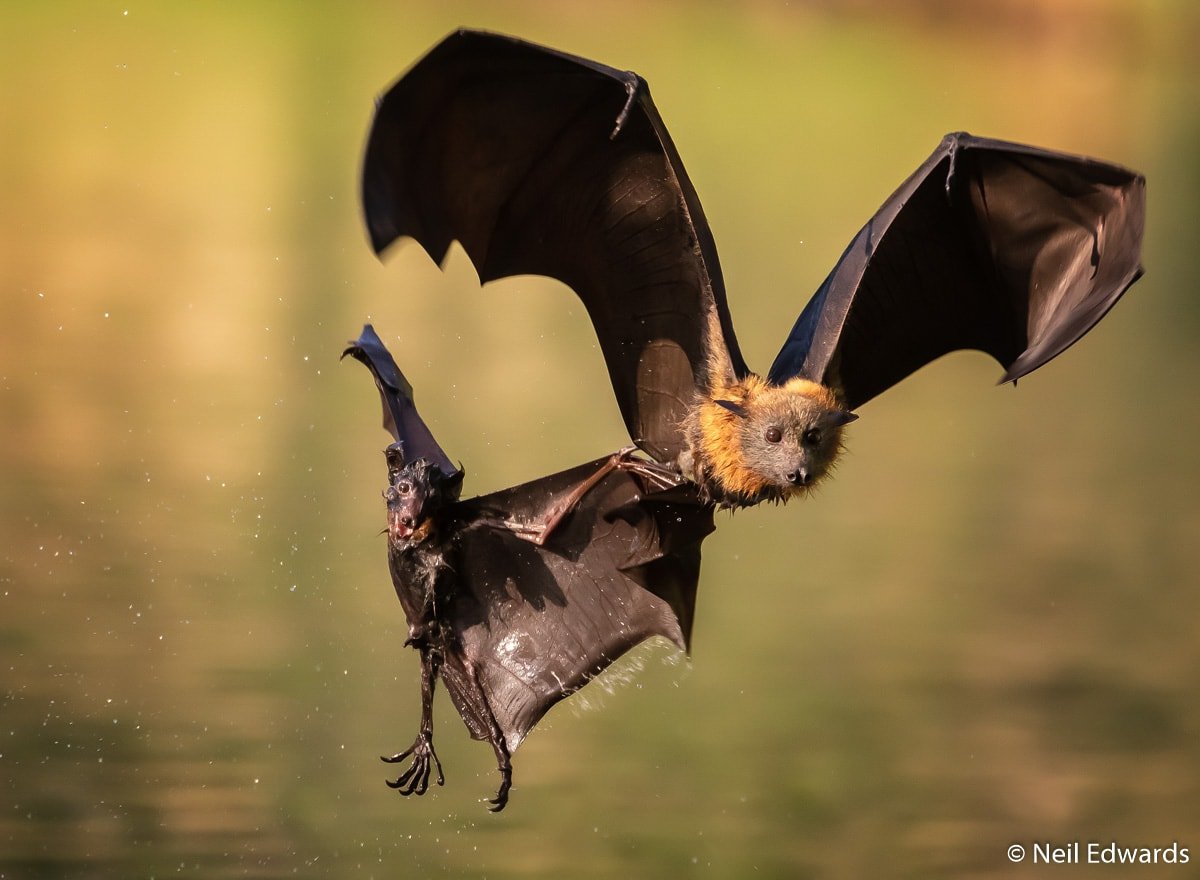
On extremely hot evenings grey-headed flyingfoxes will dip their bellies into the river so they can lick their wet fur for a drink. This female still carrying her young misjudged her approach and nearly dropped the baby on impact with the river, but somehow it just managed to hang on.
River Torrens, Adelaide, South Australia
Canon 7D Mk II, Canon 100–400mm
f4.5–5.6 L IS USM and Canon Extender EF 1.4X III, 1/1600, f/8, ISO 1600, handheld
Photo Credit: Neil Edwards, South Australia
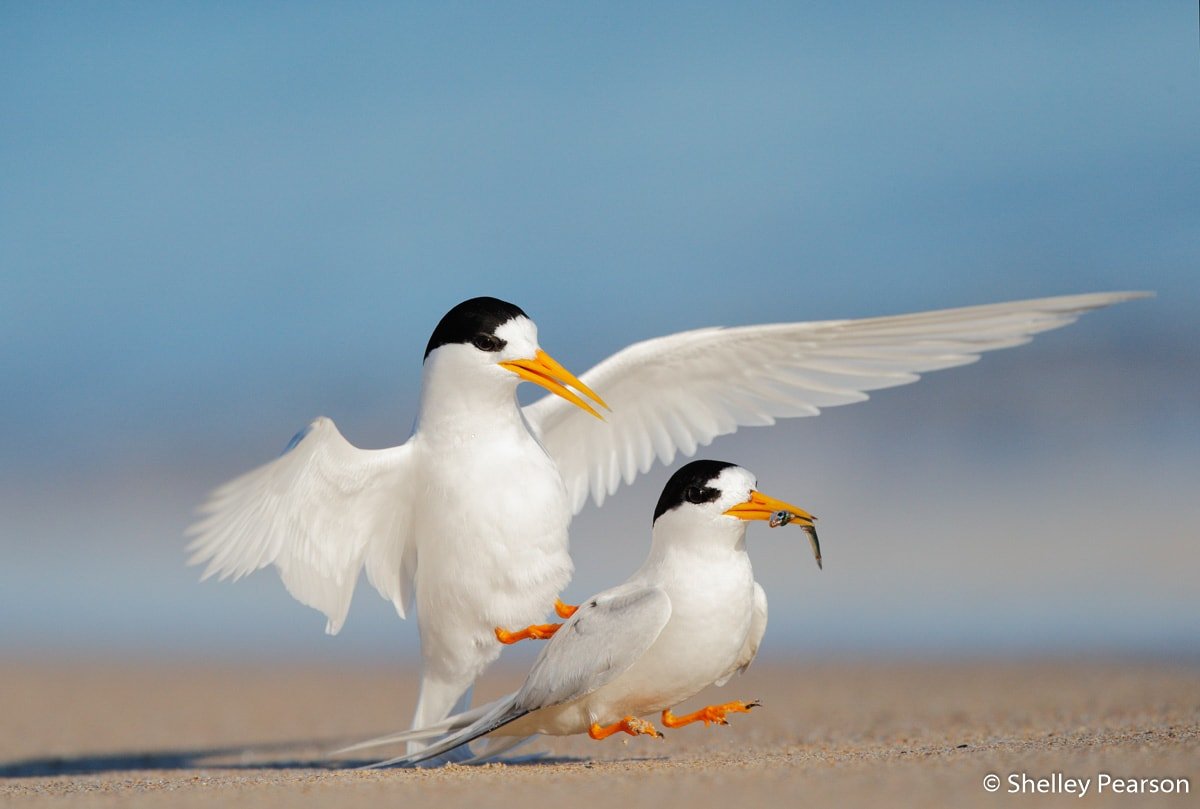
THE EXCHANGE
FAIRY TERN Sternula nereis
STATUS: VULNERABLE
This male offers a fish to the female in
the hope of mating; usually the fish is
exchanged during mating. The female
quickly left once she got the fish. Fairy
terns face many threats, which include
loss of nesting habitat due to coastal
development.
Mandurah Estuary, Mandurah, Western Australia
Canon 1DX Mk II, Canon 500 f4 II IS with 1.4x extender, 1/3200, f/7.1, ISO 800, handheld
Photo Credit: Shelley Pearson, Western Australia
The AG Nature Photographer of the Year Awards are sponsored by Coral Expeditions.
HomeTopicsWildlifeAG Nature Photographer of the Year 2019: Threatened species shortlist
AG Nature Photographer of the Year 2019: Threatened species shortlist
By AG STAFF•27 June 2019
QUOLL REFLECTIONSEASTERN QUOLLDasyurus viverrinusSTATUS: ENDANGEREDOnce night fell, high up the mountain near an old hut, a young eastern quoll came out, bouncing around the campsite. It didn’t look at us at all. After following it for about two hours, it came close to this pool for a drink. I used a single flash off-camera, off centre and down low to get the reflection I needed.Mt Field National Park, TasmaniaNikon D850, Nikon 70–200 f2.8, 1/250, f/4, ISO 500, Nikon SB5000Image credit: Charles Davis, New South Wales
In this category, we asked for photos of flora or fauna that have been deemed threatened, rare, vulnerable or endangered. This shortlist is a reminder of how many beautiful animals face extinction if we do not act. These photos will be exhibited at the South Australian Museum in Adelaide from Friday 16 August until Sunday 10 November 2019 and the Museum of Applied Arts and Sciences in Sydney from Friday 16 August until Sunday October 20