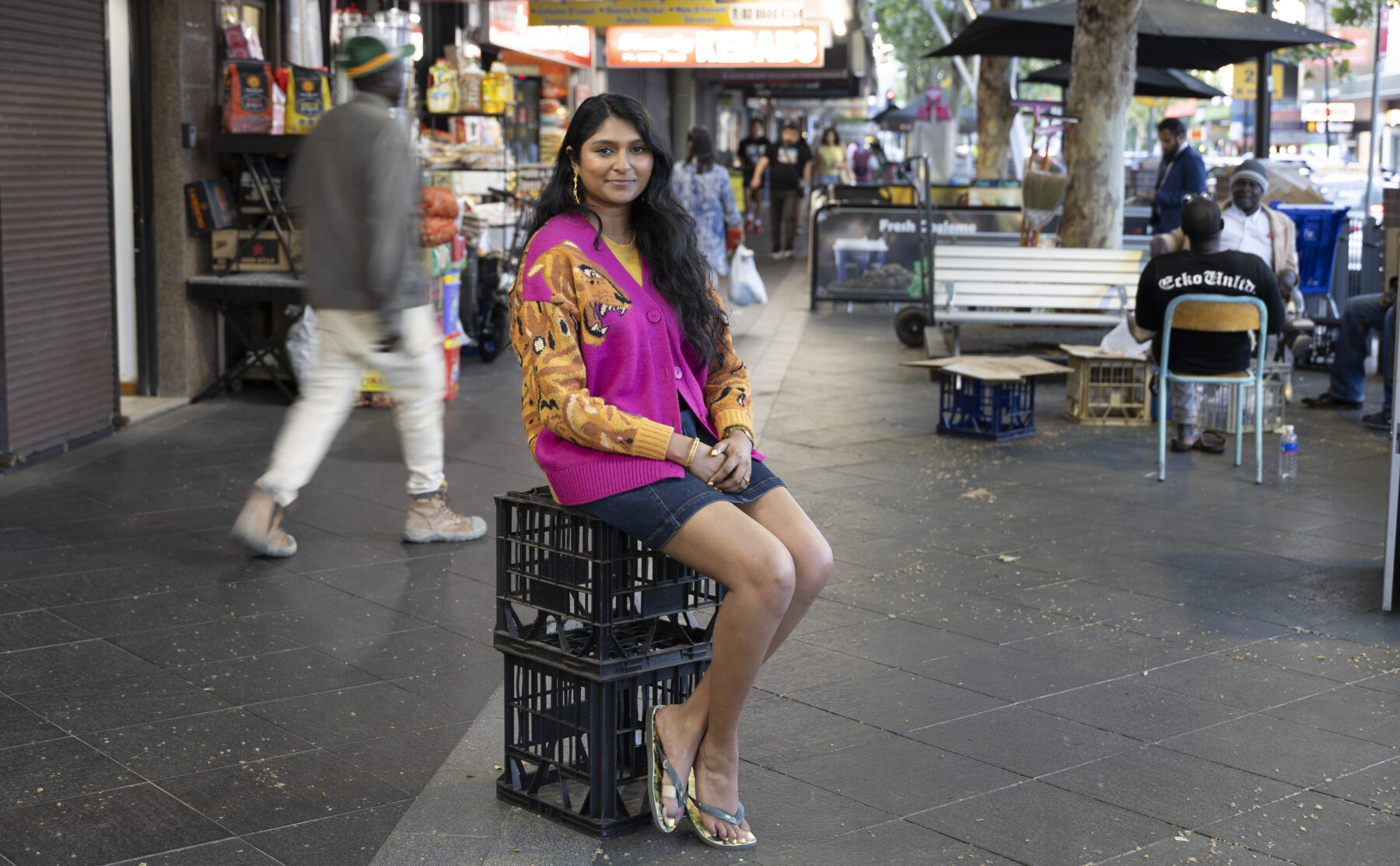
For Grace Vegesana, the seeds of activism were sown long before she joined a movement. As a child growing up in the western Sydney suburb of Blacktown, she noticed how the world felt different depending on where you stood. Summer heat was harsher out west, public transport less forgiving, outdoor workers more exposed. She didn’t yet know the terms ‘climate crisis’ or ‘environmental justice’, but she could sense something in the air around her.
High school did little to answer her questions. Climate change appeared only once in her curriculum – a 20-minute aside in Year 9 science class that left her unsettled. The silence that followed pushed her to dig deeper, learning from books and online communities. Slowly, she pieced together an understanding that would guide her adult life: the people most vulnerable to climate change are rarely those responsible for it.
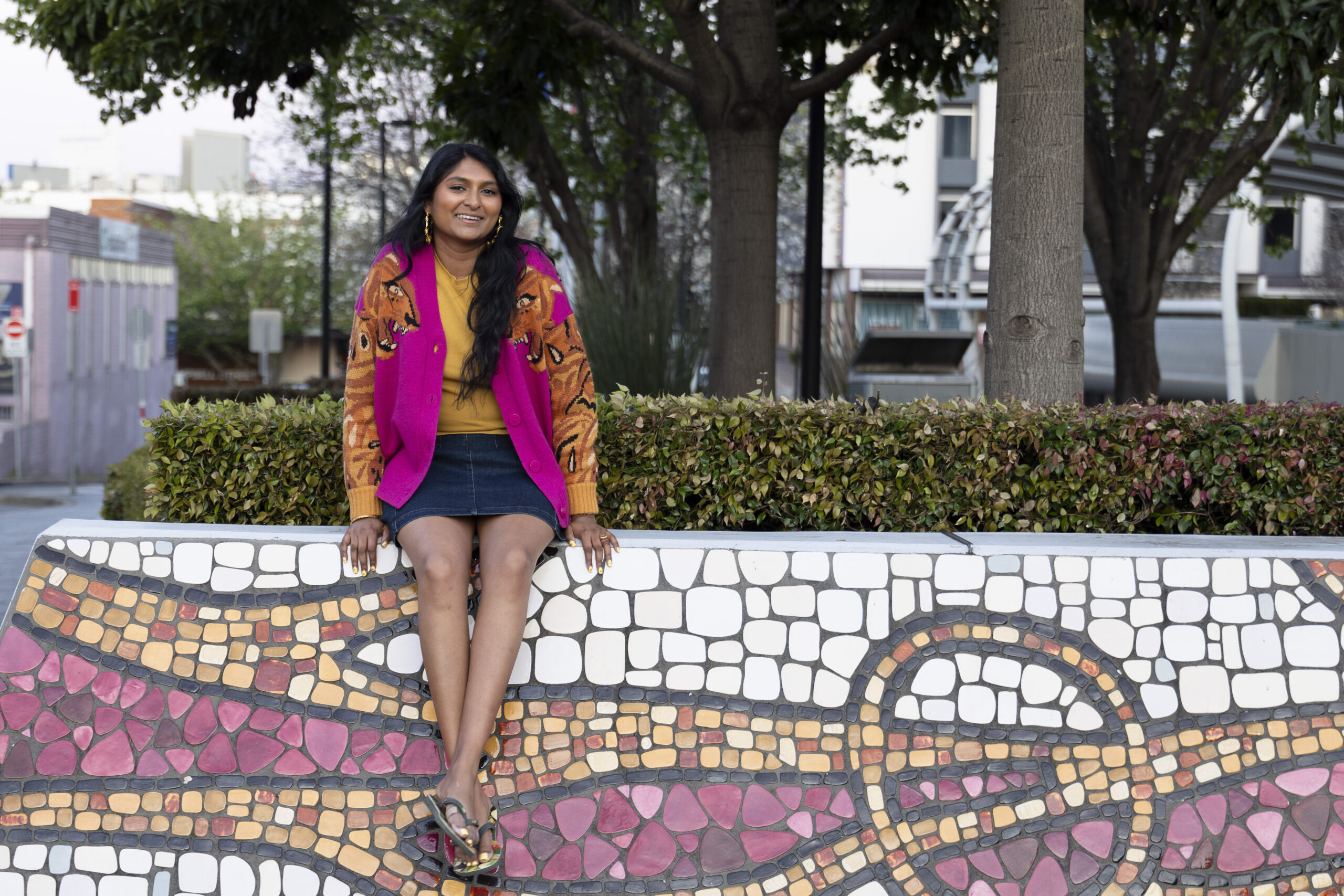
By the time she finished her HSC at Girraween High, Grace was primed for action. She found her way to the Australian Youth Climate Coalition (AYCC), the world’s longest-running youth climate organisation. That first gathering with other young people made her realise change comes from collective effort. It set her on a path of mentoring and movement-building that has carried her from her upbringing in Sydney’s west to the frontlines of national campaigns as the AYCC’s National Director – all by the age of 25.
Book lover
Grace and her family – mum, dad, two older sisters – emigrated from Botswana to Australia when she was 3 years old, settling in Blacktown. Her parents worked for Post Offices, where as a young girl she’d sit out the back stamping letters and postcards before they were mailed. When she wasn’t at a post office, she was at Blacktown’s Max Webber Library, devouring books and taking part in free children’s activities. The library was a heat refuge for her, and a critical third space in the community for her parents and family friends who needed to work but couldn’t afford childcare.
She fondly recalls learning to ride her bike by bombing it down the street as older kids egged her on, sitting on the curb afterwards eating No Frills icy poles from Franklins, and walking home from Tyndale Christian School in the summer, a cricket kit slung over her shoulder as her black school shoes adhered to the bitumen on 40°C days. But it’s a train ride with her family to the CBD that sticks in her memory as the first moment on her journey to activism.
“It was one of those terrible old leather-lined Sydney trains. You get on the train, and it’s so hot, and then you get off in the city – wax yourself off the seat as you stand up because you’ve sweated through the leather and your legs are stuck. It must have been Central or Wynyard. And it just felt distinctively colder,” Grace says. “I remember thinking, ‘Huh. That’s weird.’ From there it was just this realisation and noticing of patterns in my life of systemic differences in how western Sydney and the rest of Sydney was experiencing environmental change.
“Then fast forward to this period in Year 9, and climate change is mentioned for the first and last time in my entire school curriculum. My science teacher was like, ‘There’s this thing called global warming. It’s caused by greenhouse gases and it’s pretty bad.’ And then we moved swiftly along.
“And I was like, ‘Wait, what do – what do you mean?’ I’ve just heard this 20-minute end-of-the-world segment from my science teacher, and then we never talked about it again. I remember thinking, ‘Um, well, I’m concerned. I don’t know about you, but I think maybe we should look into that…’”
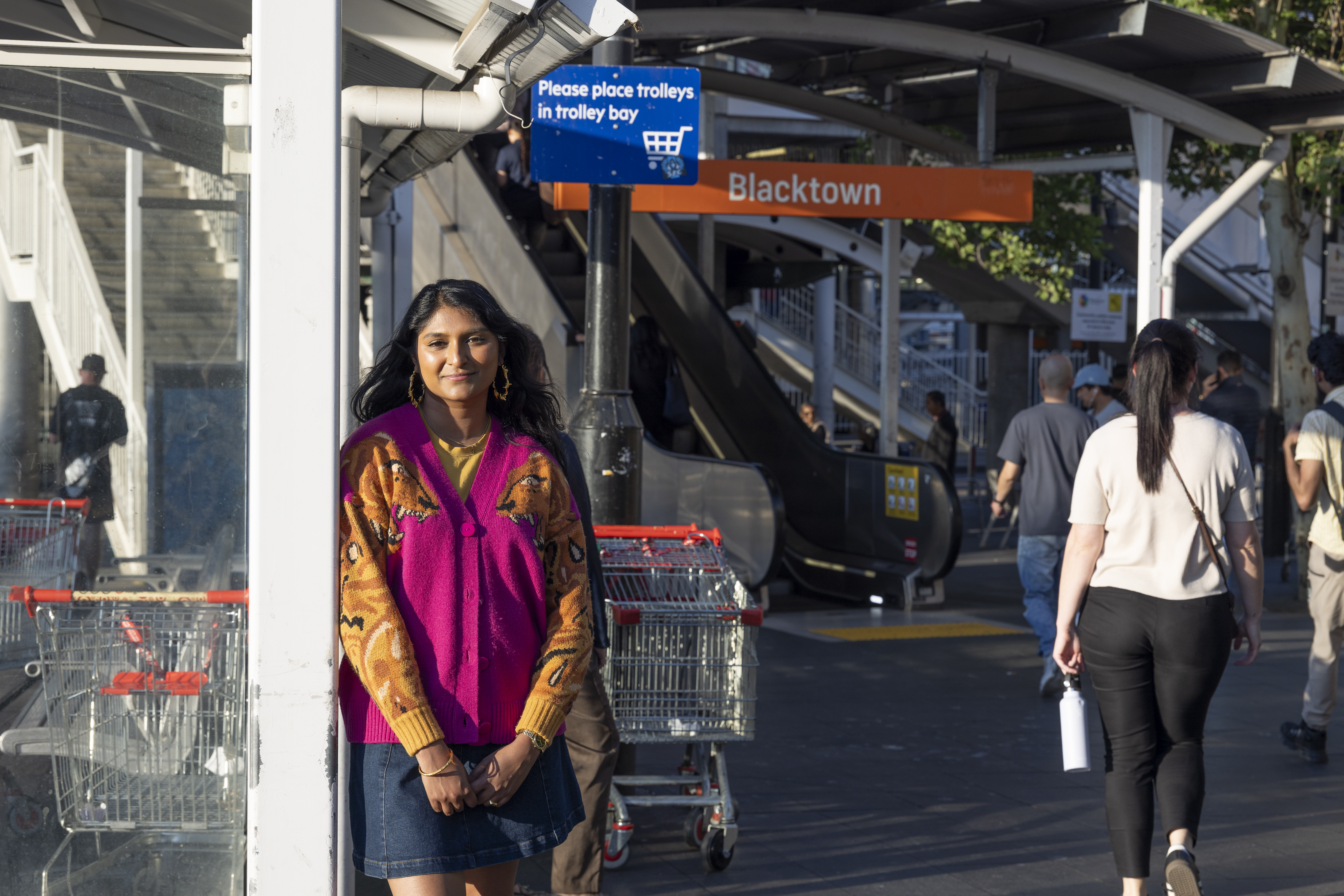
Climate literacy built slowly from there. She spent time googling, reading books, watching documentaries. The AYCC website was one of the resources she found. “It was the first result of all my googling that named the root causes of the problem and explained how young people can create change on something that feels so enormous. I signed up literally immediately,” Grace says.
Just days after finishing her HSC, she went along to her first AYCC event: the 2017 NSW Training Camp at Kings Cross Community Centre. It covered everything from an intro to climate science and climate justice to workshops on community organising, how to use social media for good, how to organise events, and how to support other young people feeling the weight of climate change. Suddenly, she’d discovered her purpose.
“The AYCC has been running training weekends like that every year for 18 years in every state and territory. I’m a big believer in those events’ ability to change lives, because mine is just one story out of tens of thousands,” Grace says. “It was genuinely the first opportunity I’d ever had to be in a room full of young people where you can be yourself, bring your own experiences, be in a space of learning and unlearning the climate crisis and what we know about the world. That was my introduction to social movements and theories of change that revolve around collective power, and I’ve never really looked back.”
Frontline leader
Established in 2006, the AYCC has grown into the world’s longest-running youth-led climate organisation. All volunteers and staff are under the age of 30, and 80 per cent of its board must be under 35 as well. Now 18 years old, the organisation has sustained wave after wave of youth leadership, building a generation-wide movement determined to act.
That action takes many different forms. It could mean frontline campaigns, like those targeting the Adani coalmine in Queensland or fracking in the Northern Territory. At other times it meant supporting the ‘Repower’ initiative, which aimed to help transition 15 schools in western Sydney to solar power. Or it could be helping build the global School Strike for Climate movement, facilitating climate conversations in federal election lead-ups, or simply helping run events like the one she first attended in Kings Cross. Grace has since run hundreds of AYCC training events and personally mentored thousands of other young Australians.
“We’ve sustained action for generation after generation. It’s not just something that existed for Millennials back in 2006,” Grace says. “The organisation has evolved and adapted to meet young people and new generations as they emerge, whether it’s Millennials, younger Millennials, older Gen Z, middle Gen Z, younger Gen Z, and eventually Gen Alpha. AYCC is an ever-evolving beast that seeks to serve the young people it exists for.”

In 2009, Grace was 9 years old and social media was in its infancy. The world was discovering the power of these platforms to spread a message, but perhaps not fully aware of the challenges that came along with them. “The early phases of the AYCC were deeply chaotic and very funny. We’re talking thousand-person flash mobs, coordinated by So You Think You Can Dance? on the steps of the Opera House in 2009. Very different vibes,” Grace says. “But the world has changed and evolved, and AYCC has too. We’ve become an organisation that focuses on peer-to-peer support and learning.”
While she has been involved with the organisation since 2017, her most transformative moment was in 2019, in Canberra, when she took part in a Parliament House foyer sit-in. It was a Water is Life gathering in opposition to NT fracking, and the AYCC attended alongside Seed Mob, an organisation for Aboriginal and Torres Strait Islander young people, and First Nations Elders. The sit-in gained national and eventually worldwide attention. Leonardo DiCaprio even posted a photo of it on his Instagram.
“I remember feeling scared at first and worried about what this looked like. I’d seen photos on social media of actions like these, and I thought they were so incredibly powerful, but I couldn’t ever imagine myself doing that. That’s not me,” Grace says. “But I went along and we staged what would be one of the longest ever Parliament House sit-ins. It was entirely led by First Nations Elders and communities who’ve been staunchly leading these fights and resisting the climate crisis for so long. And I think it just completely transformed my perception of how you can create change. I began to deeply believe and was soon leading conversations in my community, in western Sydney and in NSW.”
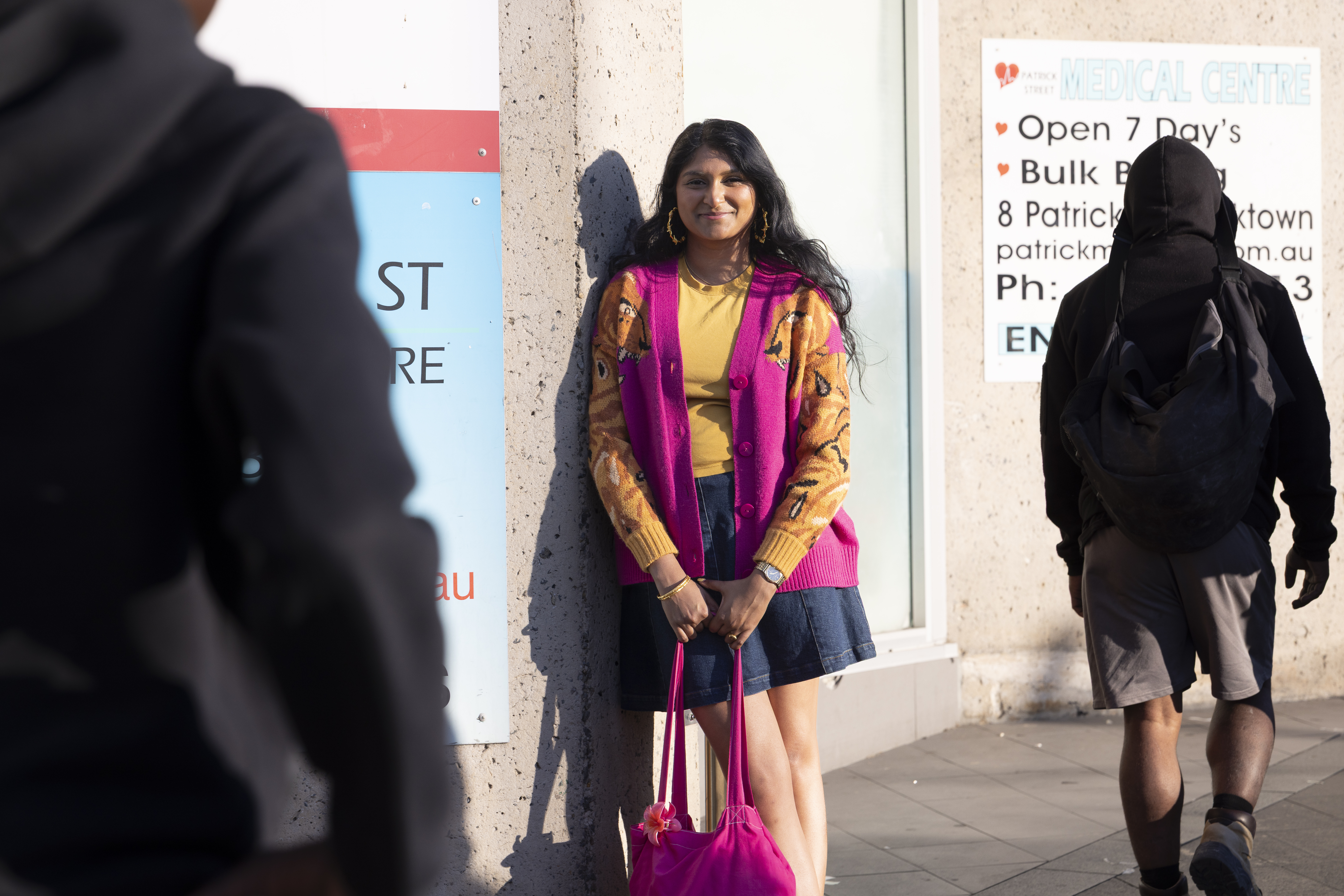
While completing a Bachelor of Environment and Bachelor of Law, Environmental Management & Geophysics and Natural Disaster Preparedness at Macquarie University, Grace’s role with the AYCC grew. She went from NSW state coordinator and western Sydney organiser to Climate & Racial Justice Director and, as of 2024, National Director. But that day in Canberra sticks with her.
“I met some of my best friends and even my bridesmaids through that action. It solidified so many of the beliefs I had in who should be leading, and what leadership looks like,” Grace says. “I think throwing yourself into that discomfort zone can be a really great growth and learning opportunity for a young person. I know when I first joined AYCC eight years ago, I was also a young person searching for answers and ways to make a difference.”
Grace is closer to the end of her time at the AYCC than the start. In a few years she’ll be 30, and a new generation of young Aussies will take the reins. But that’s all part of the movement’s design. “I take a lot of pride in being able to pay it forward,” Grace says. “I’ve received so much from this organisation, from this movement, and the generations of young people who came before me who invested in me and my generation. Now, I want to make sure we’re doing the best we can to prepare the next generation to continue this fight. Because it’s not going anywhere, and I think it’s our generation’s legacy to give it our best crack to stop it.”