No concrete evidence to support common Aussie myth

Tim the Yowie Man
Tim the Yowie Man

This is one of Australia’s most common myths. There’s hardly a bridge or dam more than 100 years old that, according to local legend, doesn’t have the remains of at least one construction worker buried in
its foundations.
I refer to these as ‘myths’ because in most cases that’s exactly what they are.
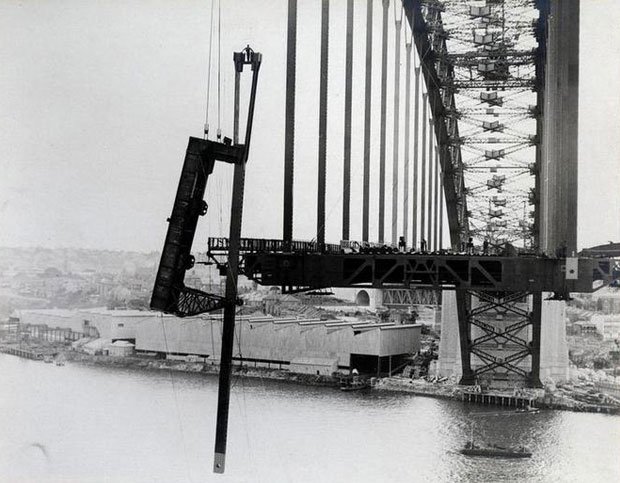
Consider the Sydney Harbour Bridge. Last time I pulled up a bar stool at a pub in the inner-city suburb of The Rocks, the bartender told me, “When three workers accidentally fell into the south-east pylon during a concrete pour, their bodies were too difficult to retrieve and remain there to this day.” Sound far-fetched?
Well, according to the official records, 16 workers were killed during the bridge’s construction – but none were entombed in concrete. Another drink, please!
One reason these myths are so widespread is that, before modern-day safety standards, tragic accidents were common occurrences at major construction sites. However, most of these deaths involved heavy machinery or falls – not a worker toppling headfirst into a cylinder of wet concrete, never
to be seen again.
But it’s not just our most famous bridge that’s subject to this popular myth. It’s also entrenched in the folklore of lesser-known bridges.
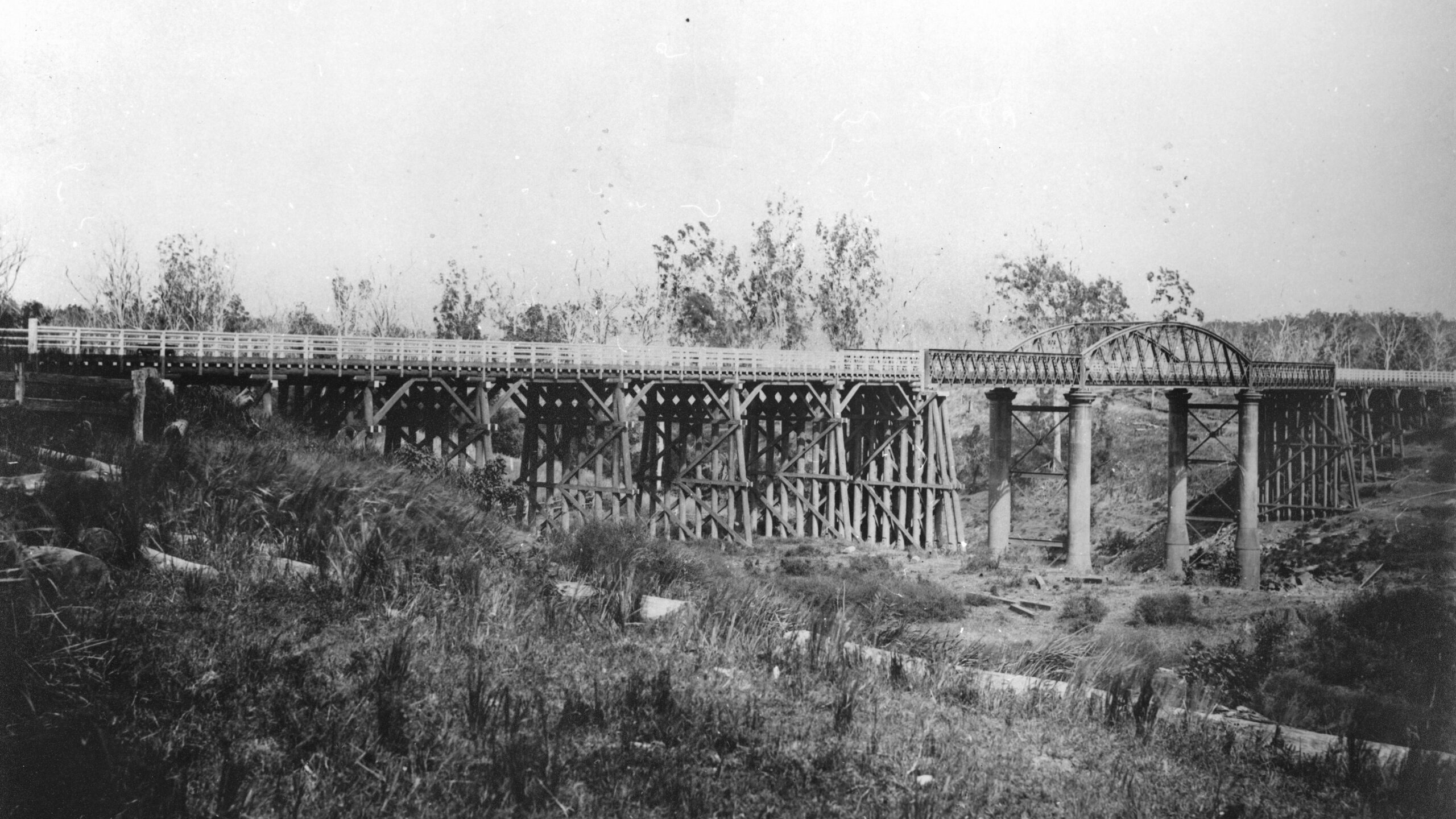
Take Queensland’s Dickabram Bridge, for example. This 200m-long road-rail bridge – the oldest in the state – spans the Mary River at Miva, about 40km north-west of Gympie in south-east Queensland.
If you believe the story printed on the history board overlooking the bridge, during its construction in 1886 a workman slipped and fell into the bottom of the pylon while wheeling a barrow of wet cement towards a cast-iron cylinder. Several loads of wet concrete were poured on top of him before other workers realised what had happened. He was left entombed in concrete. Sound familiar?
“I first heard the story when I was a kid, and it’s been bandied about ever since,” says Will Nahrung, a local who has lived just a stone’s throw from Dickabram Bridge for 88 years. “It’s probable, but I guess nobody really knows for sure.”
According to reports in regional newspaper archives, two workmen died at the site during the construction of Dickabram Bridge.
One man, Thomas Megann, drowned in 1885, and another, Thomas Lee, fell through the deck while drunk in July 1886. But surprise, surprise – there’s no mention of the missing man and his wayward wheelbarrow.
Surely, if a workman really was accidentally encased in concrete, the local (and national) press would have pounced on such a sensational story. But zippo. Nothing.
It doesn’t mean it didn’t happen. For some inexplicable reason, it simply may not have been reported at the time or, heaven forbid, was hushed up.
But given how entrenched similar stories are in our national folklore – it’s also a common urban legend in other countries – I bet that if the pylon in question was demolished, no human remains would be found inside.
Don’t try telling that to a handful of long-time locals, though, who claim the downstream pylon on the eastern side of the river is “partially hollow where the man was supposedly entombed”.
Oh, and not to mention the tales told by locals who, while dangling a line for cod on cold winter nights, occasionally hear ghostly “tapping” and “moaning” coming from the same pylon.
Of course, it may just be the timbers and steel in the ageing bridge contracting and expanding with temperature changes.
But hey, don’t let the facts get in the way of a good story.