‘They got the lot!’: Australia’s biggest-ever bank heist

Tim the Yowie Man
Tim the Yowie Man
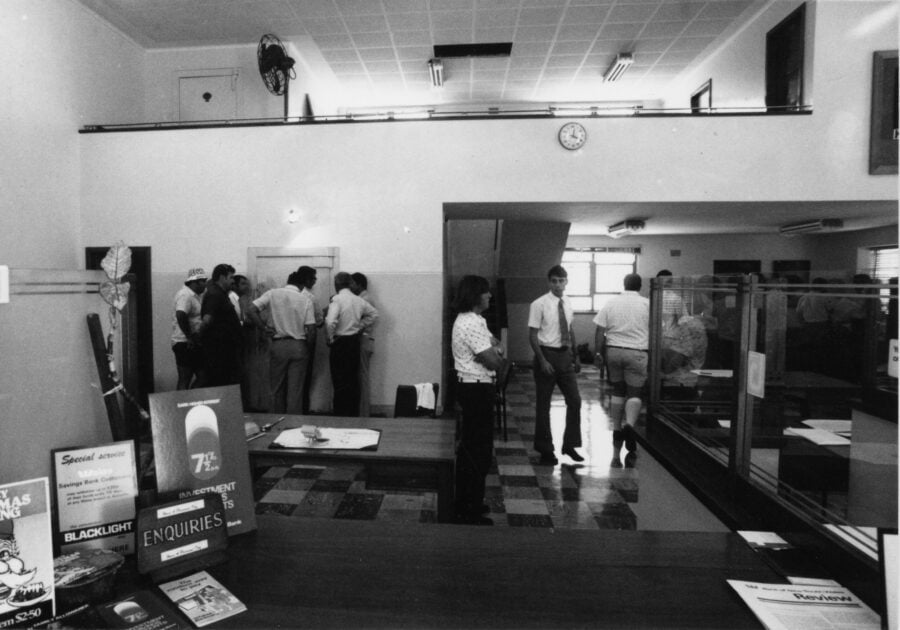
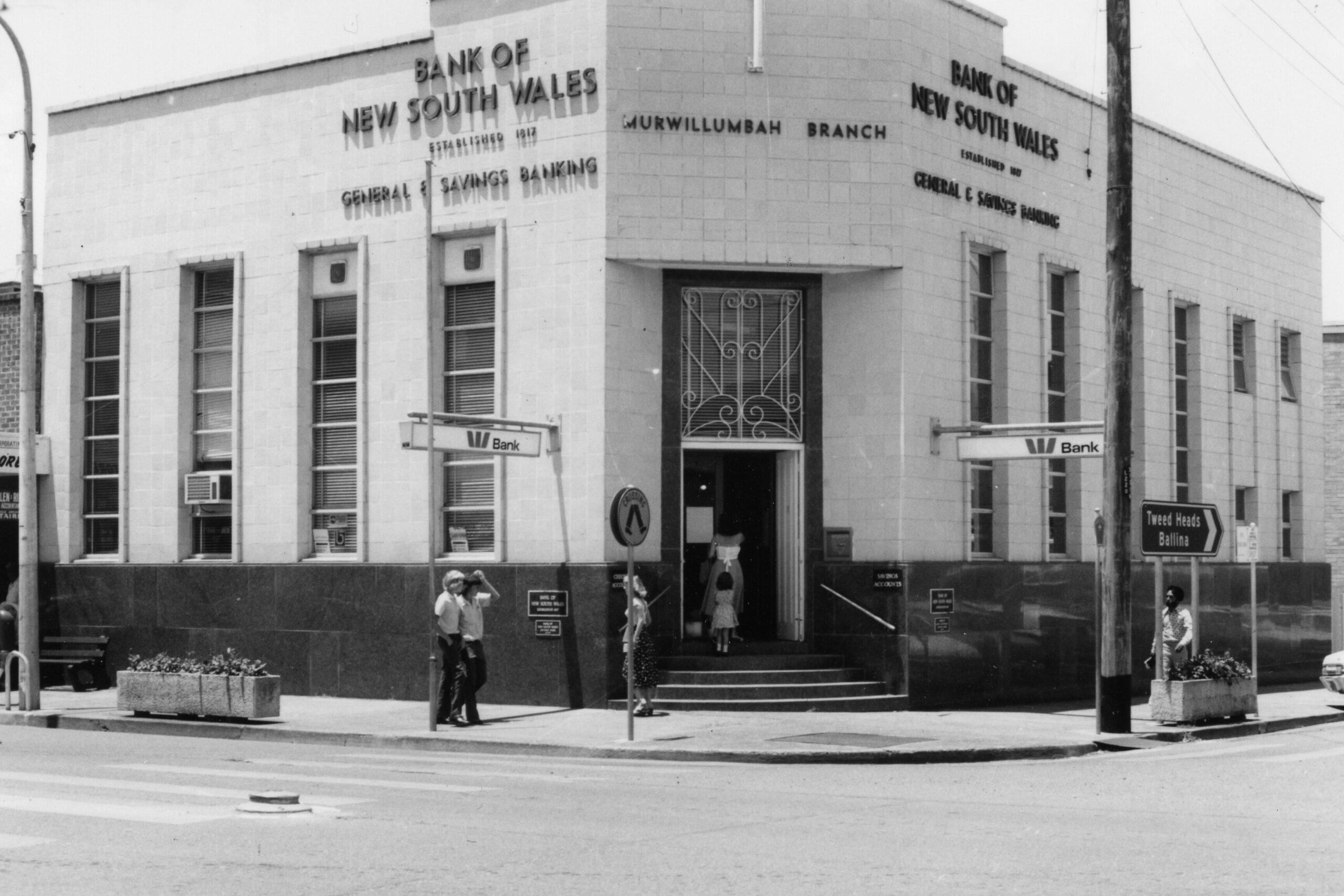
Overnight, their sleepy town had earned a most unwanted claim to fame: the location of Australia’s biggest-ever bank robbery.
Earlier that morning, a security guard noticed a rear door ajar at the Bank of NSW (now Westpac). When he ventured inside, it was clear there had been a robbery because the dials of the vault had been removed and spiked, but its door was firmly locked.
He immediately raised the alarm, but as much as he tried, he couldn’t access the vault. Local locksmiths and security experts from Brisbane raced to the scene and attempted to open the door to find out just how much had been stolen. All failed.
After nine hours hacking away at the vault door with a sledgehammer, a jackhammer and oxyacetylene cutting equipment, a team of council workers eventually broke through.
As the NSW Police chief inspector squeezed through the hole and into the vault, the growing crowd of bank staff and security experts held their breath. When he reappeared, he exclaimed, “They got the lot!”
The perpetrators had used an electromagnetic diamond-tipped drill to crack open the safe, a task that would have taken at least several hours to complete in the dead of the night.
The robbery was dubbed the perfect crime, because the thieves left no trace and no-one was hurt. What’s more, the cash – about $2 million, mainly comprising $50 notes, which is more than $12 million in today’s money – was untraceable. What a haul.
Before they left, the thieves had intentionally jammed the safe closed by removing two combination lock dials and the handle. Ironically, the town’s police station was within clear sight of the bank – just 100m away. But no-one, including the constables on night duty, heard or saw anything.
Of course, everyone had their theories. Because the robbery went so smoothly, many believed it was an inside job, or that there was at least a local informant who was heavily involved. Others speculated that it was the same ‘magnetic drill gang’ that had previously pulled off similar heists in Sydney and Melbourne.
They had probably boarded aeroplanes to the other side of the country – or perhaps the world – well before the safe was prised open. A hastily formed unit of 20 crack detectives brought in from all over Australia, and a $250,000 reward, failed to result in any significant leads.
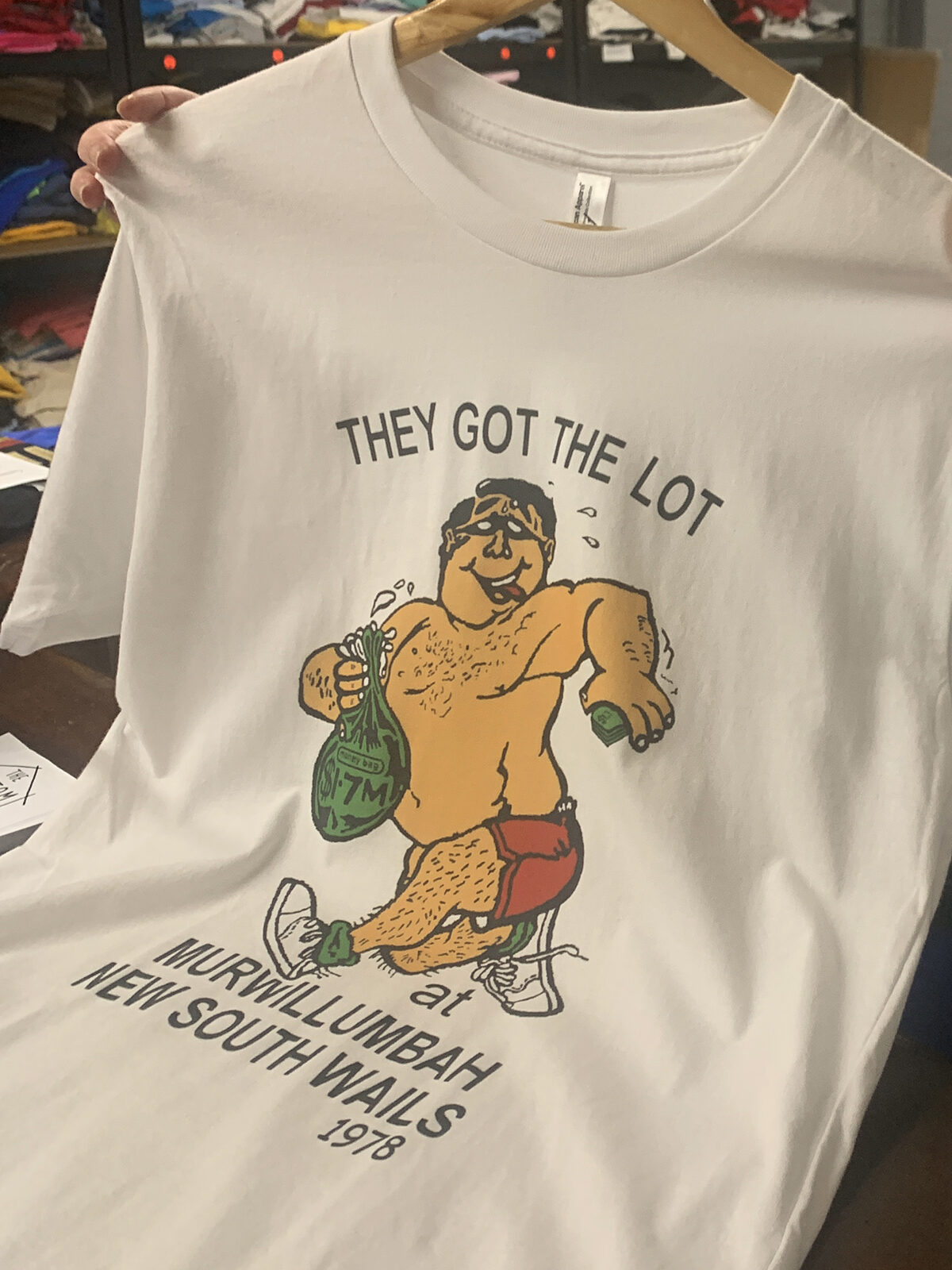
Although bank officials and police were left red-faced and clutching at straws, some locals embraced the brazen nature of the robbery. Within a week, one enterprising businessman was peddling T-shirts with ‘They Got the Lot’ plastered all over them. Incredibly, almost 50 years on, you can still buy these shirts from at least one shop in Murwillumbah’s main street.
The audacious raid also inspired Australian country band Bullamakanka to write and record a song called ‘Murwillumbah Bank Job’.
Although the case has been reviewed on several occasions, and despite a seasoned criminal claiming in 2022 that he was the mastermind behind the robbery, no charges have been laid. The culprits have never been found.
Oh, and neither has the cash.