Garmin fēnix® 8 AMOLED: Tested
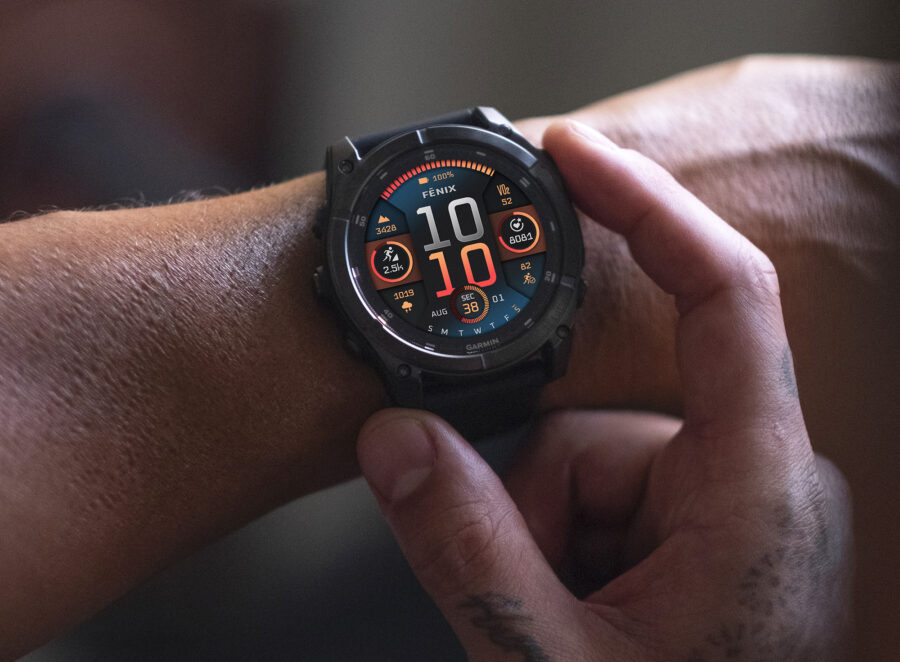
The old cliché of “It’s hard to improve on perfection” was one thing I always attached to my favourite-ever GPS sportswatch, a fēnix® 6 Sapphire, that I have owned for a number of years now, after updating from previous fēnix® watches (my first being a fēnix® 2). The fēnix® 6, when released in 2019, was a huge leap forward in terms of outdoor fitness/adventure wearables and did (and still does) all I’ve required of it. The long battery life, extensive fitness and health data and outright toughness have seen this smartwatch recording my rise (and fall) in fitness levels reliably for the six years since I purchased it. So, I surprised myself when I said ‘yes’ to Garmin Australia’s offer to test the brand’s latest – the fēnix® 8 AMOLED – while riding in the famous BC Bike Race, a seven-day mountain bike stage race in Canada’s British Columbia.
I was, at that point, happy enough to take my fēnix® 6 Sapphire, but this all-singing, all-dancing new model, complete with its very bright and colourful AMOLED screen, plus a raft of other new features, piqued my interest. Yes, there was a tiny bit of doubt in my mind as to how quickly I could familiarise myself with the new unit but, as it turned out, there was nothing to worry about, and plenty to be impressed with.
Design
The fēnix® 8 is available in two variants: the AMOLED display modes (as tested here) and a solar-powered model, which utilises a MIP (Memory-in-Pixel) display. This display type is more energy efficient than the AMOLED as it does not emit its own light, but rather relies on ambient light for its illumination, thus not drawing extra from the watch battery. A MIP-equipped watch does mean, however, that you need to turn the light option on when in low light, to see the display. All fēnix® models, up until the release of this new 8, used MIP displays.
The AMOLED display is very bright – and colourful as a result – but it’s just one of many new design elements in this latest version of the fēnix®. The AMOLED version is available in three face sizes (43mm, 47mm, and 51mm), while the two solar models sit at 47mm and 51mm. New features include a depth gauge (and other dive functions, along with a maximum depth capacity of 40 metres), a microphone and speaker (for phone calls, plus you can record audio notes – a handy feature for us outdoor scribes), and a revised (leakproof) button design, borrowed from Garmin’s Descent dive watch, along with that watch’s dive-focused functionality (including a 40m dive rating and myriad other Descent features). Add in the optical heart rate sensor carried over from fēnix® 7, the usual raft of health and fitness data features that Garmin has excelled at for many years, and backward compatibility with relevant accessories, and it’s an impressive piece of kit.
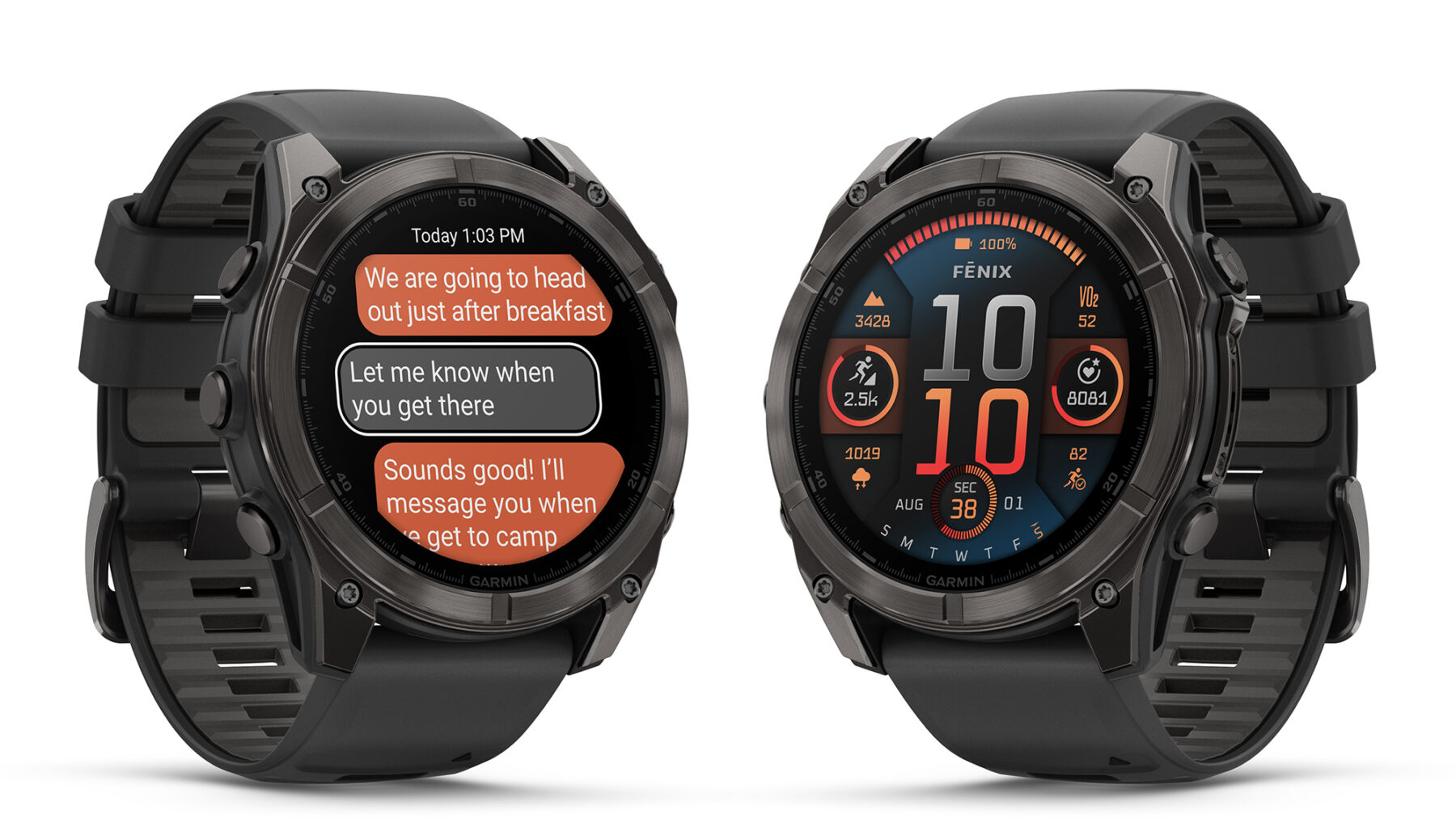
The button layout for the fēnix® 8 AMOLED is similar to previous-gen fēnix®, with five buttons (three on the left side; two on the right) and a touchscreen. As per previous models, the fēnix® 8 allows plenty of watch face customisation, via the excellent Connect IQ app. Claimed battery life is reflected in each variant’s size, with the 43mm offering up to 10 days, the 47mm up to 16, and the big bopper 51mm claims up to 29 days of battery life when used in ‘smartwatch mode’, which allows full use of all features. This claimed battery life can be extended by switching to ‘battery saver or ‘GPS Only’ modes, with a corresponding drop in features you can access in those respective modes.
Speaking of features, the screen will now display your top three activities, effectively ‘pinning’ them to the top of the watch screen for easy access. Once you click on your activity (other less frequently used activities are accessed by clicking sideways/across the screen to a four-dot display, which then opens the rest of the activities menu). The activities covered by the watch are extensive – and the data is incredibly in-depth, so much so that it can be overwhelming (for a full rundown, check out Garmin Australia). At the same time, for those who love digging deep into their fitness and health figures, nothing comes close to the breadth of available on this fēnix® 8. Don’t be put off, though, as all those features, and the resultant data collected, are very easy to access – even for us less tech-oriented users. And yes, that’d be me…
In the field with the Garmin fēnix® 8
If I was after a stern test of the fēnix® 8, the BC Bike Race certainly delivered; riding for four to five hours each day, on challenging MTB trails, in dusty, hot conditions (yep, not very BC-like!) with constant jarring and vibrations transferred from the bike’s handlebars to my hands and wrist, certainly left nothing in terms of a durability test.
I had my screen setup displaying time, heart rate, distance and elevation (yes, there was loads of climbing), and had set up the watch to sync directly to my Strava account as well (the sync process was simple). After setup, it was just a case of pressing ‘go’ for data collection on each day’s stage; that simplicity of operation when recording an activity is what I have always loved with my various Garmin smartwatches.
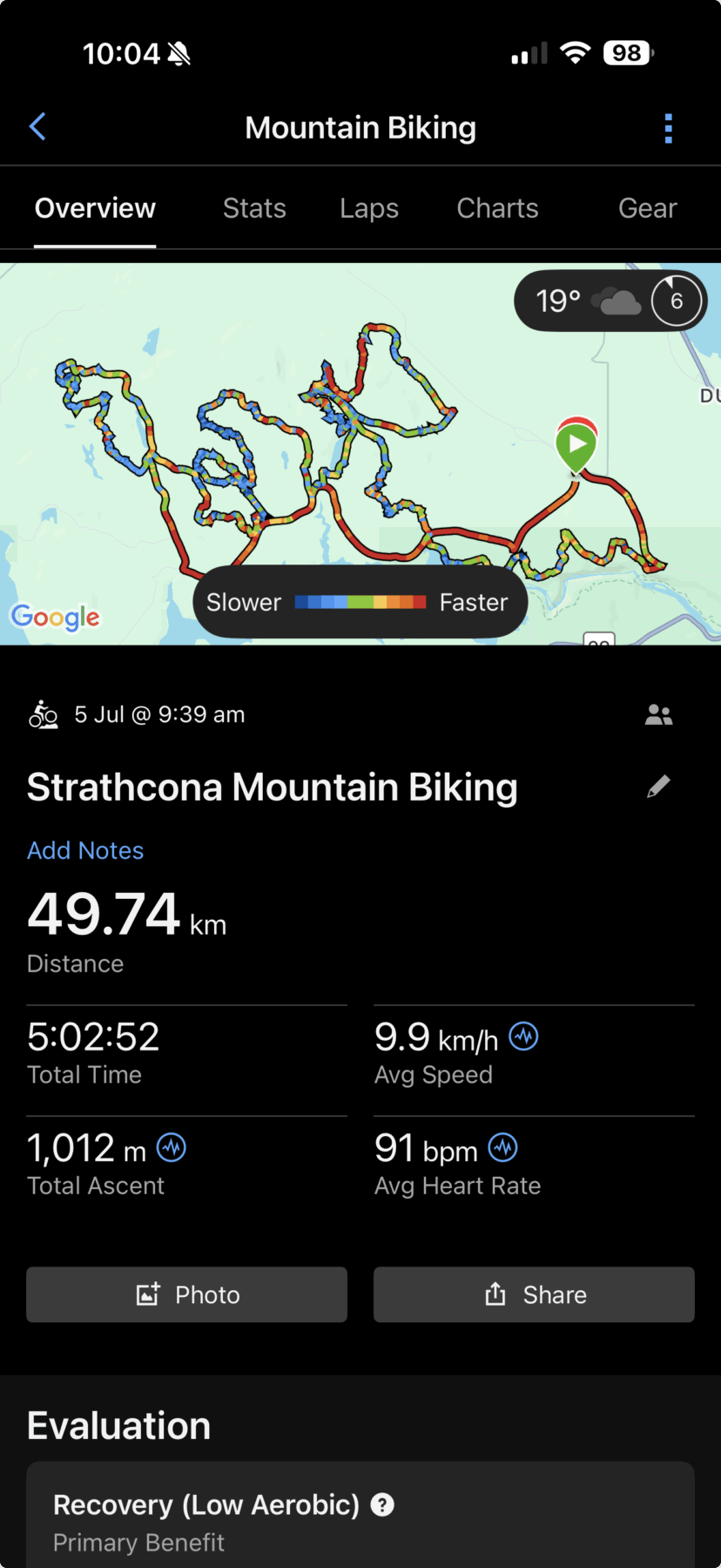
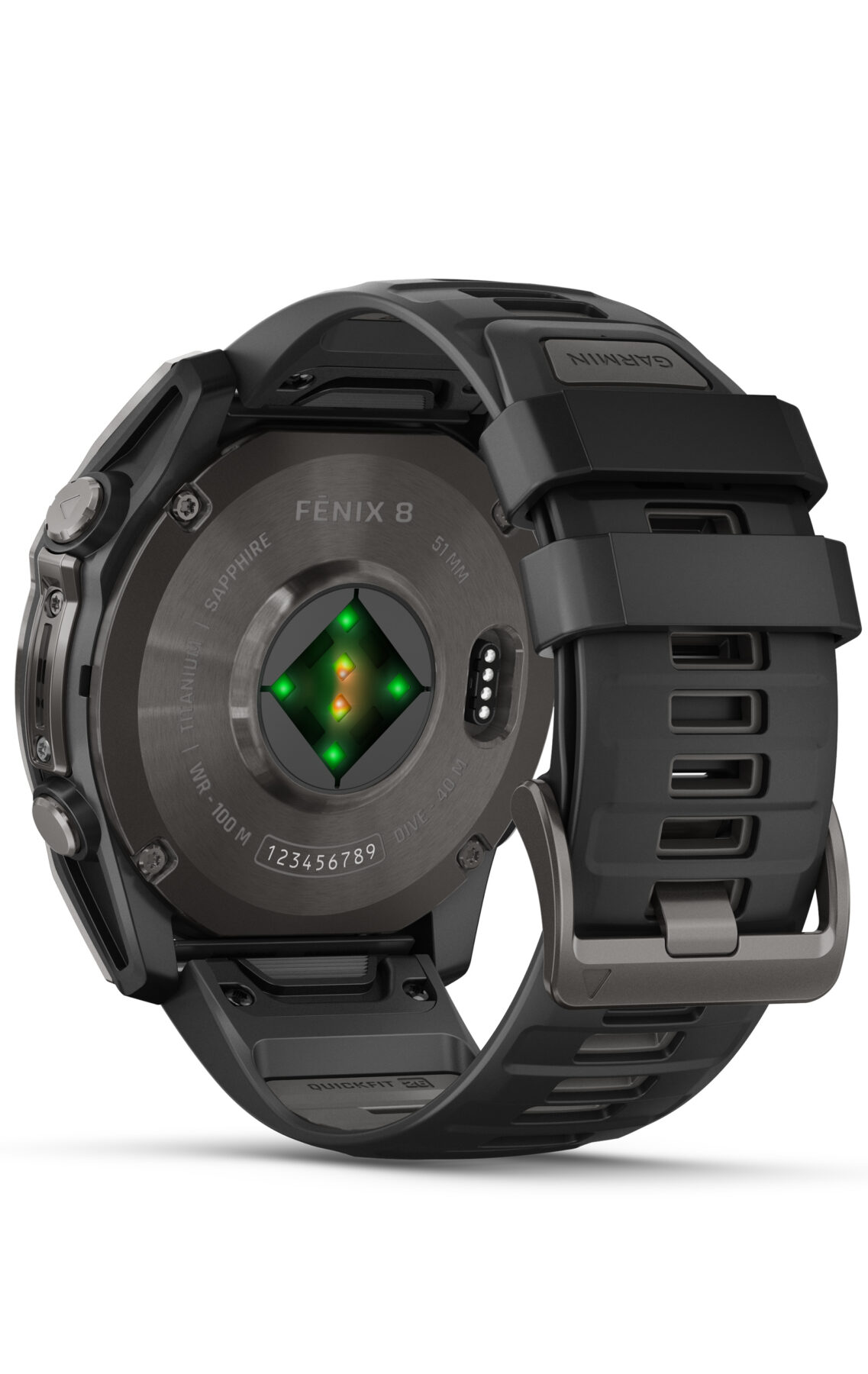
Over the seven days of riding, with each day averaging between four and five hours, the fēnix® 8 did not miss a beat (excuse the heart-related pun). For this tester, the standout was that AMOLED screen. Even in the brightest sunshine, the info on display was easy to see; the scary amount of climbing or my up/down heart rate were all easily discernible.
One other standout during testing – and something that is probably a more personal viewpoint – was the watch’s big buttons. It sounds odd, but being able to access menus and work through different data fields was far easier with physical buttons, rather than trying to swipe when wearing bike gloves. Even the thinnest glove fabric can stop a touchscreen from responding properly; the benefit of a physical press to easily click through to what you’re looking for cannot be understated – especially when wearing bike gloves.
The battery life impressed during testing; recharging during the BCBR was quick and easy, and I only had to do so once, mid-week, and still finished with a bit of juice left on the final, seventh, day (albeit a shorter 2.5-hour stage). This is all the more impressive considering I was not only recording each day’s stage but receiving text/phone messages daily as well.
The final word on the Garmin fēnix® 8 AMOLED
With its all-new display, key new phone/audio features, updated HR sensor, those tougher buttons and additional capabilities around diving, the Garmin fēnix® 8 AMOLED is an impressive continuation of the fēnix® nameplate. For this (still happy) owner of an earlier incarnation it still offers enough improvements in performance and build quality to consider upgrading to (and yes, it was hard to hand this test unit back). The only caveat is the asking price, which has increased significantly from when I stumped up for my fēnix® 6 a few years ago.
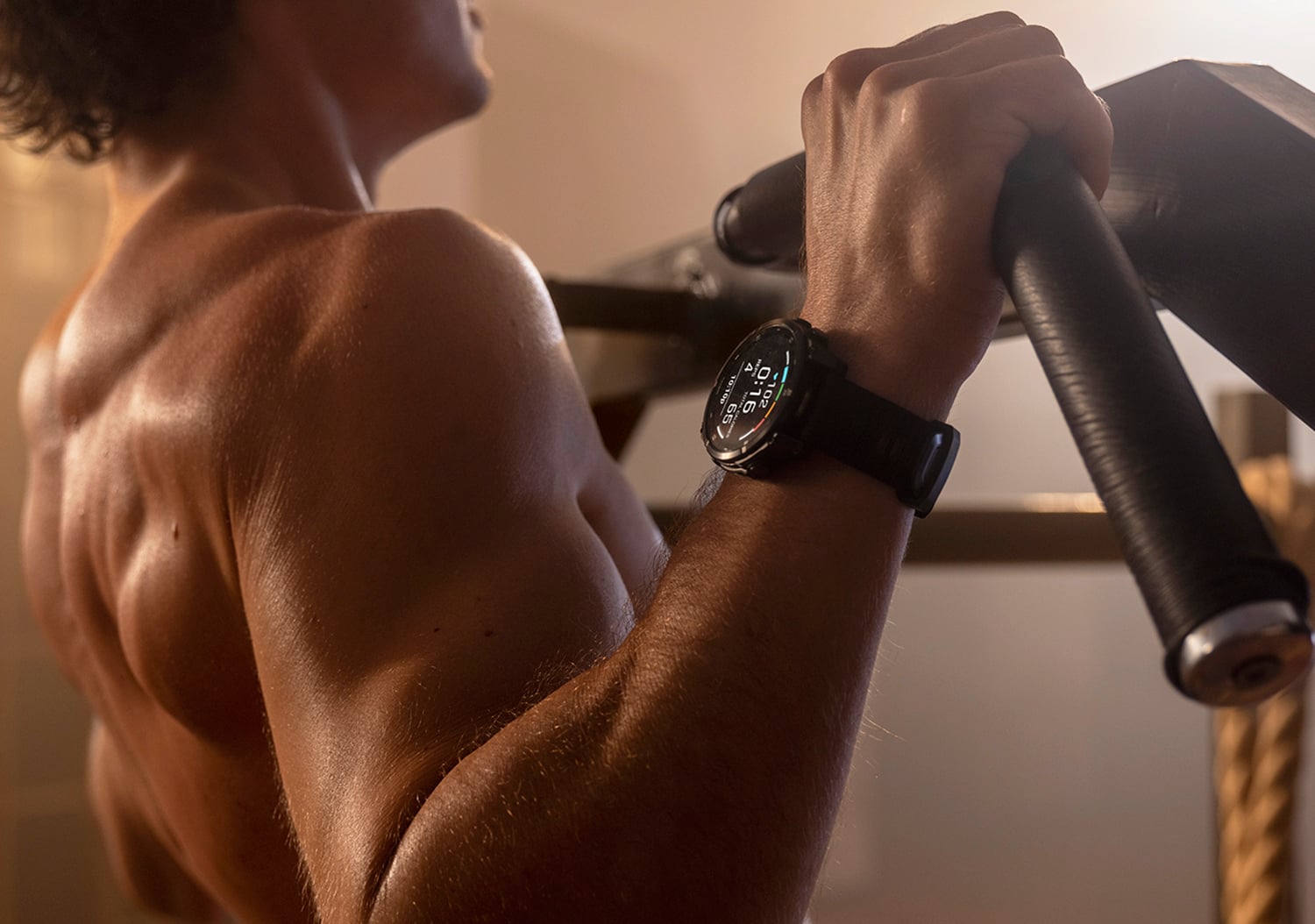
Nothing, of course, comes cheap – and least of all the overload of tech that’s been sandwiched into this smartwatch – but that decision will come down to the purchaser. However, for those happy to invest in what is close to what is the ‘ideal’, when we think of an outdoor/fitness smartwatch, the Garmin fēnix® 8 AMOLED presents a compelling case.
RRP: From $1699
See Garmin Australia for more info on this and the brand’s other smartwatch models.