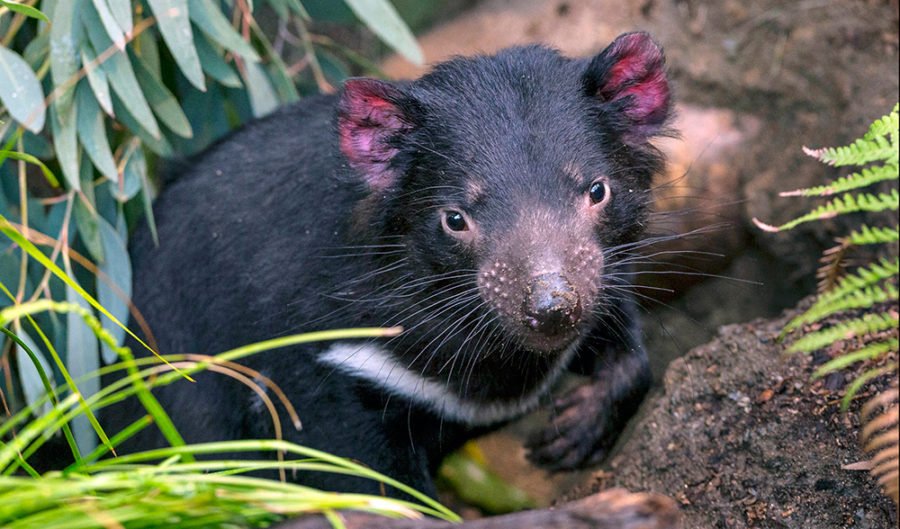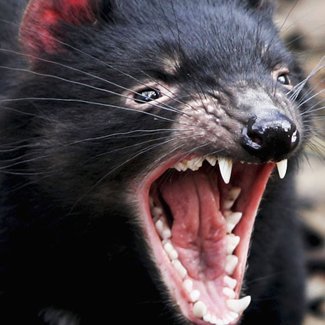
The iconic Tasmanian marsupial, the Tasmanian devil, is one of the most unique and most threatened Australian species. Prominent on the mainland 400 years ago, the species now survives in the wild only in Tasmania. Suffering mostly because of the Devil Facial Tumour Disease (DFTD) Tassie devils have lost over 60 percent of their population since the mid 1990’s. A 1994 estimate credited the species with having nearly 150,000 healthy animals. Since, studies have struggled to accurately measure the surviving animals but experts suggest a range between 20,000 and 50,000 individuals in the wild. Because the population is so connected on the island, the genetic make-up of all the individuals is very similar, making it very easy for DFTD to infect other animals. Simple altercations like a bite or scratch can spread the disease from one specimen to another making their genetic similarity a threat to the population’s survival. Being hit by cars and killed by humans for being a pest are also dangers to the population. Studies to make a vaccine for DFTD are now underway in an effort to help the declining numbers.
Photo Credit: Ken Bohn, San Diego Zoo/Getty Images
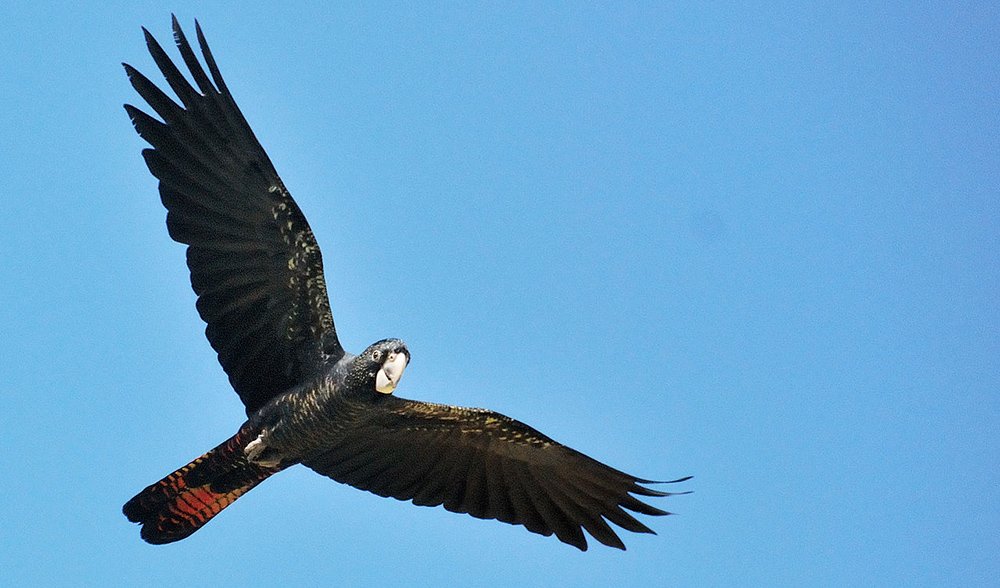
Often found screeching around the South Australian and Victorian skies, the red-tailed black cockatoo (south-eastern) is yet another endangered Australian bird. Known for its distinctly ebony plumage with a red band across its tail, this bird inhabits a very small areas of land that straddles the southern border of Victoria and South Australia. Population estimates are vague but have been in decline since 1989 when there were allegedly 500-1000 adult birds living in their very small habitat. It is estimated that it currently takes the red-tailed black-cockatoo (southeastern) 37 years to replace the adult breeding population entirely. They survive on a highly specific diet from the seeds of the desert and brown stringybark gums and are endangered by this dependency because of how localised these trees are. It is suspected that hundreds of years ago these birds interbred with other cockatoo species but because of encroaching desert boundaries they have become isolated to their immediate habitat. Pressured further by expanding agriculture, their food sources and nesting areas are being cleared, leaving these birds without nutrition or the opportunity for reproduction.
Photo Credit: Richard Fisher/Wikimedia
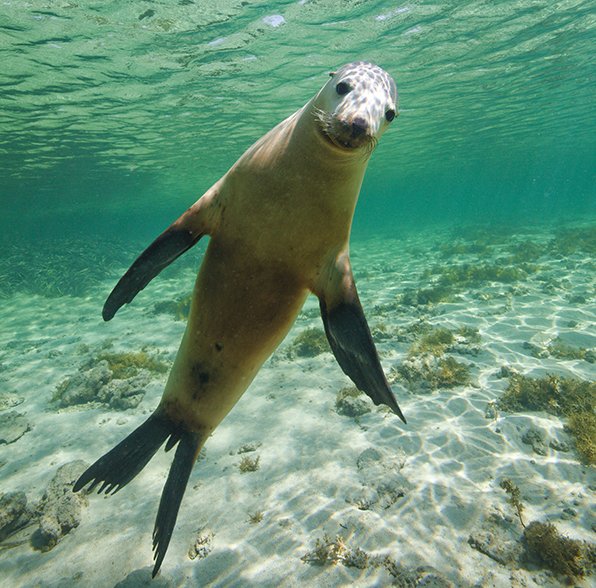
Amassing in colonies along the South Australian and Western Australian coastlines, the Australian sea lion was relentlessly hunted until the 1920s and the population has never recovered. Feeding most small marine animals from molluscs to crustaceans, cephalopods to fish, the sea lion controls the population of many animals in its ecosystem, making it another keystone species. Currently numbering between 9000 and 12,000 animals in various sub-colonies, the sea lion is struggling to build its population after human persecution at the beginning of the 20th century and has been stagnant since. The key issue for this species is the slow reproduction cycle and improbability of raising young. With nearly an 18 month breeding cycle, sea lion pups are endangered by large predators, fishing nets, lobster traps. Currently it’s estimated that 374 pups are removed from gillnets each breeding cycle and that within the first two years of life, 40-50 per cent of pups die. Pup mortality is further challenged by male sea lion which are extremely territorial and frequently kill pups. The Australian Sea Lion Management Strategy is currently monitoring the interaction between sea lions and gillnets and through this observation many fishing habits have been adjusted to protect sea lions.
Photo Credit: Darren Jew/Australian Geographic
Photo Credit: Terry Goss/Wikipedia
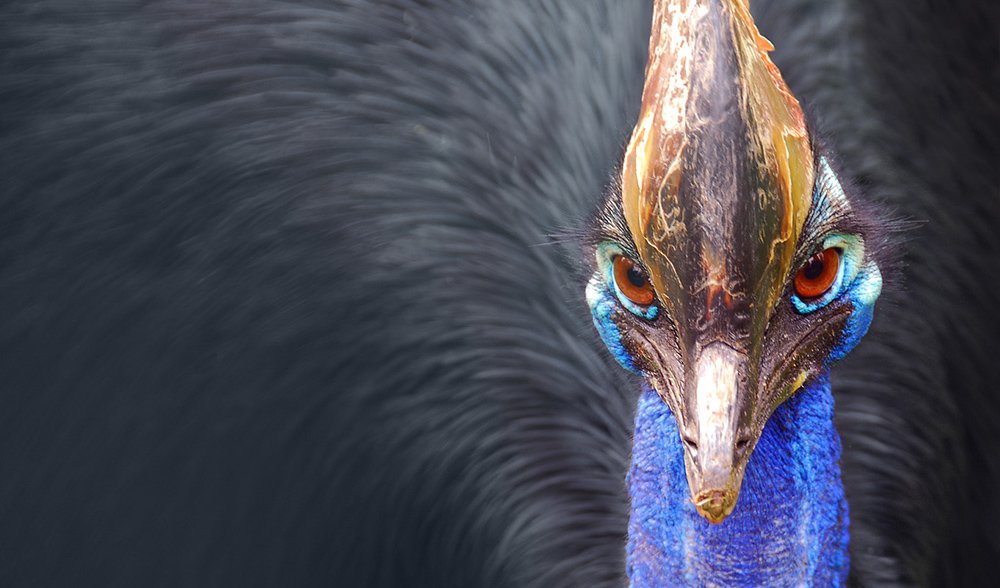
Standing a towering 1.8 metres tall, the southern cassowary stalks the northern Queensland rainforest and is responsible for transporting the seeds of more than 60 plant species around the Cape York Peninsula. While data is for this rare flightless bird is difficult to gather due to is shy and elusive nature, estimates show that the national population hovered around 2500 to 4000 breeding adults in 1988. Since, the population has more than halved with estimates of fewer than 1500 individuals existing in an official 2001 census. This drop in numbers is due to the cassowary’s need for approximately 300 square hectares of rainforest habitat for each individual and its inconsistent breeding habits. Both male and female birds initiate courtship laying an average of four eggs per nest but only one of these chicks usually survive to adulthood. After nine months of companionship with the father, the baby cassowaries are chased from the male’s territory to find their own area of rainforest. This is becoming increasingly difficult for young cassowaries because expanding farms are isolating the nine known cassowary subpopulations in northern Queensland.
Photo Credit: Paul IJsendoorn/Wikimedia/www.flickr.com/photos/ijsendoorn/379148971
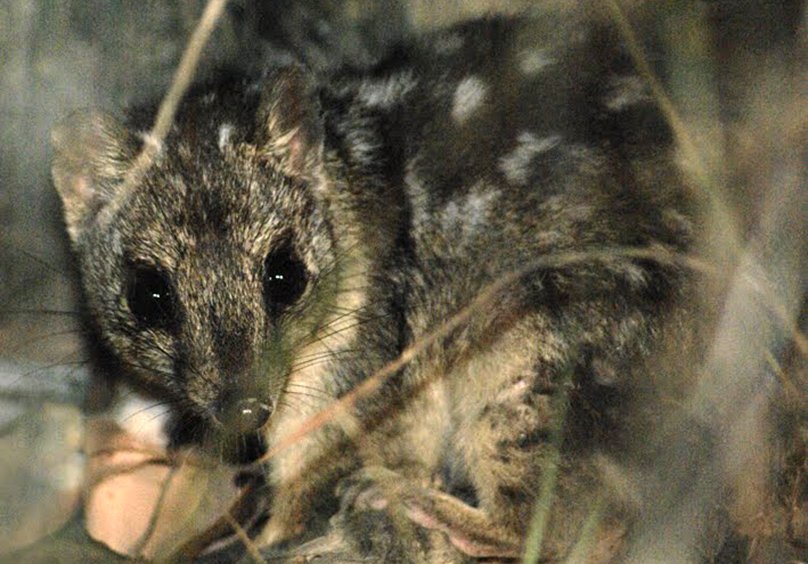
Inhabiting the northern half the country from the Pilbara to Brisbane, the northern quoll is coming under increasing population pressure. With five distinguished regional groups across their habitat, the northern quoll has secluded itself from breeding across these populations. With a life span of only one to three years and in reaching sexual maturity after 11 months, further pressure is added to the species by their infrequently successful reproductive cycle. As with other keystone species, the northern quoll hunts a wide range of prey from insects, frogs, 11 species of mammals, birds and reptiles, while also eating many plant species. Their consumption helps to maintain balance in their respective ecosystems. The quoll also consumes cane toads whose poison is lethal to the small marsupial and this is the prime threat to the species. The population of northern quolls has been reduced to 30-40 per cent of the original size prior to the introduction of cane toads. Other threats include predation by feral cats and bushfires.
Photo Credit: Wikimedia
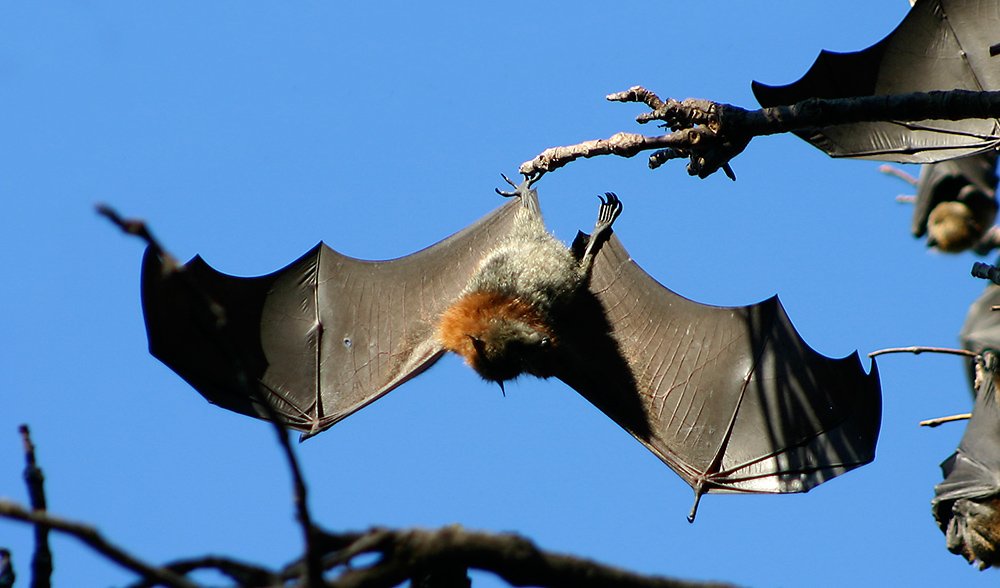
Most commonly spotted when they are flying along the horizon near sunset, the grey-headed flying fox is another keystone Australian species that’s vulnerable in our bush. While some considered them pest because of their noise and their taste for our fruit, these animals are a critical part of the ecosystem on the east coast. Living for 15-20 years, these nocturnal frugivores mate once a year and leave females solely responsible for rearing the young. Their population is particularly important to native species of hard woods, palms and rainforest plants because of they distribute seeds and are responsible for pollination. Hundreds of years of evolution have made these plant species highly dependent on the grey headed flying fox’s migratory corridor and sub-colonies for their reproduction. Like the cassowary, these animals are threatened by expanding agricultural projects that are creating greater distances between their colonies. As these animals become more localised by this phenomenon the diversity of the plant species they disperse is also affected and the biodiversity of the east coast as a whole suffers. Their numbers are growing promisingly and recent studies estimate 674,000 throughout the east coast. This number has doubled since the beginning of the millennium when culling of flying foxes was at its highest.
Photo Credit: Mike Lehmann/Wikimedia
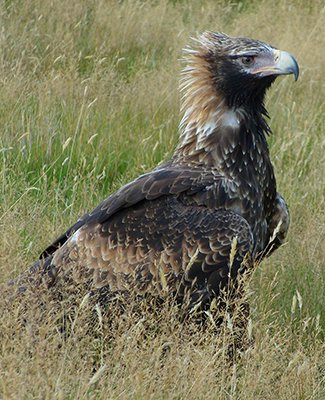
Known for majestically soaring above the Tasmanian bushland, the Tasmanian wedge-tailed eagle (this one pictured was an injured wild bird being released) is slowly disappearing. With population estimates hovering below 440 breeding adults the eagle are a serious part of the Tasmanian ecosystem. Eating almost any small marsupials or mammals, most snake, lizards, fish and cats, the eagle is another top-order predator that keeps the balance of the ecosystem in check. Because it lives all around Tasmania and has such a wide variety of prey, the eagle is not endangered because of shortage of habitat. Its primary threat is its fragile nesting behaviour in which slight disruptions can scare a female away from her fertilised eggs. This occurs most frequently with human contact. In addition, there are common persecutions from human when livestock are taken as prey. Chickens, geese and small or sick animals are sometimes seen as food options for the eagle, occasionally bringing them in contact with farmers. Studies estimate that five per cent of adult eagles and 35 per cent of juvenile eagles are killed each year from human contact.
Photo Credit: AAP Image/Libby Sutherland
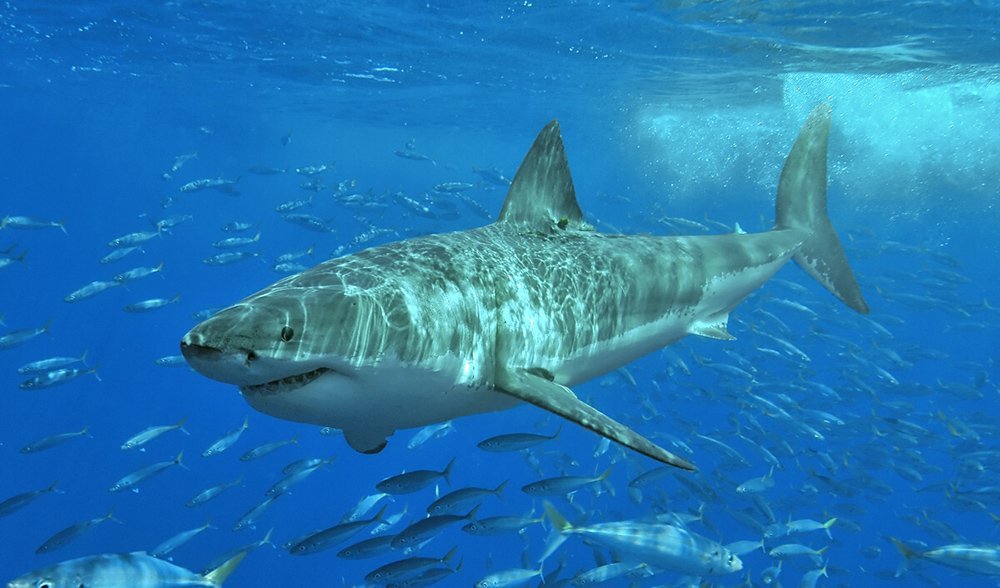
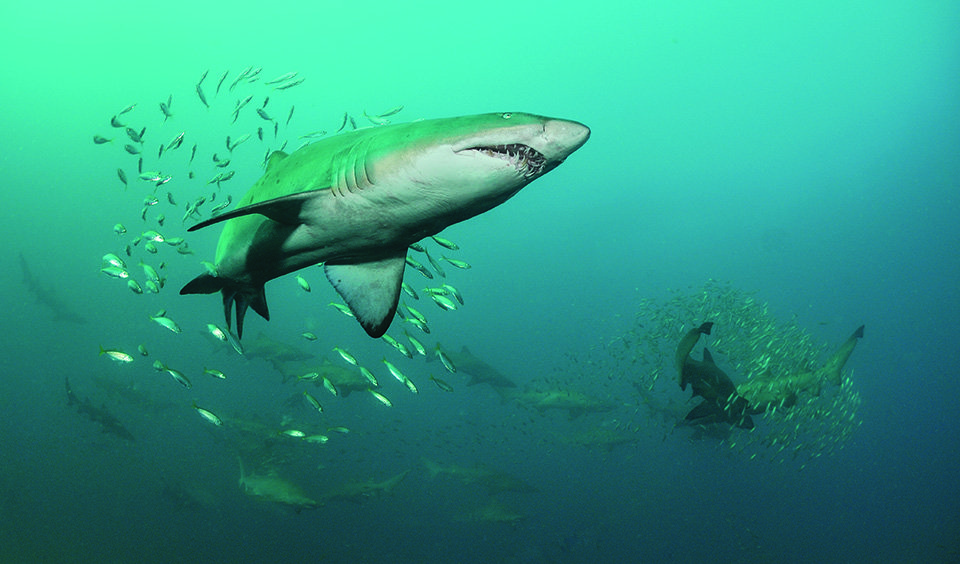
A top-order predator with a menacing appearance that belies its calm nature, the grey nurse shark’s east coast Australian population is struggling to survive, with only an estimated 500 left. Eating almost any kind of fish, crustacean, sharks, rays and squid, this predator is key in maintaining a balance in the marine ecosystem along the Australian coastline. While hunting this shark was legal in 19th century, poaching the fish has been common throughout the 1900s. Its unique skin is used to make high quality leather and its flesh is prepared for human consumption in a variety of ways making the grey nurse a valuable commodity. In addition, human activity and shark control have played a prominent role in animal’s endangerment. Sharks are caught in shark nets and often times die of starvation and stress before then can be relocated. Scuba diving encounters with grey nurses were common in the 1950s and up to 50 individuals could be found at most reefs along the east coast. Today, these encounters are rare.
Photo Credit: Dean Cropp/SEA LIFE/AAP Image
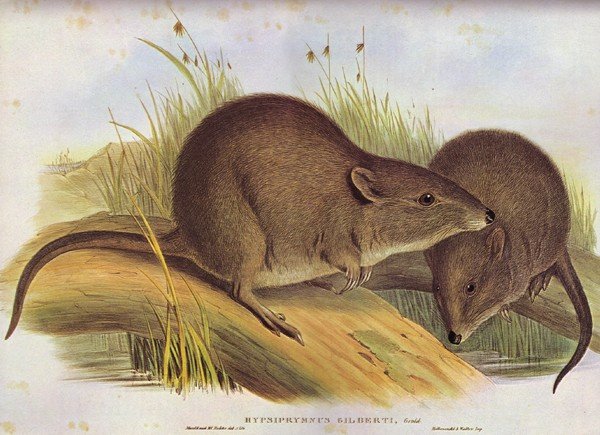
Once considered extinct in the wild, Gilbert’s potoroo is now listed as Critically Endangered nationally and on the IUCN Red List after being found on Mt Gardner, near Albany, in 1994. This species is endemic to this south-western point of Western Australia where an estimation of 35 individuals lives. This potoroo is a fragile species because of its delicate diet that depends almost entirely on 40 different kinds of fungi. Gilbert’s potoroo has evolved to create a symbiotic relationship with the fungi, which needs the potoroo to disperse its spores, while providing the potoroo with unique nutritional benefits. Clearing of the Mt Gardner area continues to threaten the species because of the effect it has on the availability of its food. Foxes and feral cats also hunt the potoroo, creating another danger to the fragile species. Due to high mortality rates, Gilbert potoroos in captivity have been cross-fostered in long-nosed potoroos allowing for the Gilbert potoroo to conceive another joey more quickly.
Without these important species, ecosystems will falter, such is their central role. While all species are important to an ecosystem, ‘keystone’ species are particularly vital because of their roles, such as being top predators, controllers of prey, or conduits for spreading seeds.