Making conservation pay
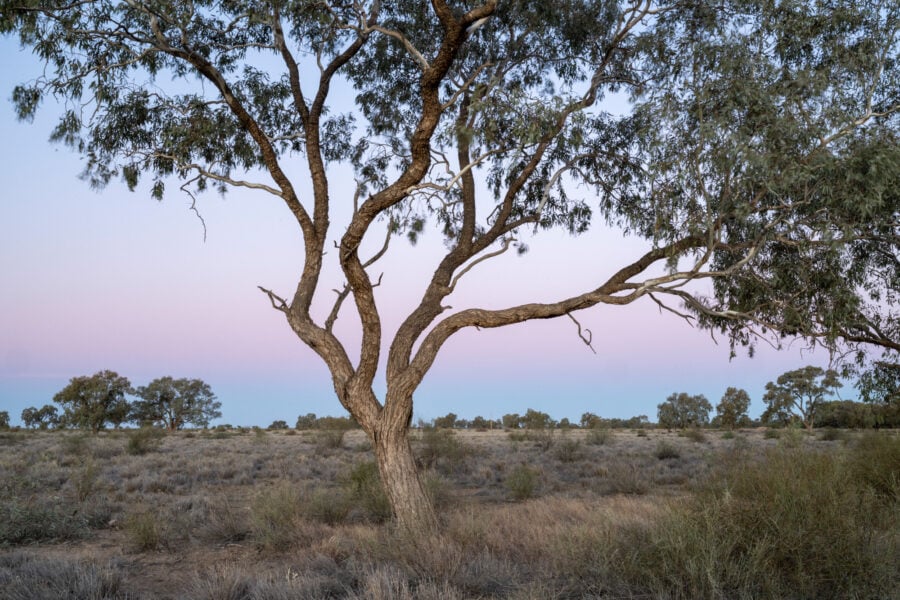
For outback farmers Justin and Julie McClure, the decision to set aside 7600ha of their property for conservation was easy to make. The McClures own Kallara Station, a 100,000ha sheep and cropping station near Tilpa in Far West New South Wales, and their property is like a wildlife haven.
They’re among 600 landholders across the state who have either entered, or are about to enter, a conservation agreement with the NSW Biodiversity Conservation Trust (BCT), a not-for-profit that supports the management by private landholders of conservation areas on their properties.
Since it was formed in 2017, the BCT has added more than 3320sq.km of land to NSW’s conservation estate, helping to safeguard 40 ecological communities and 207 threatened species.
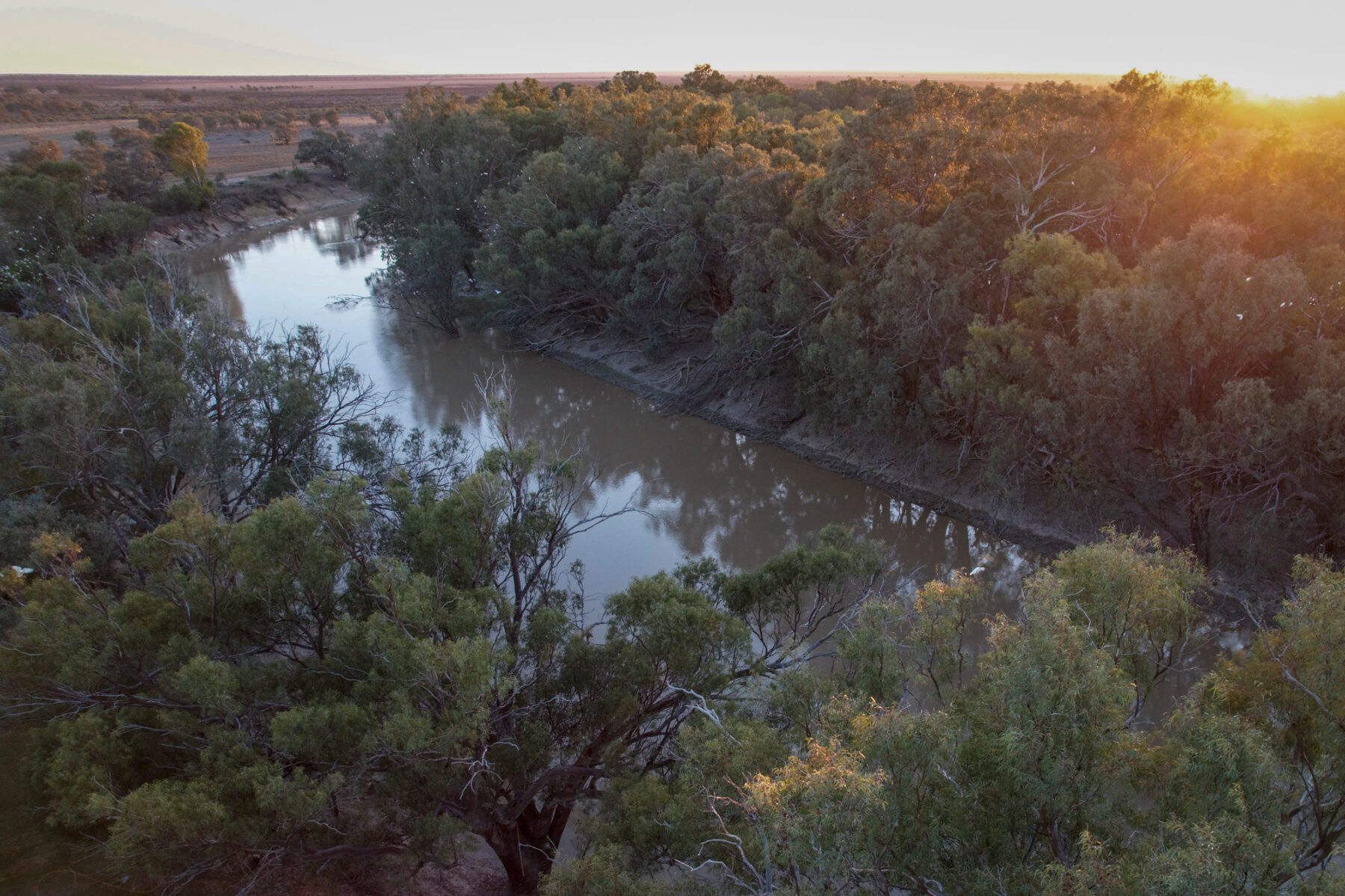
Now, Justin and Julie have added 7600ha of riverine floodplain woodlands – including 2500ha of coolibah–black box woodland, an endangered ecological community – and 24km of Darling (Baaka) River frontage to that estate. Many threatened species occur in the area, including the Australian bustard, spotted harrier, pink cockatoo, yellow-bellied sheath-tailed bat and red-tailed black cockatoo.
So, what’s in it for the McClures?
Cashing in on conservation
Nature conservation is often depicted as a conflict of interest for farmers. But Justin and Julie see it as essential to the long-term health of their business and family.
They view conservation as compatible with their work as farmers – and long before entering the agreement were already rehabilitating native vegetation and farming organically.
“Ultimately, we’d like to leave our land in a better condition than when we started,” Julie says, explaining that she and Justin feel they “hold it in trust for [their] children”.
“So, I guess a healthy environment leads [to] healthier families and healthier financial situations,” she says.
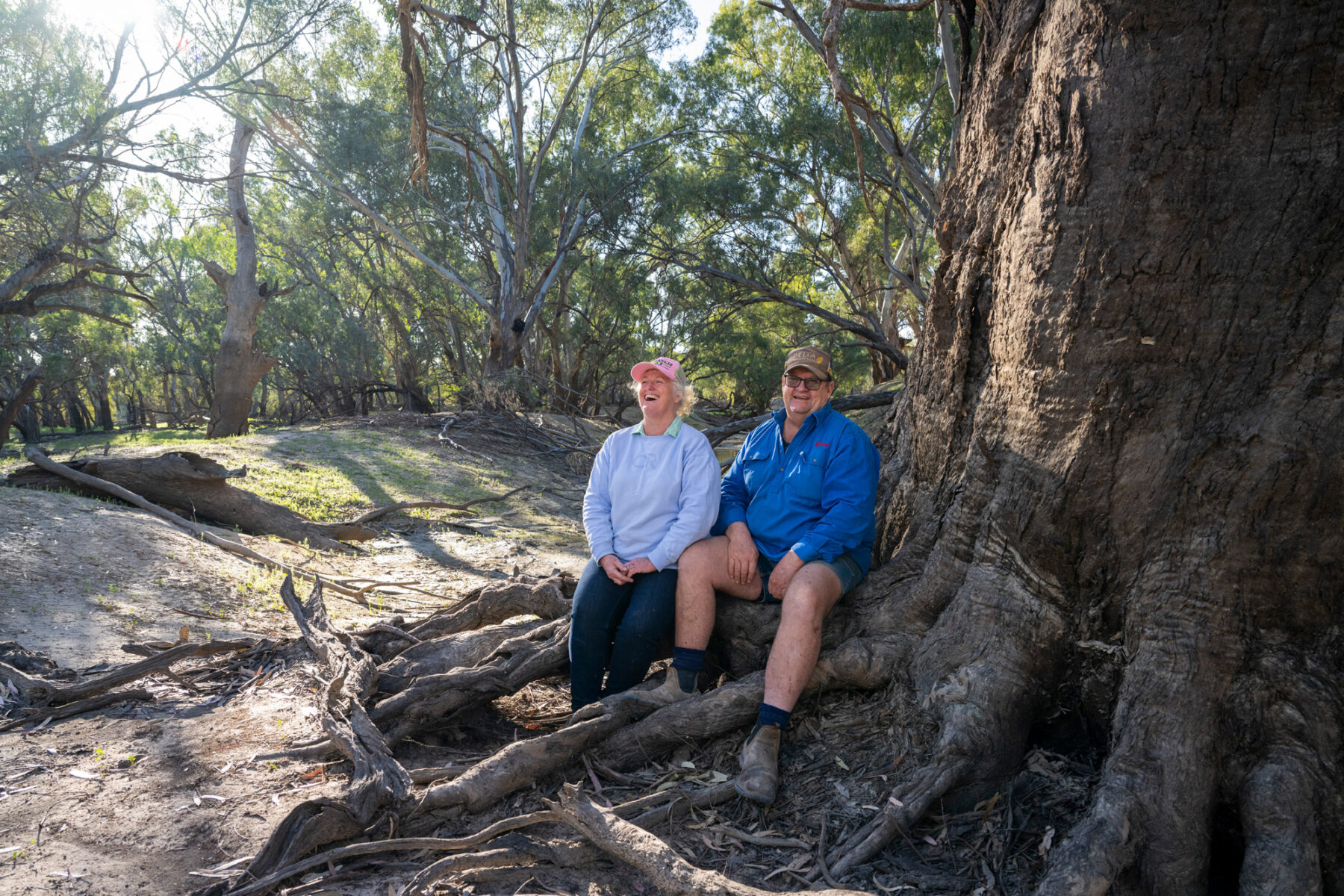
Justin, whose family has farmed in this region for five generations, says family farmers are “probably the best environmentalists out there” because they’re managing land that will one day be passed down to their children and, eventually, grandchildren.
Their funded agreement means they receive annual payments from the BCT for their work managing the conservation site on their property. It offers long-term financial security in an agricultural region shaped by the ‘boom–bust’ cycles of the Barwon–Darling River system.
“[The BCT funds are] an offset to our income in dry and wet times…a safety net that delivers an income stream when things are tough,” Justin says. “And it protects the natural environment.”
The arrangement also offers a succession plan as the couple approach retirement.
“As we’ve gotten older, the farm succession has come into our thinking, into our business planning, and the BCT provides us with an off-farm income as well,” Julie adds.
When the McClures entered their agreement in July 2024, reactions from friends and neighbours were mixed. After seeing the financial benefits, attitudes have begun to shift – but some remain concerned that it will mean lost production.
“We need to be able to help people change their thinking,” Julie responds. “Conservation can be highly rewarding financially.”
Why private land conservation matters
Because more than 80 per cent of land in NSW is privately managed, the BCT’s conservation agreements are seen as vital to expanding and connecting conservation areas across the state.
“A huge portion of NSW is owned by private landholders, so having conservation on [owners’ properties] and working with them is a really good [way] to improve the biodiversity of the regional areas of the state,” says BCT’s Senior Regional Conservation Officer, Jo Milgate.
Each agreement is tailored to each landholder. Because BCT staff consult directly with farmers to develop management plans, conservation actions vary between properties.
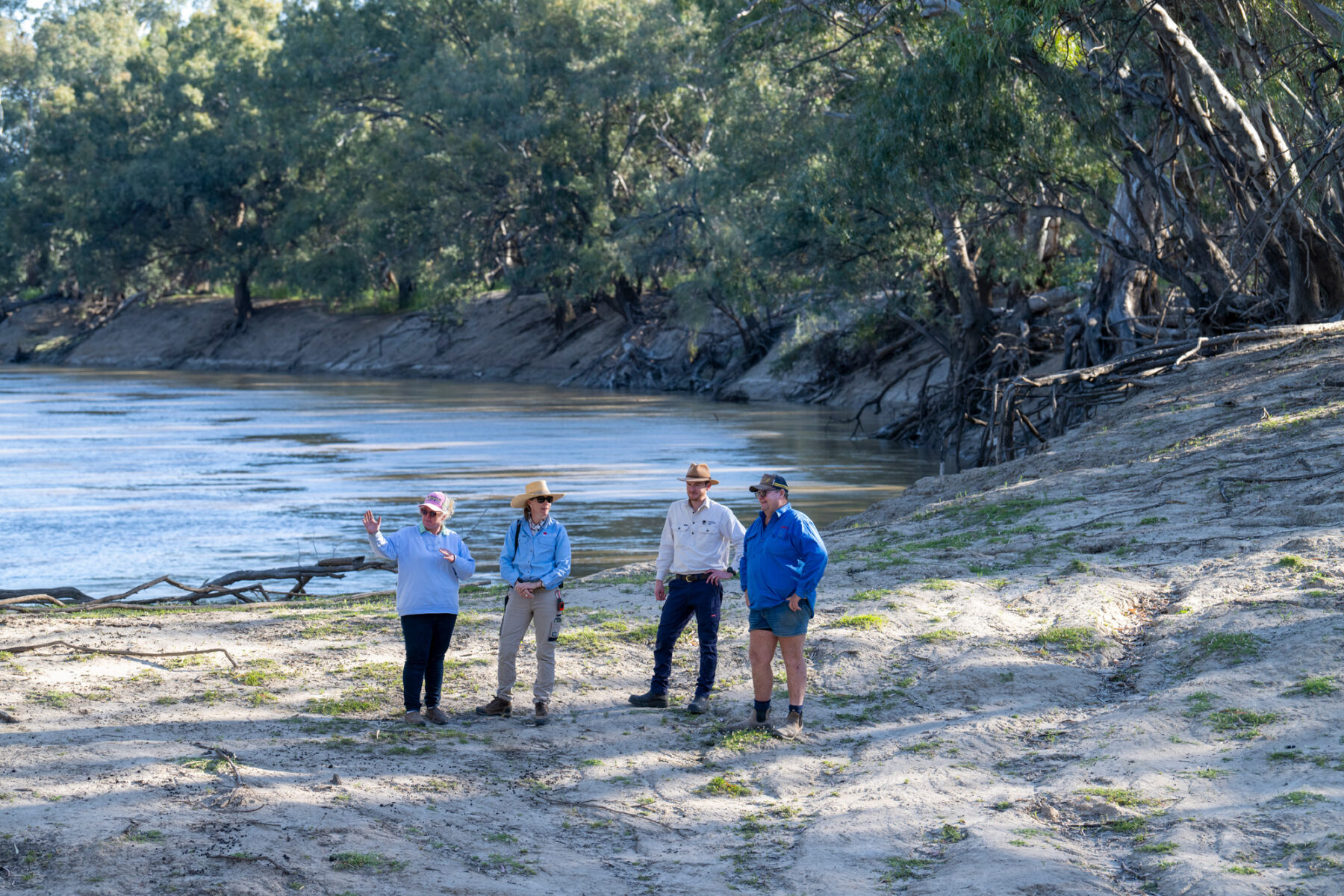
Landholders may manage their properties in a variety of ways, from restoring native vegetation, removing weeds and controlling feral animals to maintaining fences and creating fire breaks. These are things most farmers already do, Jo points out.
As part of the initial investigations, BCT ecologists assess the condition of vegetation, looking for sites that are already in moderate-to-good condition and where conservation work will have the biggest impact. Environmental health is also a good indicator of a landowner’s long-term commitment to caring for their property.
“We like to see landholders establish these conservation agreements on their property because they’ve already done an amazing job to get it to where it is today,” Jo says.
Restoring Kallara’s floodplains
At Kallara Station, the McClures’ conservation management plan focuses on improving vegetation biodiversity by removing feral rangeland goats and rehabilitating scalded claypans.
“Scalding is where the landscape has become very dry from previous agricultural events,” Jo explains. “There’s very limited vegetation, and the surface of the soil sets quite hard, almost like a clay brick surface.”
Native vegetation struggles to establish on claypans because root systems can’t penetrate the dry compacted surface, which also doesn’t retain water, making it harder for plants to colonise.
To correct this, the McClures have deployed a technique called ‘waterponding’: cutting large, circular depressions into the landscape, which traps water for longer periods and collects windblown seeds on raised banks.
BCT ecologist Ben Perrott explains that this helps “reset” the landscape.
“Those first little seedlings … act like a wall for the next wind event that brings seed through,” he says.
“They catch more seed, and then it rains, and then those seeds germinate and [help] restart the ecological system.”


Removing feral rangeland goats from the area will also boost biodiversity.
Goats are generalist herbivores that eat all parts of plants – flowers, twigs, bark and root systems.
“They’ll eat nearly everything, and they’ll do it quickly,” Ben says. “They will target certain plant species so they can pretty rapidly remove plants from the landscape and cause localised extinctions.”
Restoring native vegetation and removing feral goats will have flow-on benefits such as reducing soil erosion and attracting birds, insects and mammals back into the area.
Crucially, neighbouring farmers will benefit too.
“If you’ve got 7000ha of floodplain that’s not being grazed by any exotic livestock, just native fauna, the seed that’s going to be produced in this [area] … then becomes the seed bank for the entire floodplain,” Ben says. “It has massive, scalable potential, [because] that seed then redistributes across the landscape, making the broader ecosystems more resilient.”
The McClures might have only entered their BCT agreement in 2024, but their years of caring for the land had already set the stage for a promising future.
“This site, in particular, is in really good condition, even with that legacy of livestock grazing here,” Ben says. “I think that’s testament to the stewardship of the McClures and how they’ve managed it over time.”