Rescuing flying-foxes from deadly heat
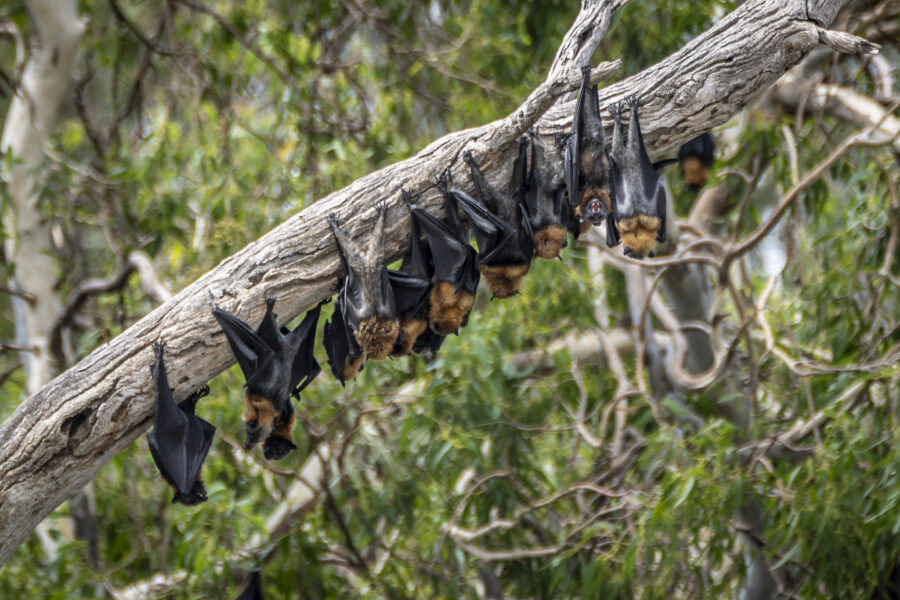
Thousands of flying-foxes have died in recent weeks during a series of record-breaking heatwaves across south-eastern Australia.
The majority of fatalities have been grey-headed flying-foxes (Pteropus poliocephalus). Endemic to Australia, this species is listed as Vulnerable under Australia’s EPBC Act, and in December 2021 was added to the global IUCN Red List of Threatened Species.
While all native wildlife species struggle in extreme heat conditions, flying-foxes are particularly vulnerable as they cannot regulate heat in the same way other mammals do. This leads to dehydration and heat stress, progressing to organ failure and, ultimately, death.
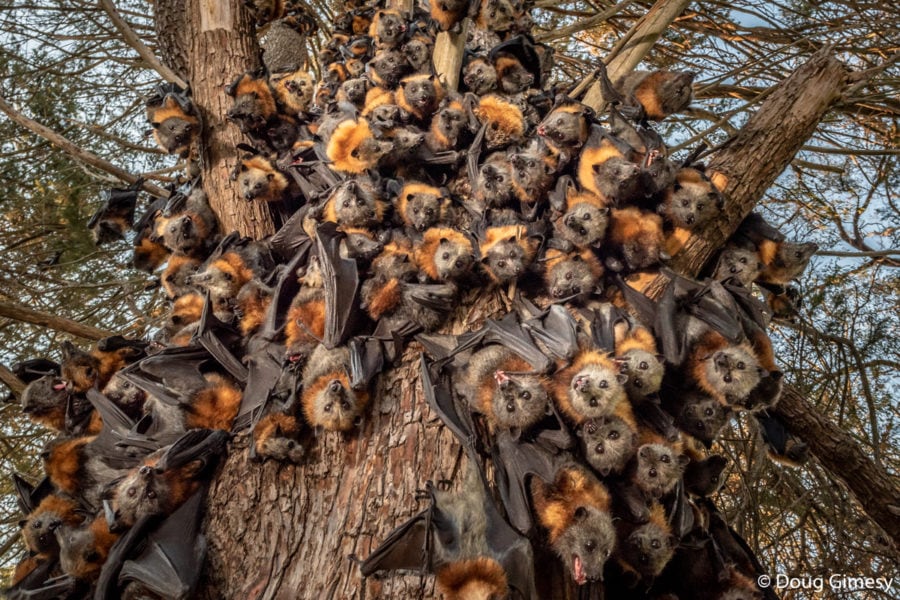
One stress response is particularly confronting – ‘clumping’. This is when desperate bats descend from the tree canopy in search of somewhere cooler, where they ‘clump’ together.
In moderate heat, clumping can help to reduce direct sun exposure. But in extreme heat, it causes extra body heat to be shared among the group, pushing temperatures past survivable limits.
Rescue missions
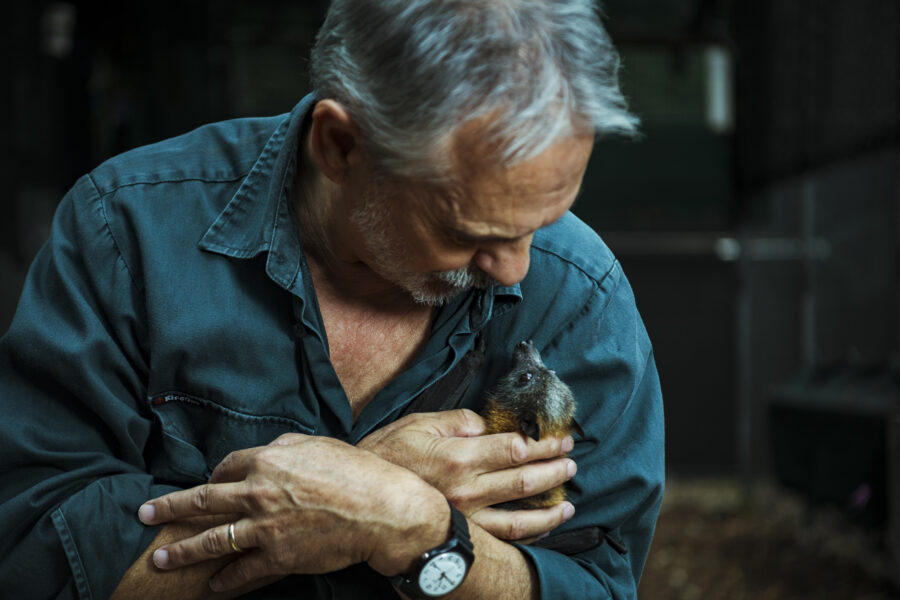
Wildlife rescue groups across the south-east have leapt into action to both help keep the flying-foxes cool and rehabilitate those sick or injured.
One such mission was led by Wildlife Victoria, which sent teams into the Tatura and Numurkah flying-fox camps to deploy misting sprayers.
While permanent sprinkler infrastructure exists in three other large flying-fox colonies in Victoria, Tatura and Numurkah do not have this.
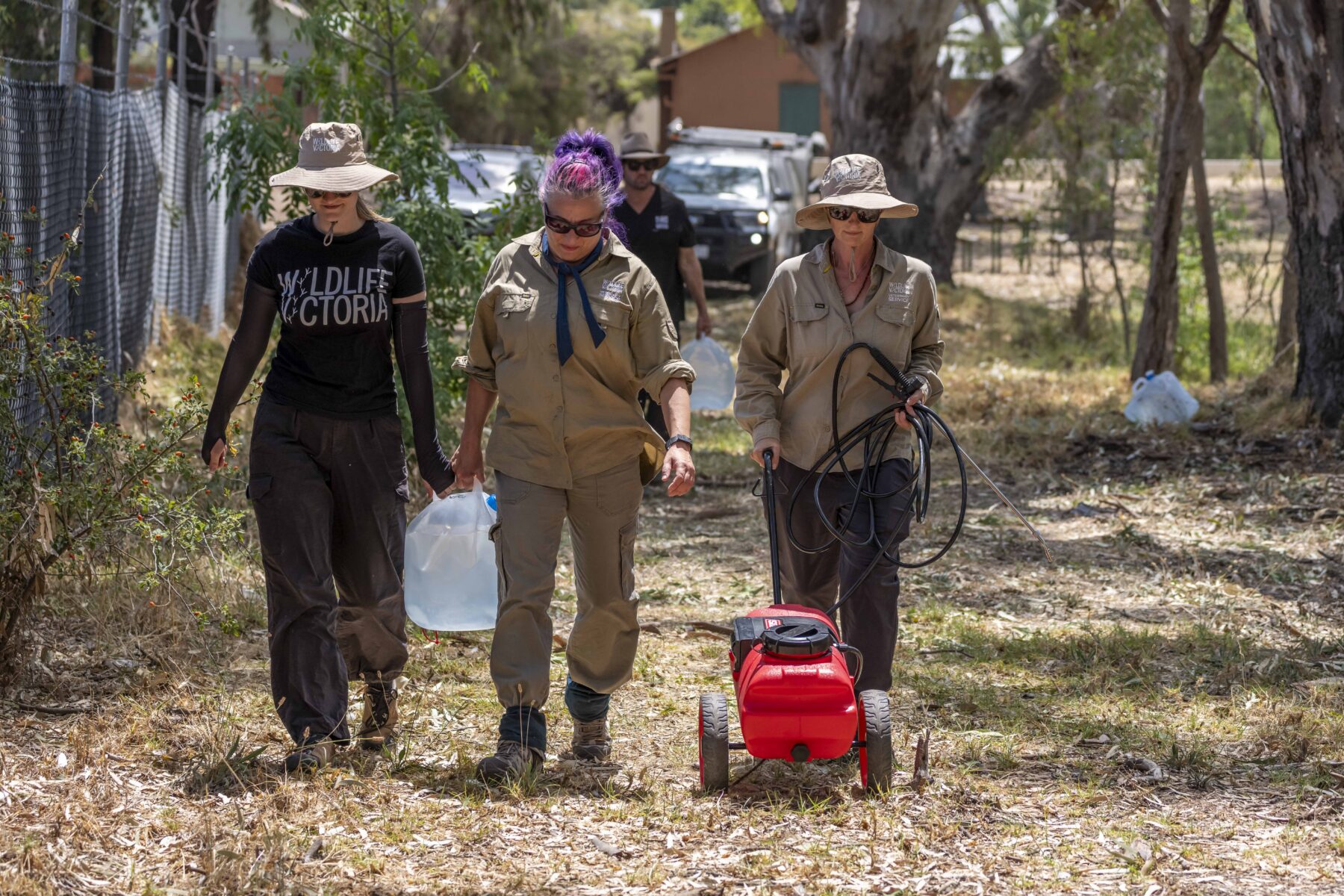
The Department of Energy, Environment and Climate Action (DEECA) and local councils have supported Wildlife Victoria in their endeavours. “We’ve worked together to mist the canopies and bring down the ambient temperature,” says Wildlife Victoria CEO, Lisa Palma.
“This work is incredibly hard. It’s physically demanding, it’s long days in extreme heat, and it can be emotionally challenging to witness animals suffering,” Lisa says. “But it’s immensely rewarding to see bats actively fly into the misted area. There’s no doubt that this response has reduced clumping and saved hundreds, if not thousands, of lives.”
The Tatura and Numurkah camps are each estimated to home approximately 5000 grey-headed flying-foxes. Wildlife Victoria says without intervention both populations were at high risk of collapse during the heatwave.