Exploring the Australian Geographic canvas
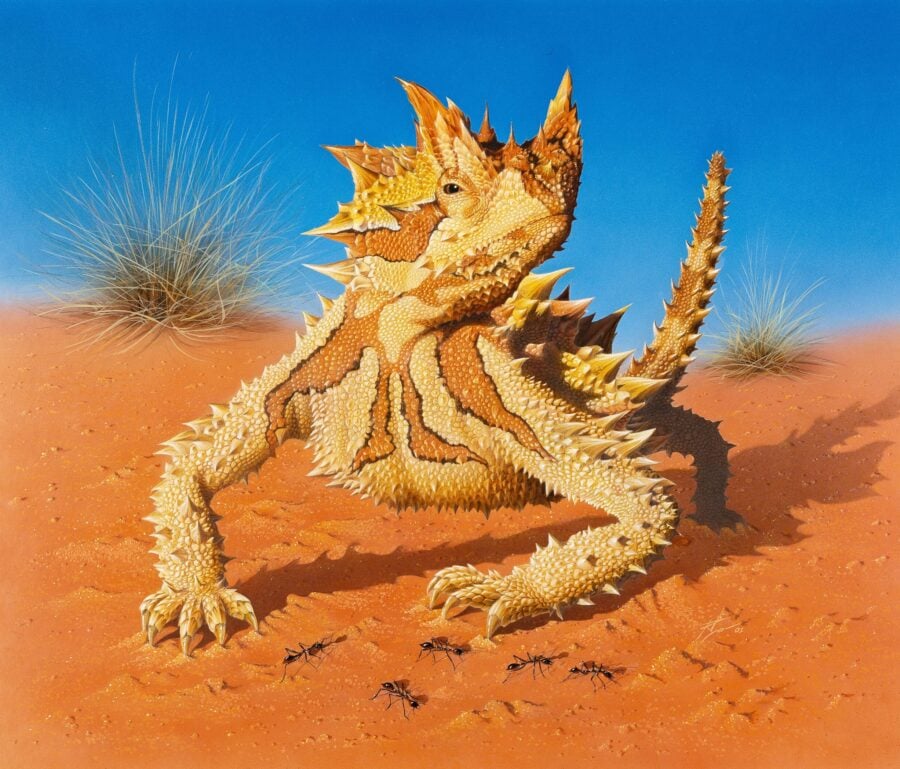
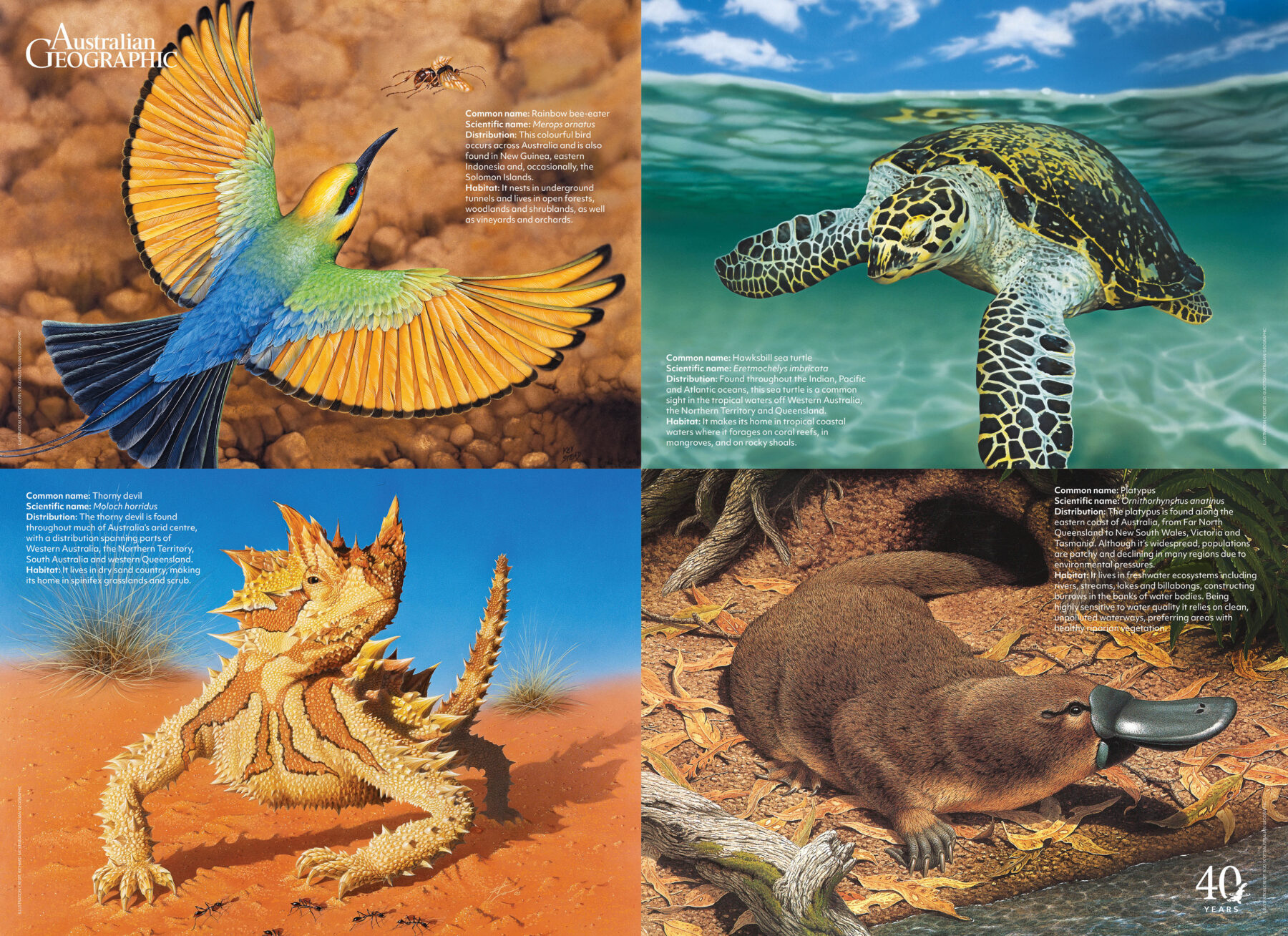
A wall poster featuring stunning images from Australian Geographic’s illustration archive seemed like a perfect retro concept as a 40th birthday gift for our readers.
Showcasing four iconic Aussie animals captured in lifelike detail, it’s a reminder of one of the many unique ways Australian Geographic has celebrated, informed on and championed our country’s iconic wildlife for four decades.
Extraordinarily detailed natural history illustrations graced the cover of Australian Geographic for the first 83 issues – from January–February 1986 to July–September 1996.
And they’ve also featured prominently – along with meticulous and thought-provoking diagrams – inside most of the 189 issues throughout our first 40 years.
A visual celebration
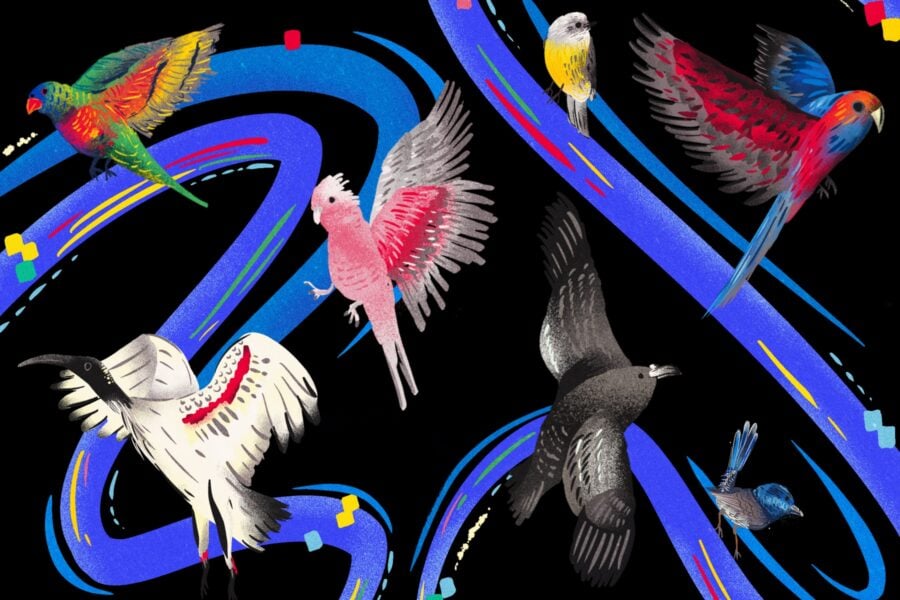
Alongside stunning photography and exquisite maps, detailed illustrations and diagrams have helped ensure each issue of Australian Geographic is a sumptuous visual feast as well as a richly informative and entertaining read.

Illustrations have an enduring and universal appeal because they have the ability to overcome the nuances of written language and can add meaning to the lives of people with a range of reading abilities.
A well-developed illustration not only enhances text but also takes the viewer on a journey that adds depth of meaning and understanding that’s not always expressed by the written word.
Natural history illustration, in particular, has been a necessary art form since humans began exploring the natural world.
And today, more than ever, it fulfils a critical role in the dissemination of knowledge that ranges from the atomic structure of a molecule to the composition of the universe.
The basis of good illustration lies in thorough research. Knowledge of the subject matter is critical if the illustration is to convey the appropriate information to the required audience.
A technically well-executed illustration can fail if it doesn’t deliver the required accuracy and, conversely, an illustration aimed, for example, at young children can miss the mark if not properly conceived for the age group.
A talented team
The various illustrators who’ve contributed over the lifetime of Australian Geographic have demonstrated a wide range of skills, experience and passion for their subject matter.
A few of the recurring names that long-time readers may recognise have included Ego Guitto, Kevin Stead, Marjorie Crosby-Fairall, Bob Kayganich, Oliver Rennert, Lida Xing, Anne Hayes and Rod Scott.
Their illustrations – ranging from wrestling male lace monitor lizards to snarling Tasmanian devils, to prehistoric scenes featuring a long-extinct giant platypus – stand out for their sheer beauty. But they’ve also been, and continue to be, integral in defining and clarifying complex ideas and themes in the pages of the magazine.
A simple image can routinely take days of painstaking work, while a more complicated cover image or double-page natural history scene can take many weeks or more to complete.