| Common name | Wedge-tailed eagle |
| Scientific name | Aquila audax |
| Type | Aves |
| Diet | Carnivorous – mainly rabbits, wallabies, small mammals, carrion and occasionally reptiles and birds |
| Average lifespan | Up to 25 years in the wild |
| Size | Wingspan 2.3m–2.8m; body length 0.9m–1.1m; weight 3–5.3kg |
CONSERVATION STATUS (Australia): Not listed as threatened under the EPBC Act
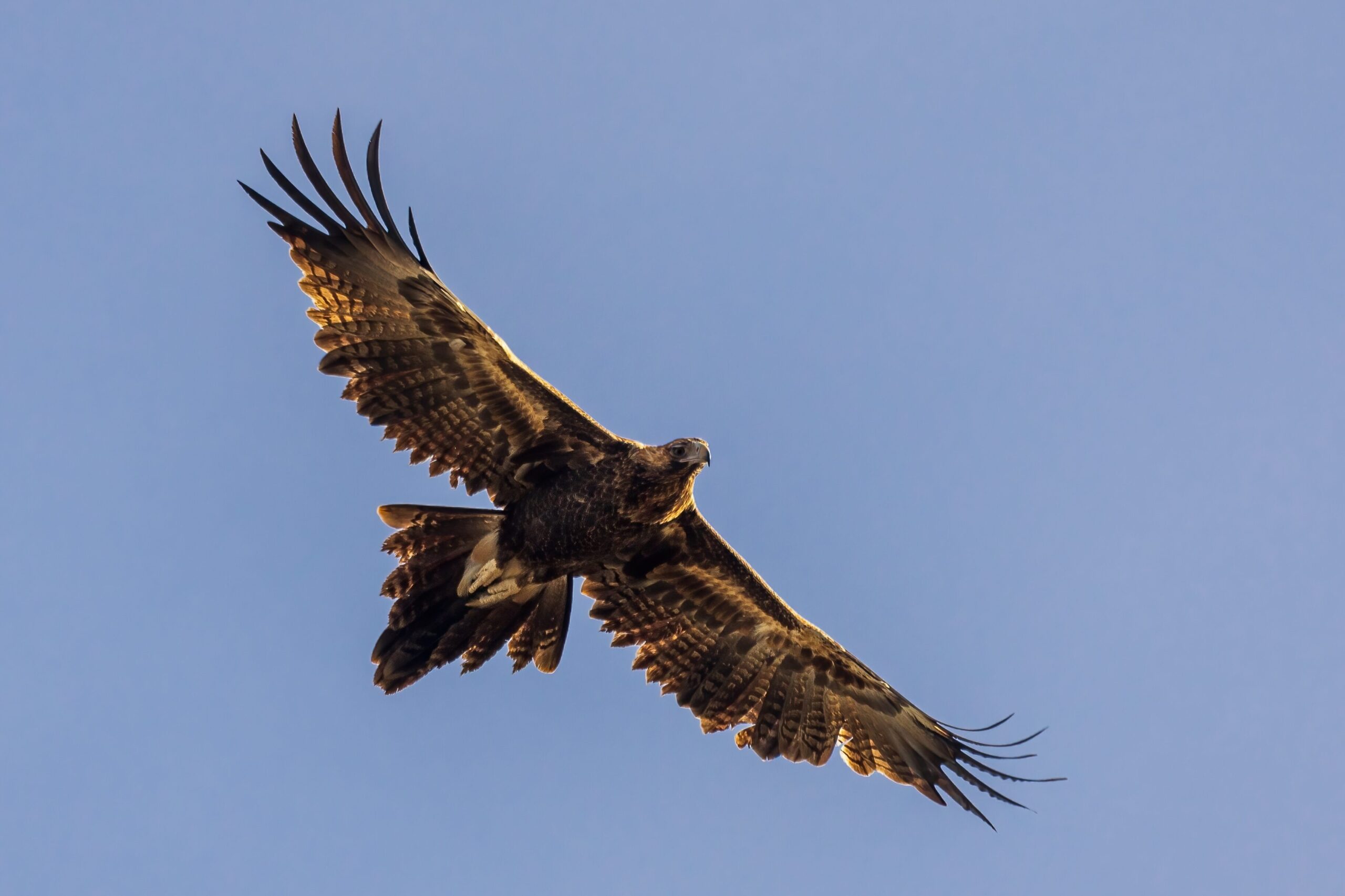
Australia’s largest bird of prey commands the skies with its massive wingspan, distinctive diamond-shaped tail and keen eyesight that can detect prey from over 2km away. A master of thermal soaring, it’s often seen circling high above open country, using rising air currents to stay aloft with barely a wingbeat.
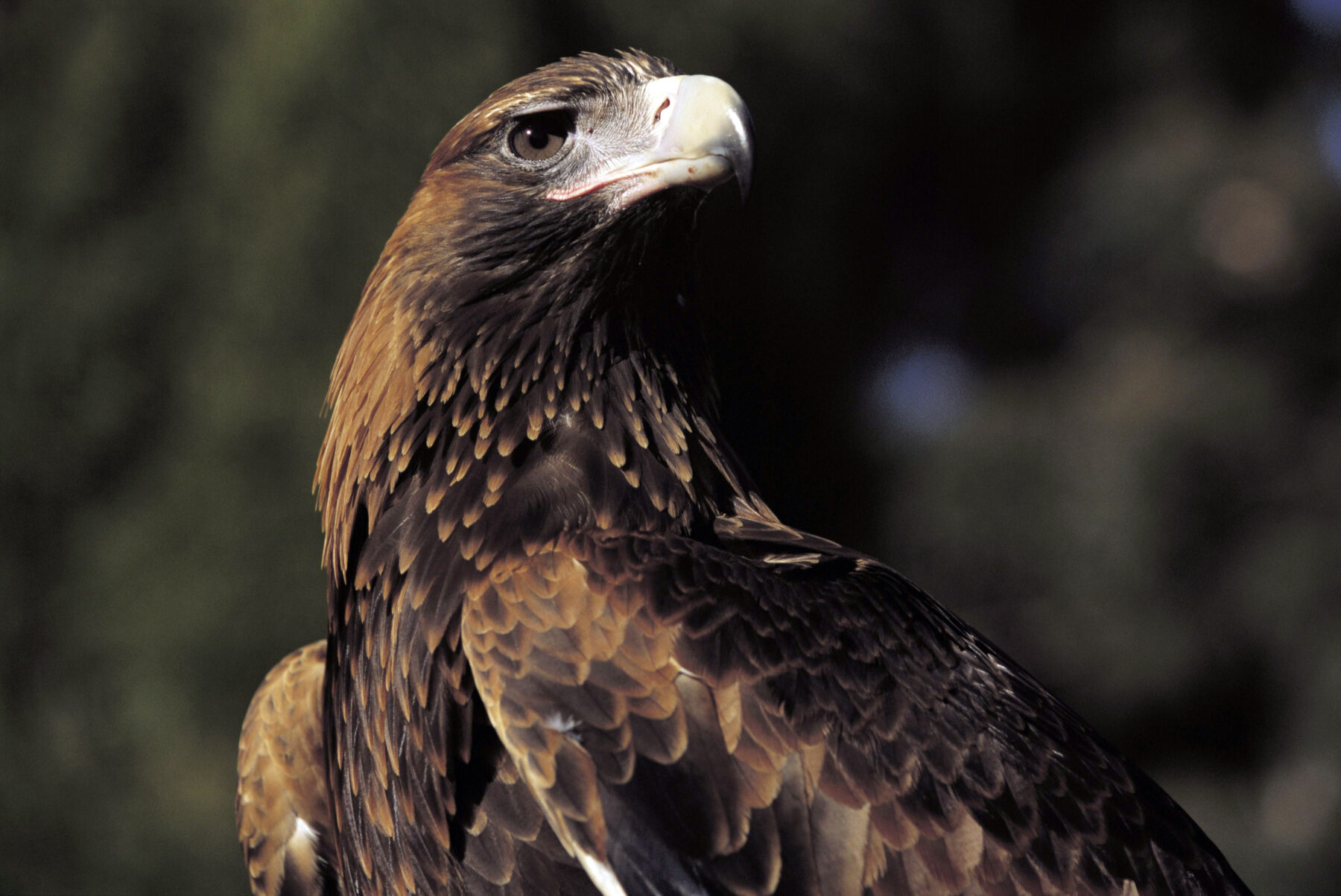
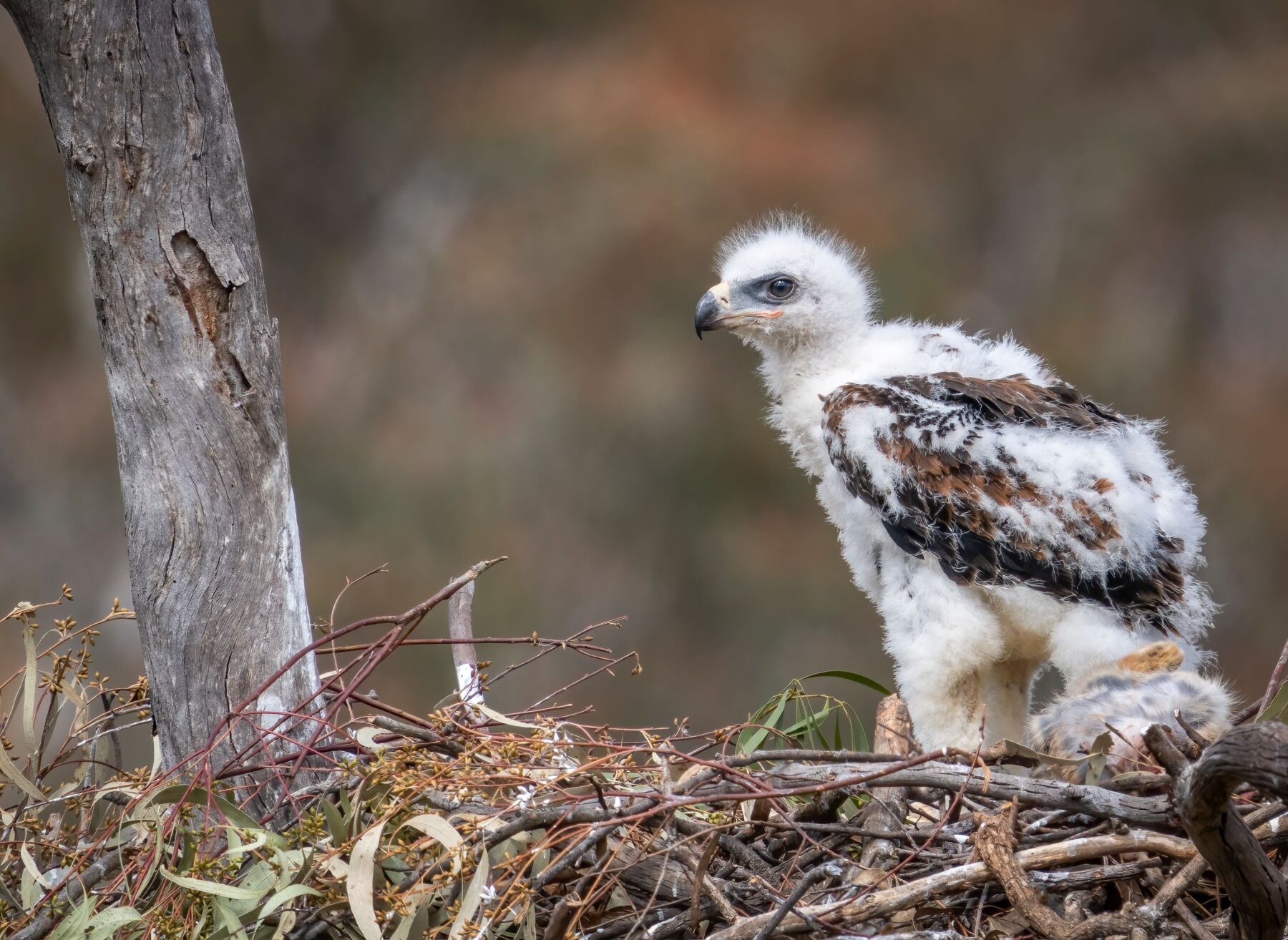
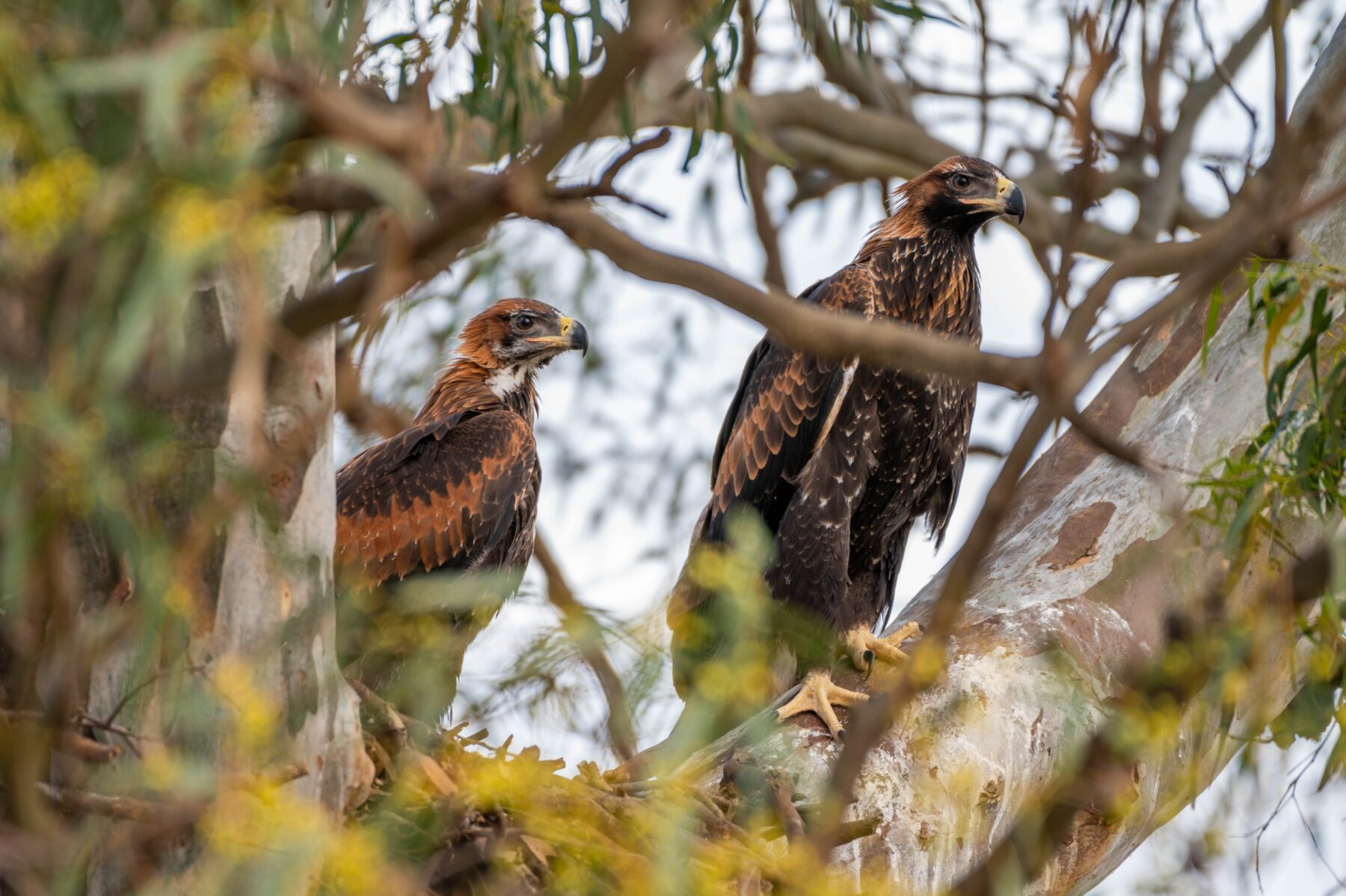
The wedge-tailed eagle is dark brown to black, with paler flight feathers and a wedge-shaped tail that gives it its name. Juveniles are lighter, showing golden-brown plumage that darkens with age. Females are considerably larger and heavier than males, a common trait among birds of prey. Their strong hooked beaks and massive talons are designed for tearing flesh, while feathered legs protect them during hunts.
Closely related to other eagles of the genus Aquila, it’s the only member of its kind in Australia. The Tasmanian subspecies (A. a. fleayi) is slightly smaller and darker, and is listed as endangered due to habitat loss and persecution.
Its Indigenous name varies by region; in some central desert languages it’s known as Warlawurru; to the Noongar people, its Waalitj; to the Gamilaraay people, it’s Maliyan. The wedge-tailed eagle holds deep spiritual meaning in Aboriginal cultures, appearing in Dreaming stories as a powerful ancestral being and creator figure.
Habitat
Wedge-tailed eagles occupy a wide range of habitats, from open forests and woodlands to arid deserts and mountainous areas. They prefer regions with tall trees or cliffs for nesting and open areas for hunting.
Distribution
Historically and currently, wedge-tailed eagles are found throughout mainland Australia, Tasmania and southern New Guinea. They are adaptable and remain widespread, even inhabiting modified agricultural landscapes.
Conservation status
Not listed as threatened nationally, though the Tasmanian subspecies is endangered. Past persecution by farmers and bounty hunting dramatically reduced numbers, but protection laws and shifting attitudes have allowed recovery.
Reproduction
Pairs mate for life and occupy large nesting territories. Nests, or eyries, are built high in trees or cliffs and reused annually, often added to until they reach massive sizes. Breeding occurs from May to October, with one to two eggs laid per season. Both parents incubate the eggs, and the chick fledges after about three months.
Threats
Primary threats include habitat clearing, illegal shooting, poisoning and vehicle collisions when feeding on roadkill. Powerlines and wind turbines also pose occasional risks.
Fascinating fact
Wedge-tailed eagles can soar for hours without flapping, reaching altitudes over 2km. They’ve even been recorded mobbing aircraft that enter their airspace!