| Common name | Palm cockatoo |
| Scientific name | Probosciger aterrimus |
| Type | Aves |
| Diet | Omnivorous – nuts, seeds, fruit, leaf buds and occasionally insects |
| Average lifespan | Up to 60 years in the wild |
| Size | 55–60cm; weight 800g–1.2kg |
CONSERVATION STATUS (Australia): Vulnerable under the EPBC Act
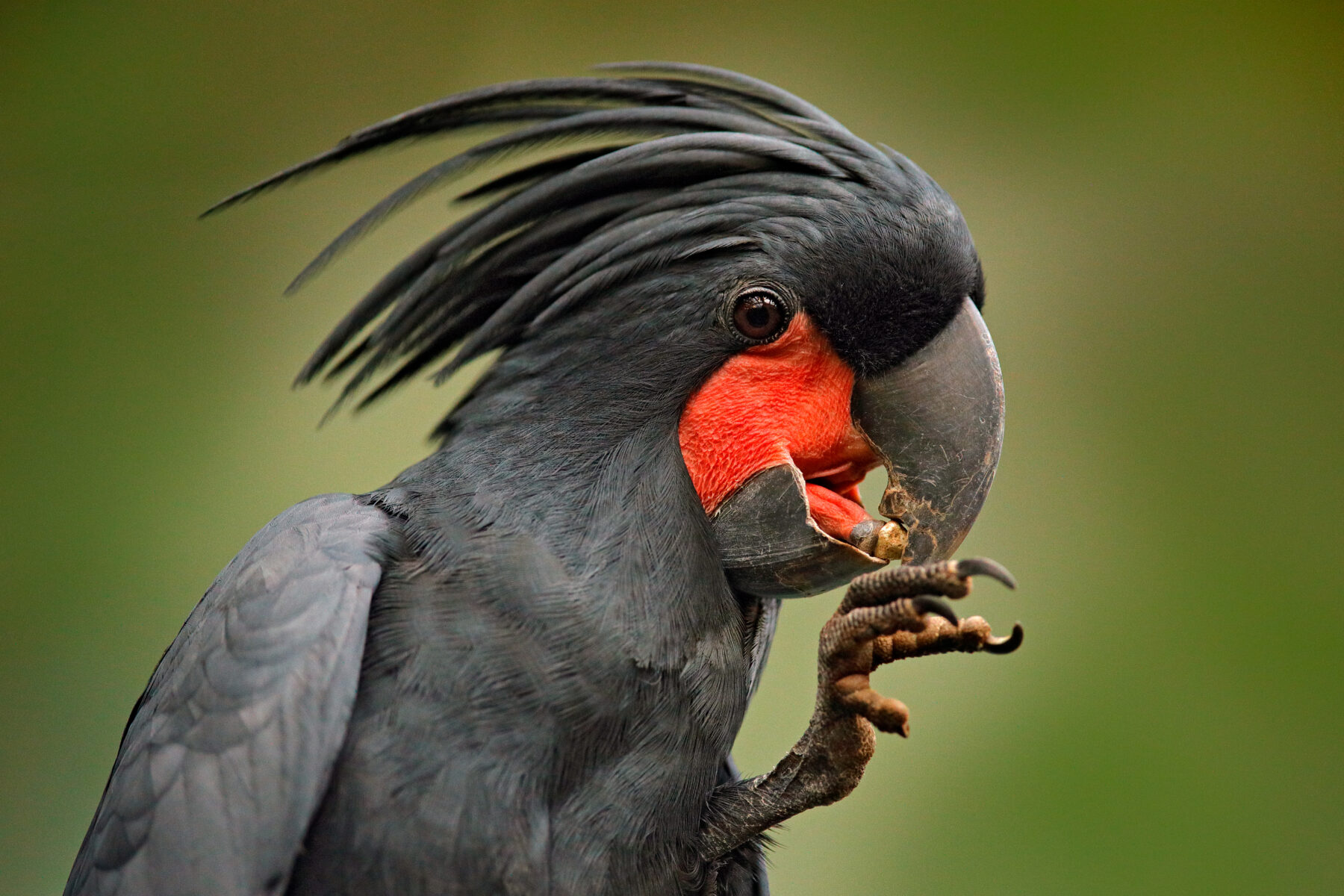
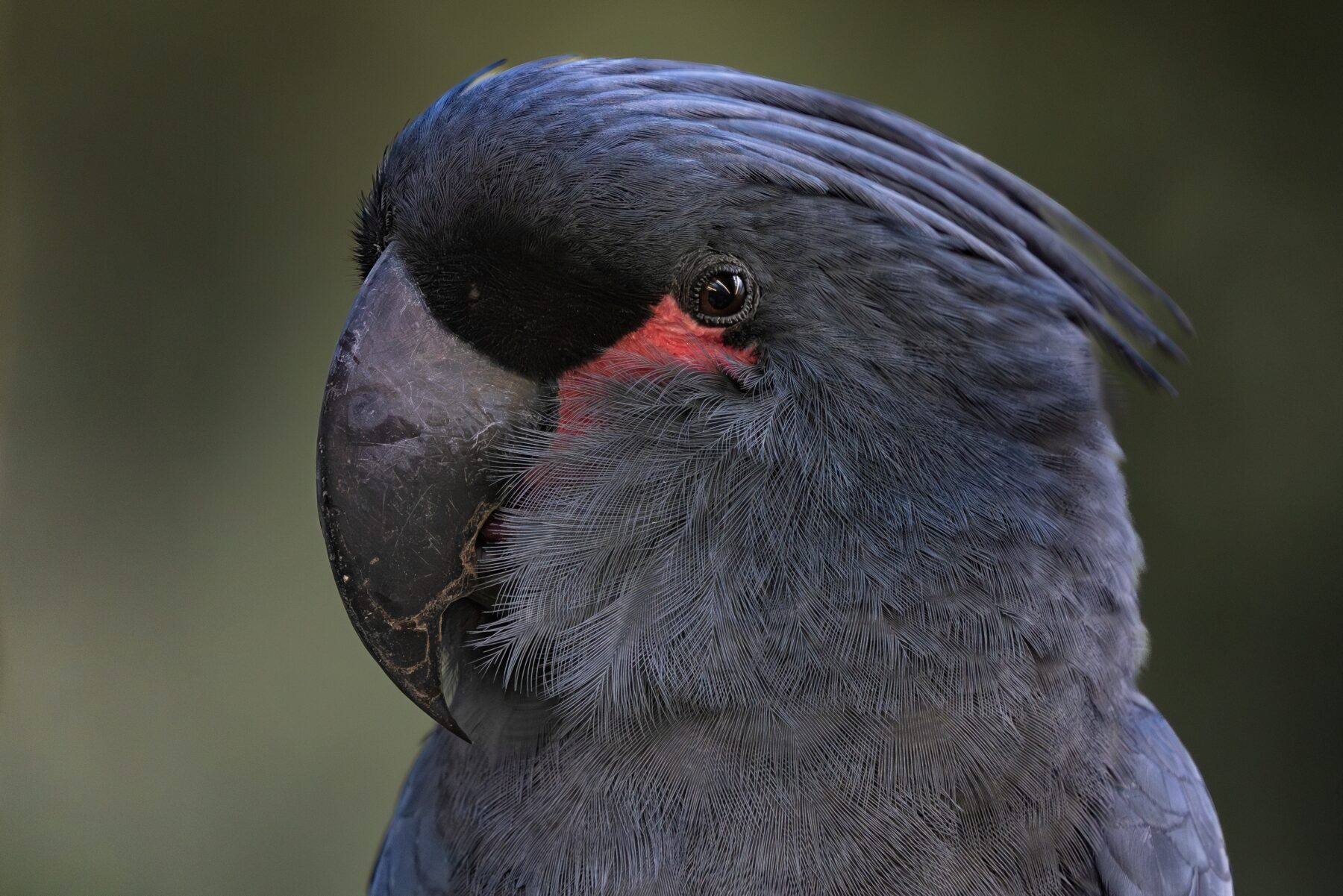
With its smoky-black plumage, towering red cheek patches and punk-like crest, the palm cockatoo is one of the most striking and intelligent birds in the world. Native to Australia’s far north and New Guinea, this enigmatic parrot is famous for its drumming displays – the only bird known to fashion and use a musical instrument.
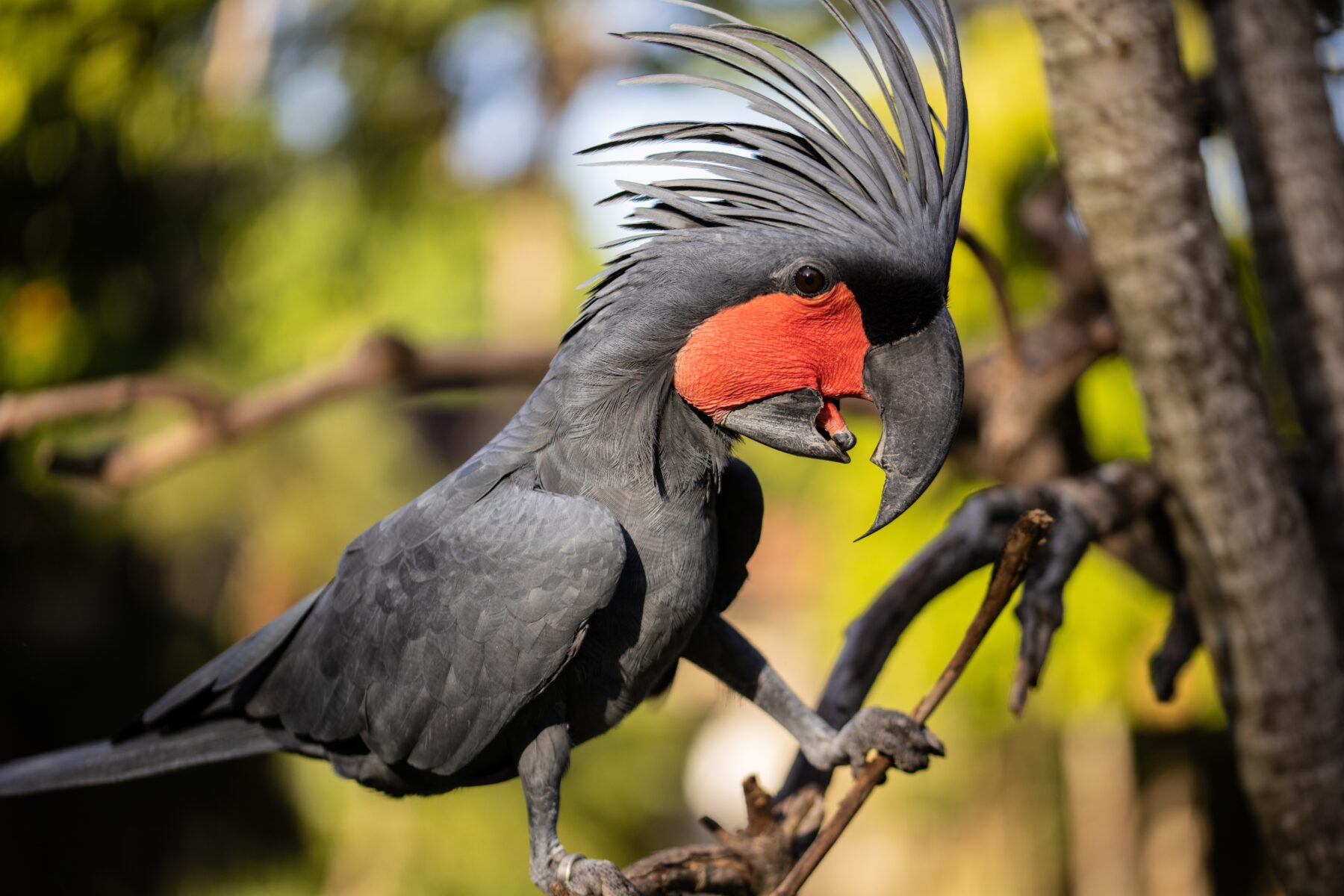
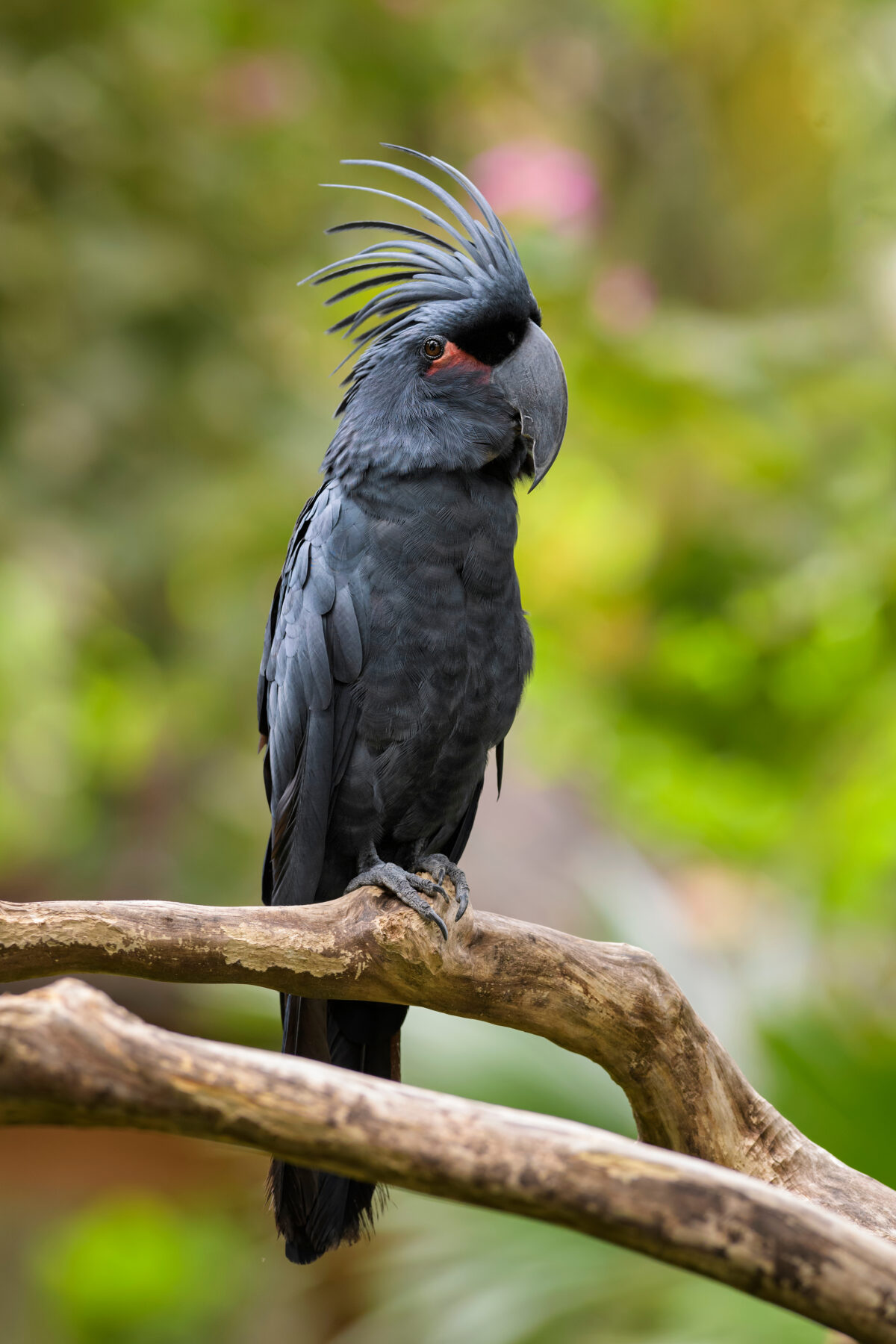
The palm cockatoo has glossy black feathers and a large curved bill capable of cracking the toughest nut. Males and females look similar, though males are slightly larger with broader bills. Its impressive crest can be raised in a dramatic display.
It’s the sole member of the genus Probosciger. Four subspecies are recognised, with P. a. macgillivrayi restricted to Cape York Peninsula.
Habitat
The palm cockatoo is found in tropical rainforests and woodlands, especially where large old trees provide suitable nesting hollows. They rely on mature trees, often near clearings or rivers.
Distribution
The Australian population is confined to Cape York Peninsula, while the species is also found in southern New Guinea and surrounding islands. Once more widespread, habitat fragmentation has restricted its range in Australia.
Conservation status
It’s listed as vulnerable due to low breeding success and loss of nesting trees. Each pair may only raise a chick every few years, so populations are slow to recover.
Reproduction
Palm cockatoos form long-term pair bonds. Breeding occurs during the dry season (August–January). Males perform a spectacular courtship display, drumming rhythmically on tree trunks or hollow limbs using a stick or seed pod. Usually, a single egg is laid in a tree hollow, and both parents share incubation.
Threats
Habitat loss from land clearing, mining and altered fire regimes reduces nesting availability. Climate change and illegal wildlife trade add further pressure.
Fascinating fact
The palm cockatoo is the world’s only bird known to use tools to make rhythmic sounds – drumming with sticks as part of courtship, each male producing a distinctive ‘beat’.