| Common name | Green sea turtle |
| Scientific name | Chelonia mydas |
| Type | Reptilia |
| Diet | Adults are herbivorous, eating seagrasses and algae. Juveniles are carnivores. |
| Average lifespan | About 70 years |
| Size | Adults can weigh more than 150kg, with a shell length of more than 110cm |
CONSERVATION STATUS (Australia): Vulnerable (EPBC Act)
The green sea turtle is one of six marine turtle species found in Australian waters.
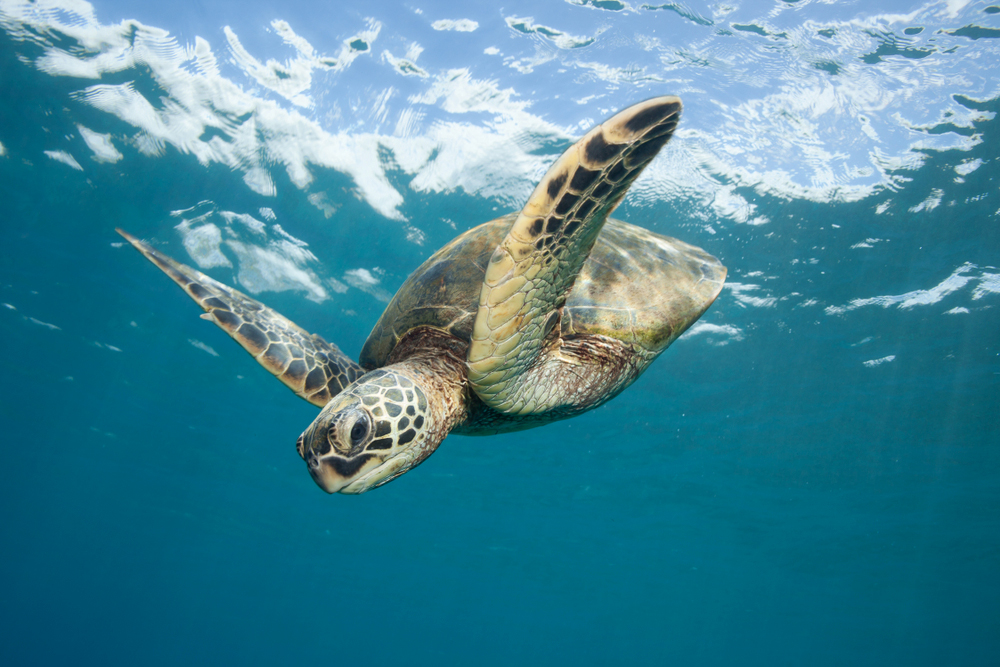
This long-lived migratory reptile has a smooth, heart-shaped carapace (upper shell) that’s typically mottled brown, grey, olive-green, with a pale underside (plastron). It’s called the ‘green’ sea turtle because of the greenish hue of its body fat, which is caused by its diet of seagrasses and algae. In fact, it’s the world’s only herbivorous sea turtle species.
Sea turtles, including the green sea turtle, hold deep spiritual and cultural significance for many First Nations peoples across Australia and are a traditional food source.
Habitat
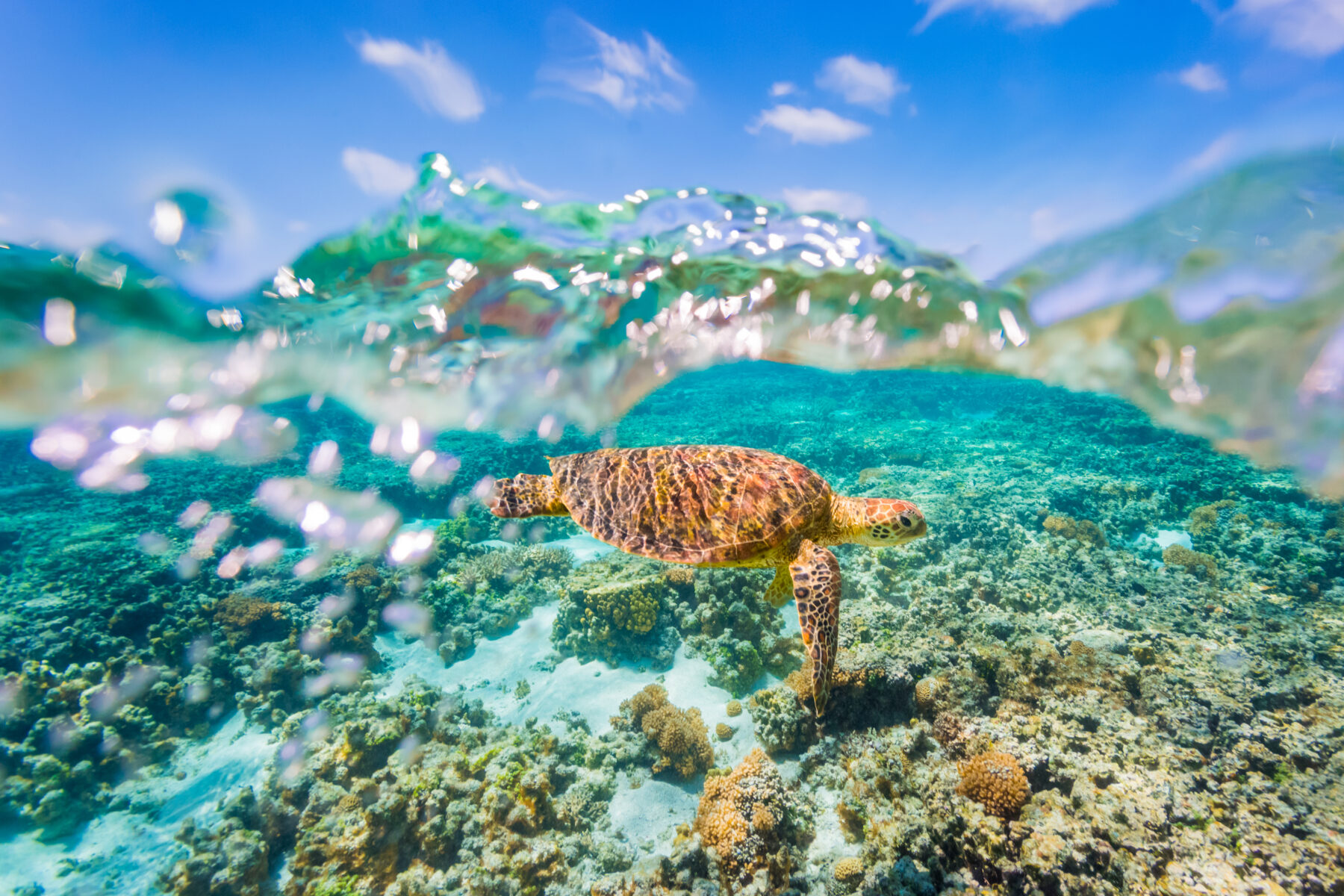
The green sea turtle is commonly found grazing in seagrass pastures and seaweed-rich coral reef systems, which provide both food and shelter.
Distribution
Green sea turtles are found in tropical and subtropical areas across the Indo-Pacific region. Nesting populations are found in seven locations across Australia: the southern and northern Great Barrier Reef, the Gulf of Carpentaria, the Coral Sea, the Ashmore and Cartier Reefs, Scott Reef, and Western Australia’s north-west shelf.
Many turtles migrate from feeding grounds in Indonesia, Papua New Guinea, New Caledonia, Vanuatu to nest on Australian beaches. The Great Barrier Reef and Shark Bay area in Western Australia are also important feeding grounds.
Conservation status
In Australia the green sea turtle is listed as ‘vulnerable’ under the federal EPBC Act.
Reproduction
Green sea turtles typically nest between October and April, although nesting can occur year-round in some areas. Females come ashore to dig a nest in the sand using their flippers, where they lay about 100 eggs before covering the nest and returning to the ocean. Females breed every two or more years, producing up to five nests each breeding season.
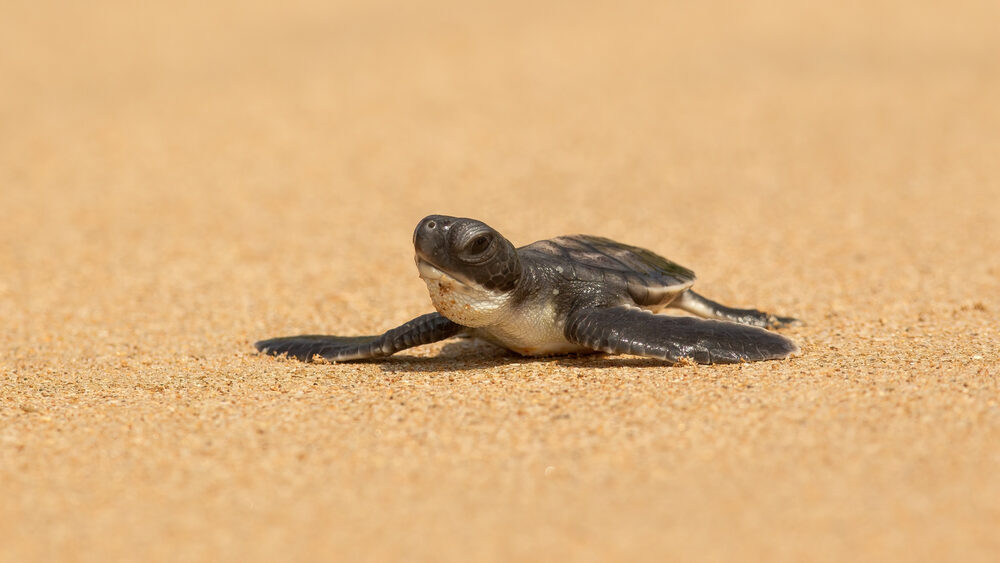
The hatchlings emerge some 60 days later, then instinctively make their way to the open ocean. Survival rates are extremely low; the Australian Institute of Marine Science estimates as little as 1 in 10,000 hatchlings will survive to adulthood. They reach sexual maturity at about 30–50 years old.
Threats
Accidental entanglement in fishing gear and nets is a leading cause of injury and death for green sea turtles. Marine debris and pollution – particularly plastics – pose another serious danger, as turtles can become entangled or ingest floating waste, mistaking it for food. Other threats include climate change, extreme weather events and coastal developments, all of which contribute to the loss and degradation of critical habitats such as seagrass meadows, coral reefs and nesting beaches.
Light pollution is also interfering with breeding behaviours. Artificial lights in coastal areas can deter nesting females from coming ashore and also disorients hatchlings, often causing them to crawl inland instead of towards the ocean.
Fascinating fact
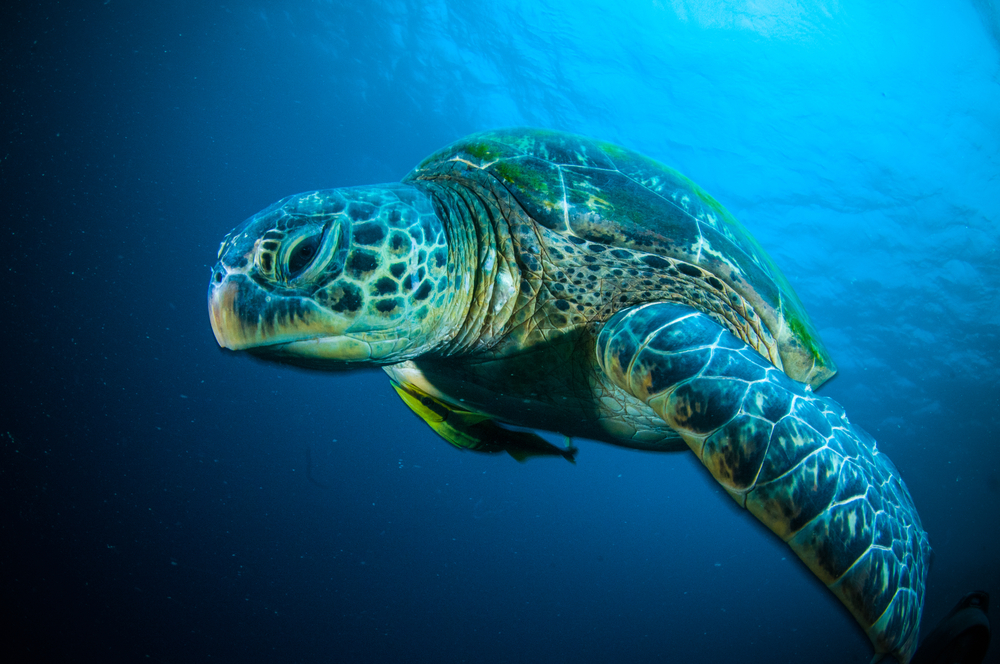
Marine researchers can identify individual green sea turtles by their distinctive facial scale patterns, which are unique to each turtle – much like human fingerprints.