| Common name | Eastern quoll |
| Scientific name | Dasyurus viverrinus |
| Type | Mammalia (marsupial carnivore) |
| Diet | Insects, small mammals, reptiles and birds |
| Average lifespan | Estimated 2–4 years in the wild |
| Size | Males weigh between 900g and 2kg; females weigh between 700g and 1.1kg |
CONSERVATION STATUS (Australia): Listed as Endangered under the EPBC Act
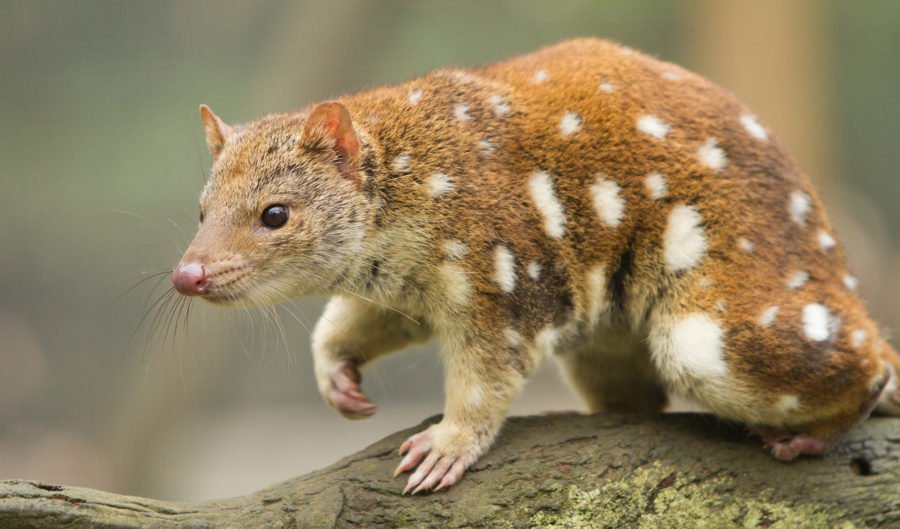
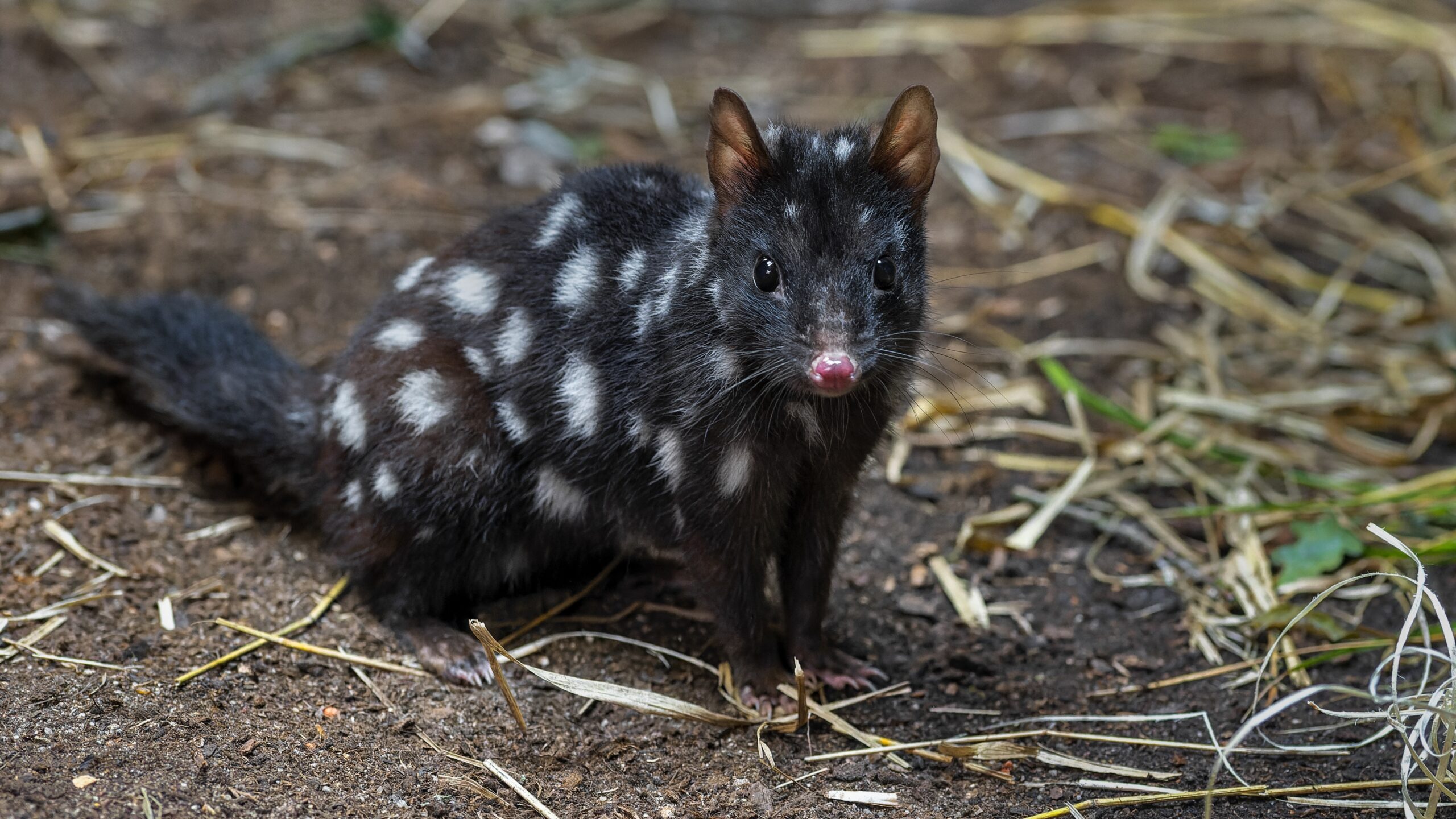
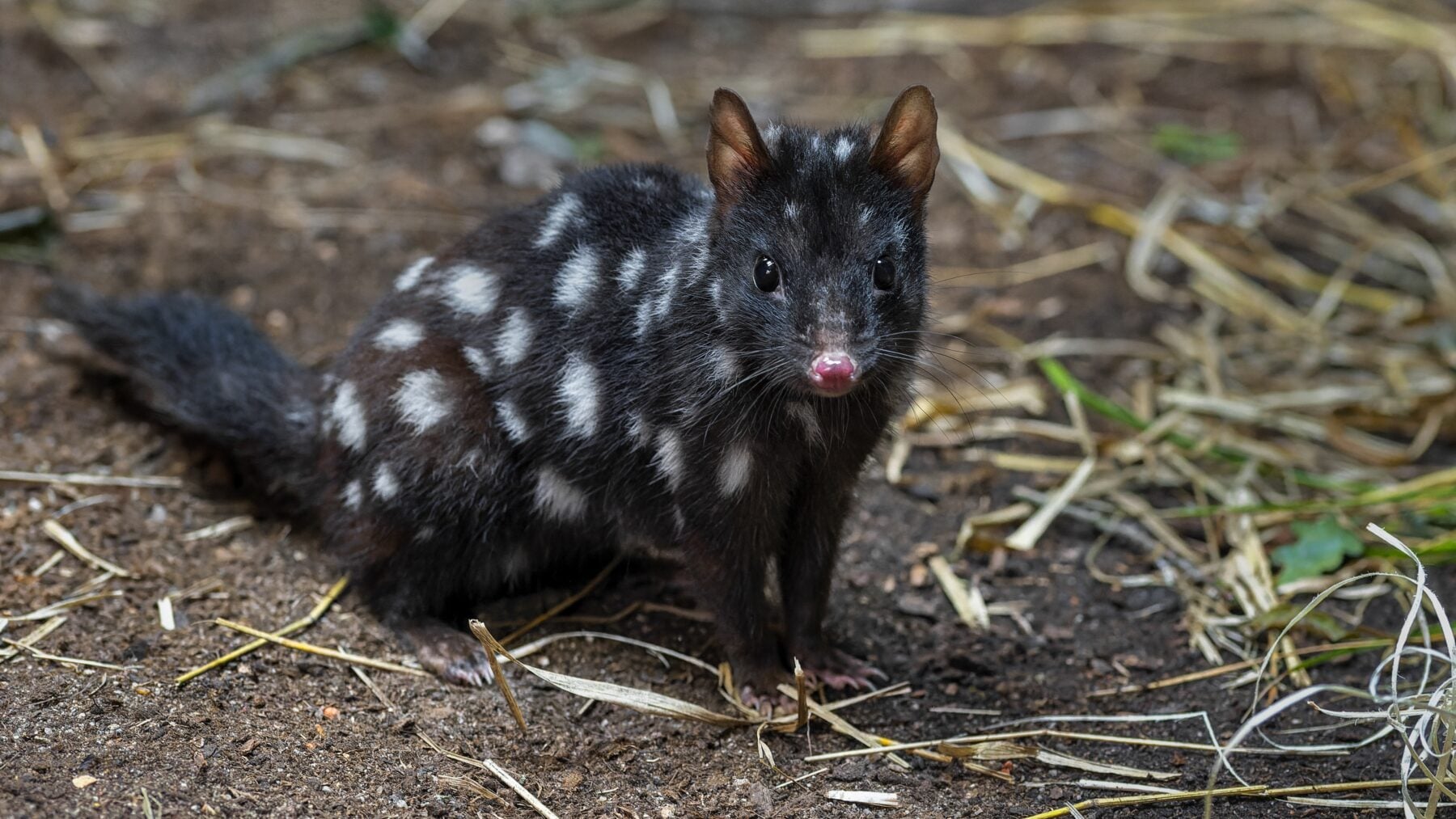
One of four quoll species found in Australia, the eastern quoll is a cat-sized marsupial carnivore that hunts and scavenges opportunistically under the cover of night, before retreating to underground burrows or hollows tree trunks to rest during the day. Its sleek black or light brown fur coat is covered in white spots – except for its bushy tail – and it dark eyes, a pointed nose and pink erect ears.
Invertebrates such as spiders, grasshoppers, beetles and cockroaches make up the bulk of its diet, supplemented by carrion, small mammals, birds, bird eggs, reptiles, fruit and seeds. As a mid-level predator, it has an important ecological role in keeping insect and rodent populations under control and helping remove carrion for a landscape.
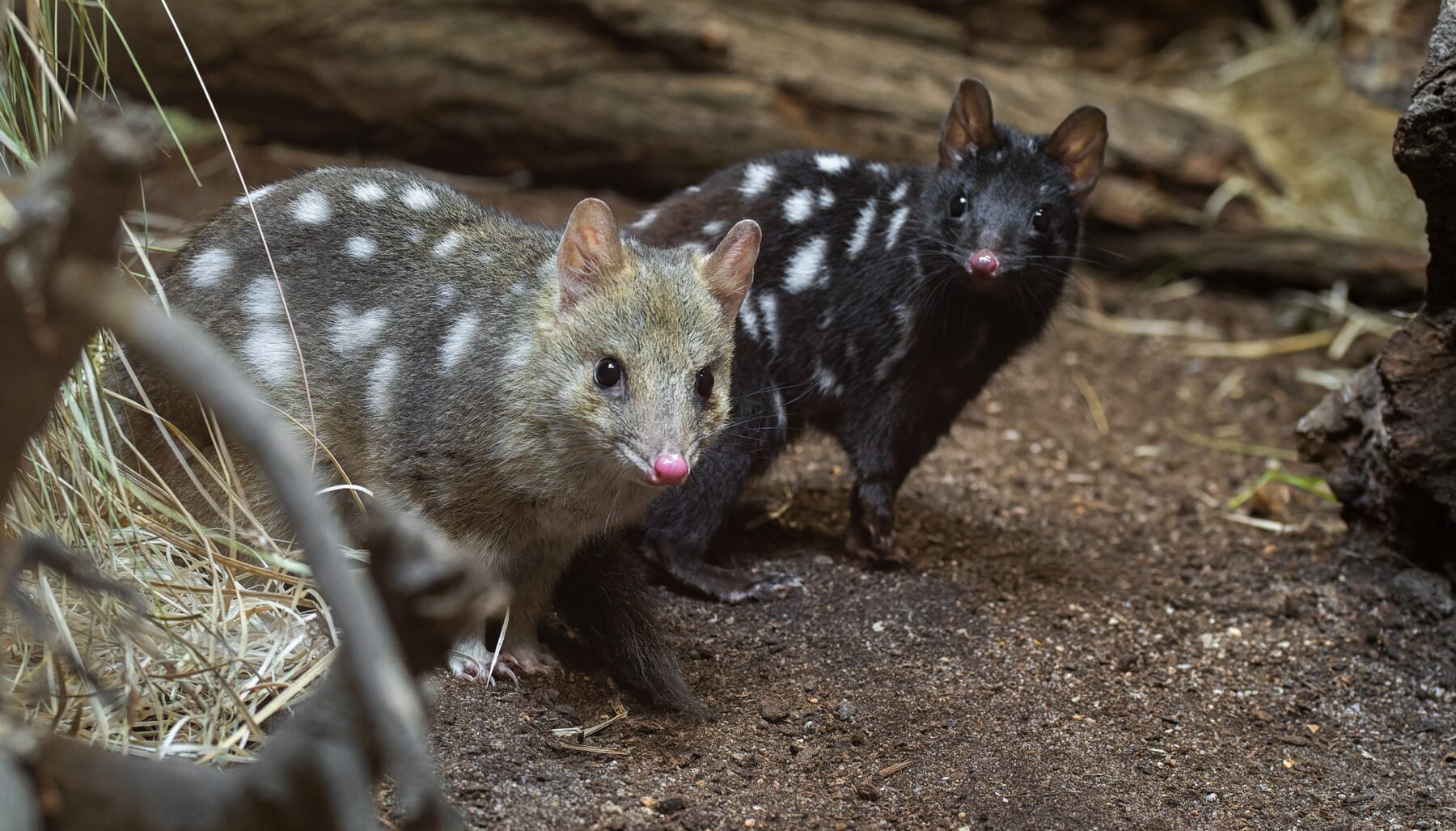
Once found across southeastern Australia, the species declined sharply due to predation by introduced foxes and feral cats, habitat loss, and persecution by early European settlers who considered it a pest. It became extinct on the mainland by the 1960s but persisted in Tasmania. Now, captive-breeding programs and other conservation initiatives are safeguarding the future of this iconic species, helping to restore populations to parts of its former range.
Habitat
The eastern quoll occurs in a range of habitats, including open grasslands, woodlands, farmland, dry sclerophyll forest, alpine heathland and coastal scrub.
Distribution
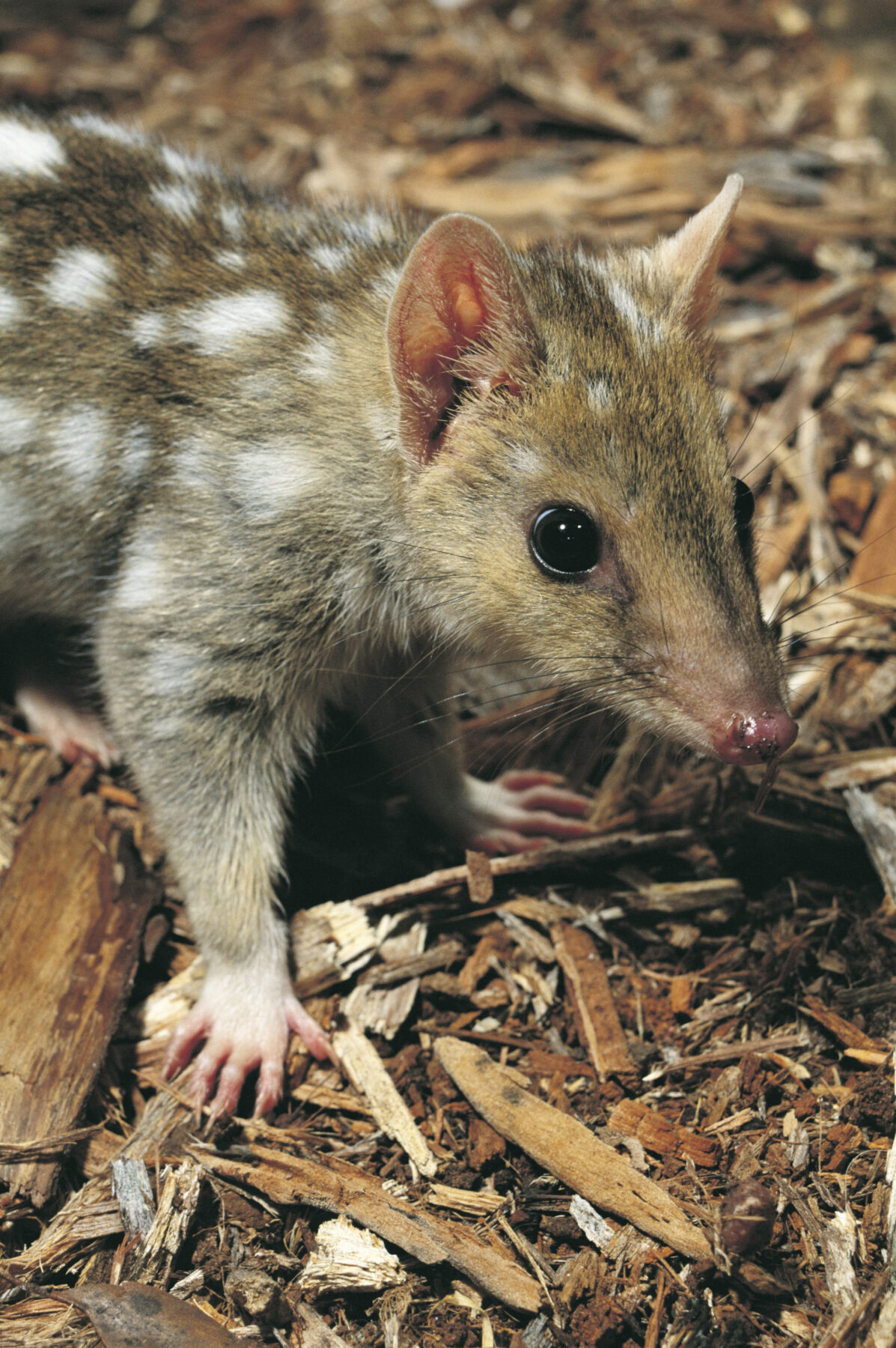
Once widespread across much of southeast Australia, wild populations are now largely restricted to Tasmania, although recent conservation programs have seen its reintroduced to the mainland.
Conservation status
Listed as Endangered under Australia’s EPBC Act.
Threats
The eastern quoll is impacted by predation by feral cats and foxes, as well as vehicle strikes, habitat loss and secondary poisoning after eating animal carcasses of animals killed by bait.
Reproduction
Breeding occurs in May and June, with females giving birth to about 30 young after a 19–24 day gestation period. Of these, only about six will attach to the mother’s teat and develop into a litter. The young are weaned at about five months old and reach sexual maturity at about 10–11 months old.
Fascinating fact
The word “quoll” comes from the Guugu Yimithirr language in north-eastern Queensland. Early Europeans called them “native cats”.