‘Spiny leaf insects have perfected outsourced parenting’

Bec Crew
Bec Crew
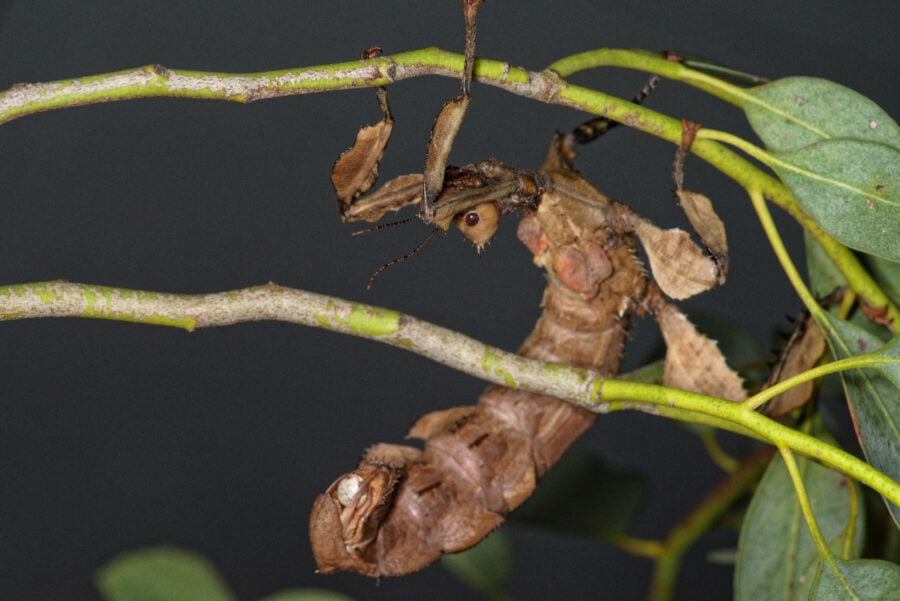
For a spiny leaf insect, motherhood begins and ends with a bunch of eggs passing through her gonopore (genital opening). She’s probably forgotten all about them by the time they hit the forest floor.
Lots of insects abandon their eggs. Grasshoppers, for example, lay their eggs in a protective pod and bury it in the soil before taking off. Butterflies lay theirs on a host plant and do the same. Flies often ditch their eggs in warm faeces, because, of course they do.
But the spiny leaf insect mother does things a little differently. She not only abandons her eggs, but she has also figured out how to trick someone else into protecting and raising them for her. And just as well, because those eggs take years to hatch.
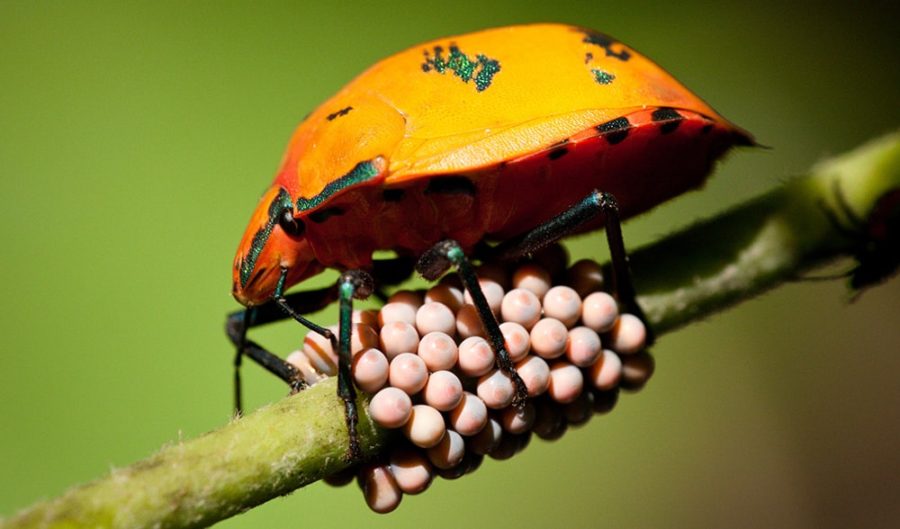
With a broad, spiky and leaf-like body, spiny leaf insects (Extatosoma tiaratum) expertly mimic the crumpled foliage of their environment. There are about 200 known species of stick and leaf insects in Australia, and they belong to the ancient insect lineage of the phasmids.
Spiny leaf insects are found in forests in eastern Australia. This habitat provides the perfect environment for them to abscond from their parental duties. Because when the mother flicks her eggs to the leaf litter below, they almost immediately catch the attention of ants.
But why would an ant care about another insect’s egg? Because they’re tipped with a nutrient-rich, fatty knob called a capitulum, which ants absolutely love. So much so that they cart the eggs away to the safety of their nest. Here, the ants only eat the capitulum and leave the rest of the eggs untouched in the safest nursery its mother could have ever hoped for.

The eggs will stay there for up to three years (which, incidentally, is longer than their mother’s entire lifespan). When the eggs hatch, the deception continues: spiny leaf insect nymphs emerge from their eggs looking and behaving just like ants.
Not only are the ants fooled and so don’t bother the nymphs as they exit the nest, but once they’re out in the open, even birds tend to avoid them, because every bird knows ants taste horrible. Over time, the nymphs will grow and develop their leaf-mimicking appearance and climb into the trees to camouflage like their mother.
For the spiny leaf insect, good parenting means no parenting at all. By outsourcing protection to an entirely different species, they’re playing 4D chess against predators who don’t even realise they’re part of the game.