Pistol shrimp and goby fish: ‘Just two best buds against the world’

Bec Crew
Bec Crew
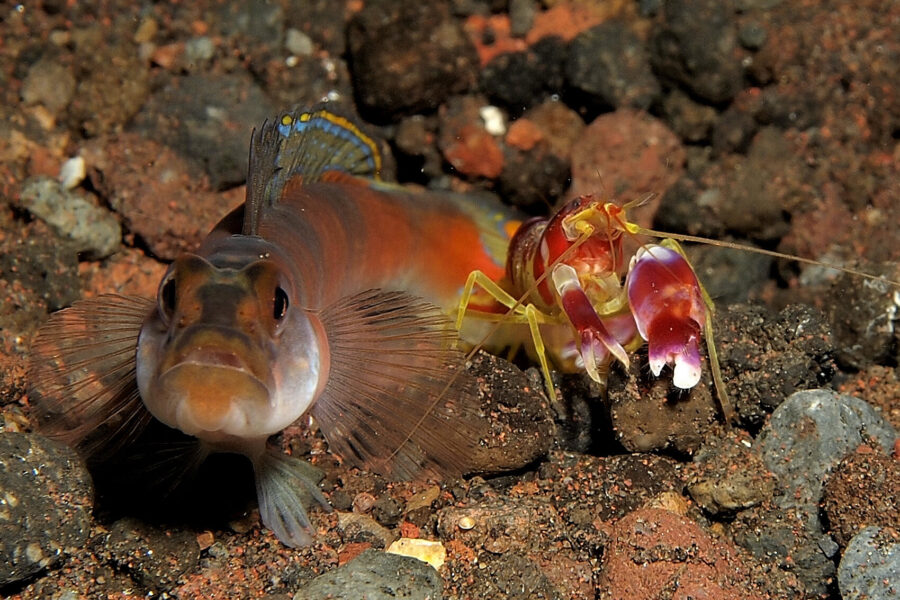
More than a century ago, scientists thought that symbiosis – a close, long-term relationship between different species – was a rare and special phenomenon. Now, we know it is incredibly common. Many plants and animals rely on another life form to survive.
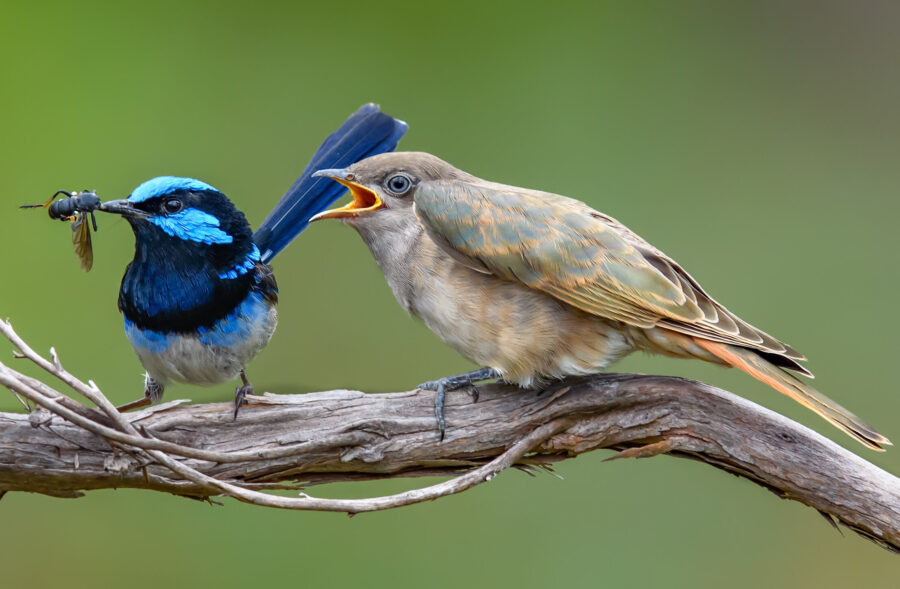
Symbiosis can come in the form of commensalism, where one party benefits and the other is unaffected (birds gaining shelter in trees, for example), or parasitism, where one party benefits and the other is harmed (like the dreaded tongue-eating louse, or Dendrogaster parasite). But the most heartwarming version is symbiotic mutualism, where both parties benefit.
We all know the classic example: clownfish gain protection from anemones and anemones get food scraps and cleaned in return. But there’s a lesser-known example of symbiotic mutualism that’s playing out in our oceans: the goby fish and pistol shrimp pairing.
Gobies (gobiid fishes) are small, bottom-dwelling fishes, more than 330 species of which have been discovered in Australian waters so far. They’re fast-moving and have sharp eyesight. But there’s one big problem: in the ocean, there are very few places for a small fish to hide.
Enter the pistol shrimp: a tiny crustacean that uses its strong claws to dig burrows in the sea floor – the perfect hideaway.
So, the goby obviously needs the pistol shrimp and its burrows to hide, but why would the pistol shrimp want a goby hanging around? Well, pistol shrimp happen to be blind.
These two complement each other perfectly.
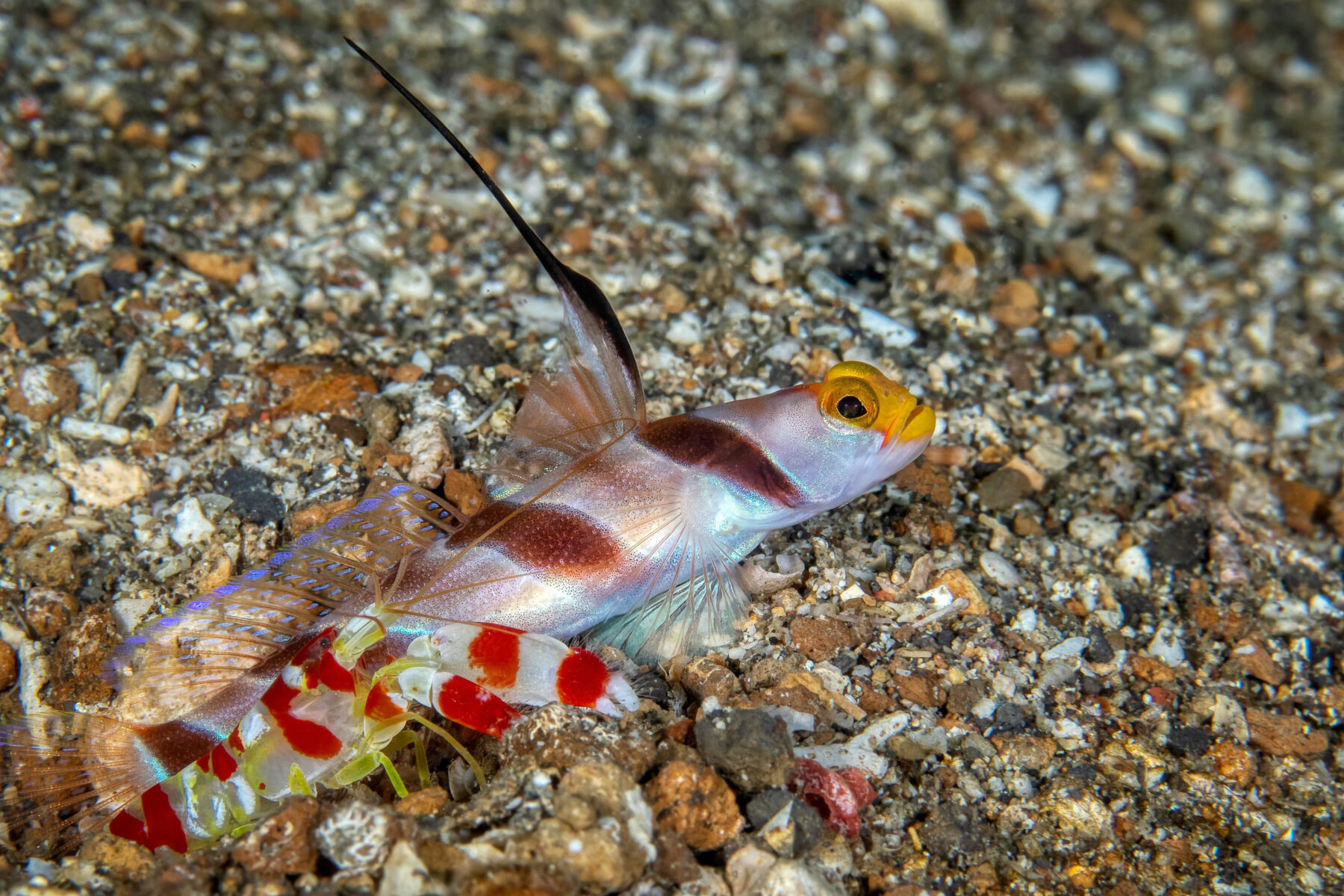
The pistol shrimp excavates and maintains a burrow, and the goby stands sentry, watching for predators that the pistol shrimp wouldn’t see coming.
They have even worked out a clever way of passing information to each other. Each time the shrimp emerges from its burrow, it places one of its antennae on the goby fish. If danger is lurking, the goby quivers its body or flicks its tail to alert the shrimp. If the threat is large or is coming straight at them, the goby will dart into the burrow or block the entrance with its body.
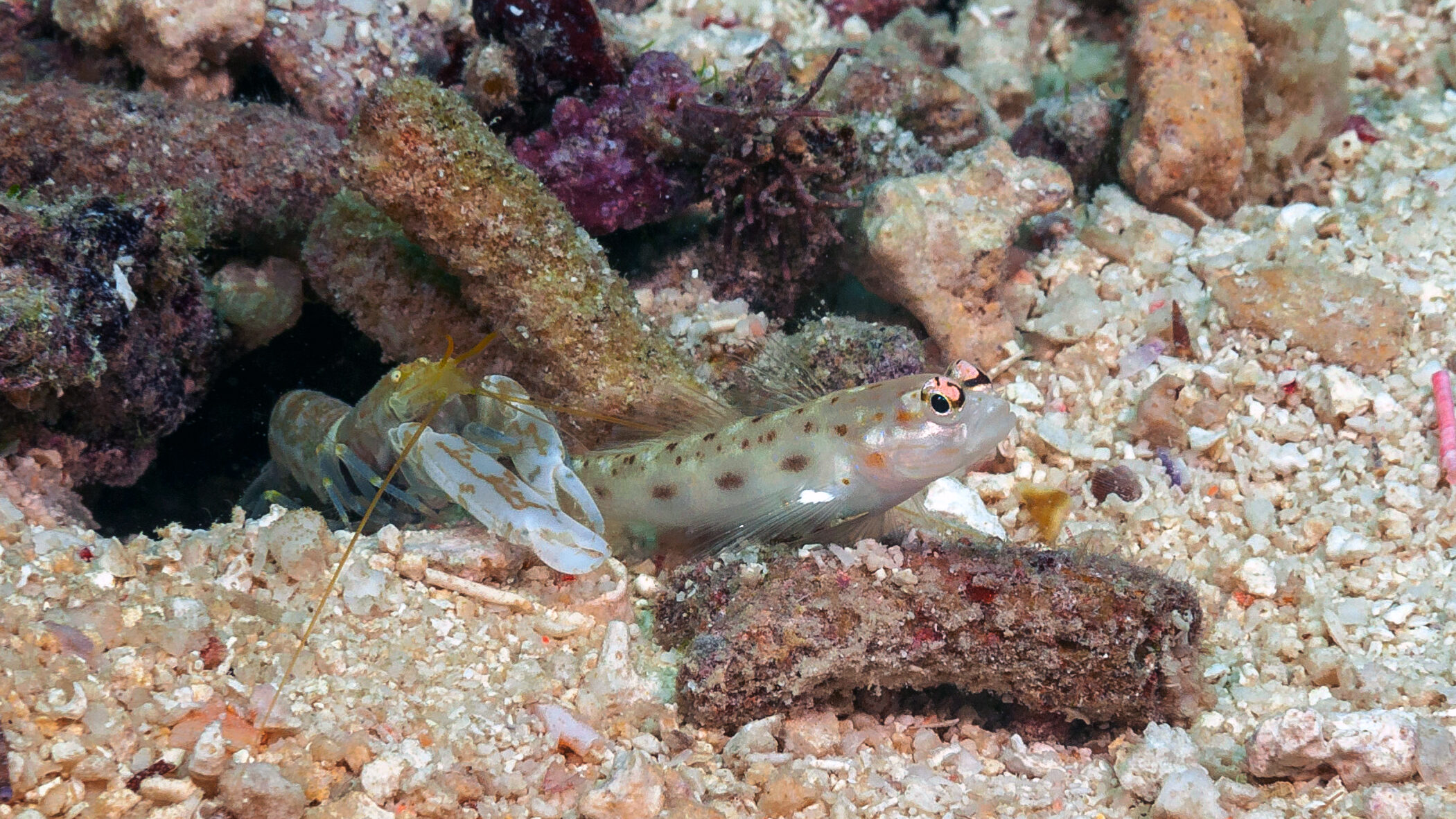
If the coast is clear, the goby will hang out at the entrance of the burrow, feeding on passing zooplankton or small invertebrates while the shrimp tinkers with the burrow, digging it deeper and deeper into the sea floor.
Funnily enough, this behaviour is so instinctual that it plays out in captivity, too. Aquarium owners have reported that if one goby or pistol shrimp dies, you can add another one and hope that they bond. It’s not a given – sometimes the vibe just isn’t there!