‘Jumping spiders are basically just cats’

Bec Crew
Bec Crew
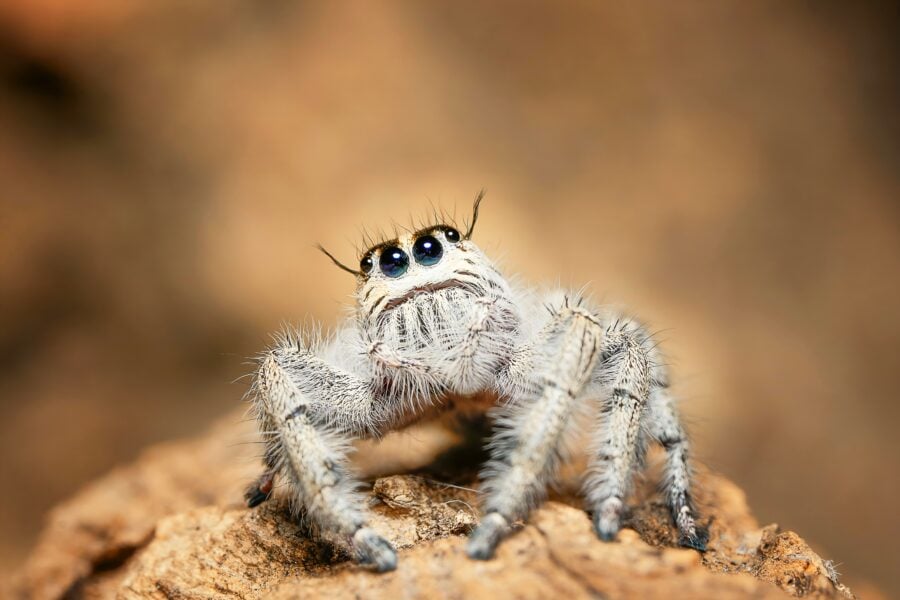
The arachnophobes have come to a decision: jumping spiders can stay. The other spiders must leave, but if a jumping spider wants to take up residence in our bathroom, that’s fine. Welcome, even! Daddy-long-legs can also stay, but only in very small numbers, and we’d better not see any mozzies. This isn’t a holiday camp.
Australia is home to an estimated 10,000 spider species, yet fewer than 3,000 have been formally described. Of these, just over 330 belong to the jumping spider family Salticidae – and researchers suspect that as many as another 1,000 species remain unnamed.
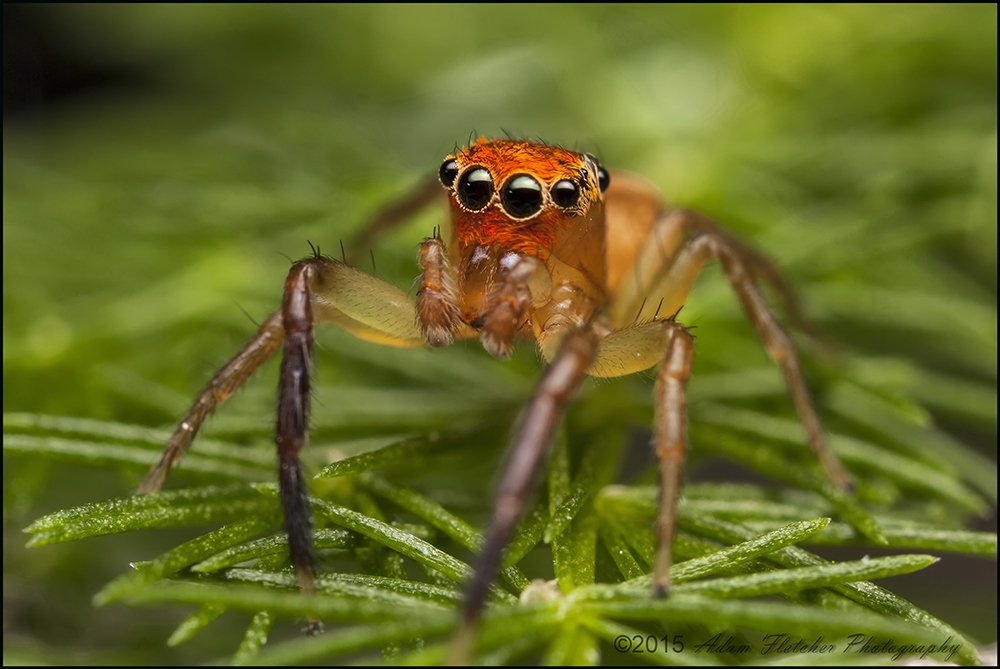
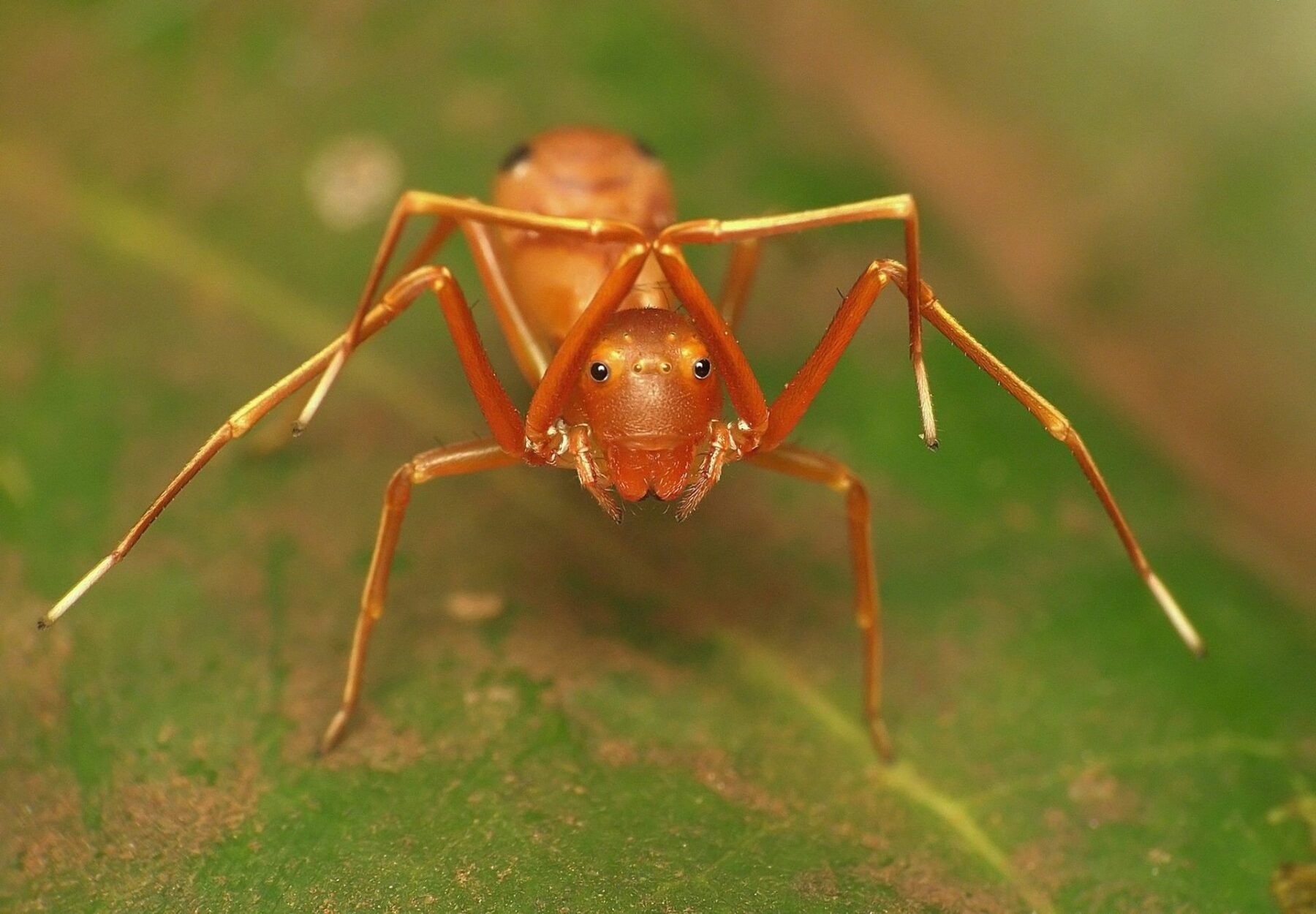
Jumping spiders vary dramatically, from the impossibly adorable to the, erm, impressively… disproportionate.
But what they do have in common is being small with large eyes. They have four pairs, with one facing directly forward, to give them an almost 360-degree view of the world. They’re also very good at jumping. In fact, some species are so good at jumping, they can clear more than 40 times their own body length in a single bound.
While many spiders are of the ‘wait and see’ persuasion, building webs in the hope that some hapless insect will wander into it, jumping spiders seek out their prey: spotting it, stalking it, and pouncing on it with deadly precision. Some species even waggle their abdomens before they strike, just like a cat.
Because they are active hunters, jumping spiders have evolved some fascinating characteristics. They are naturally curious, because they have to be – they’ll observe and pursue anything that appears prey-like, and because they have such good vision, they like to check out other things, too. If you spot one in your house or yard and get right up close to it, don’t be surprised if it turns around to meet your gaze.
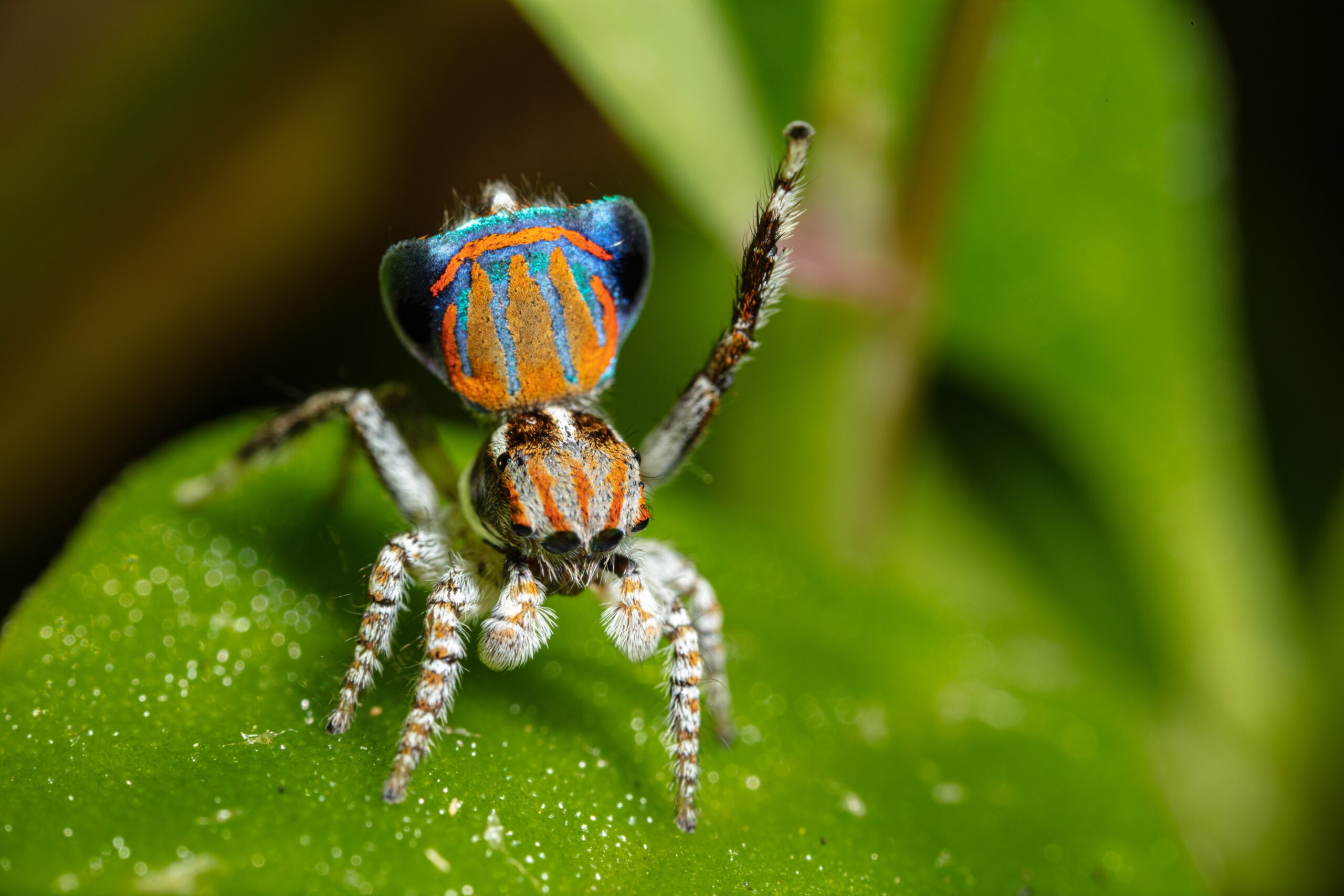
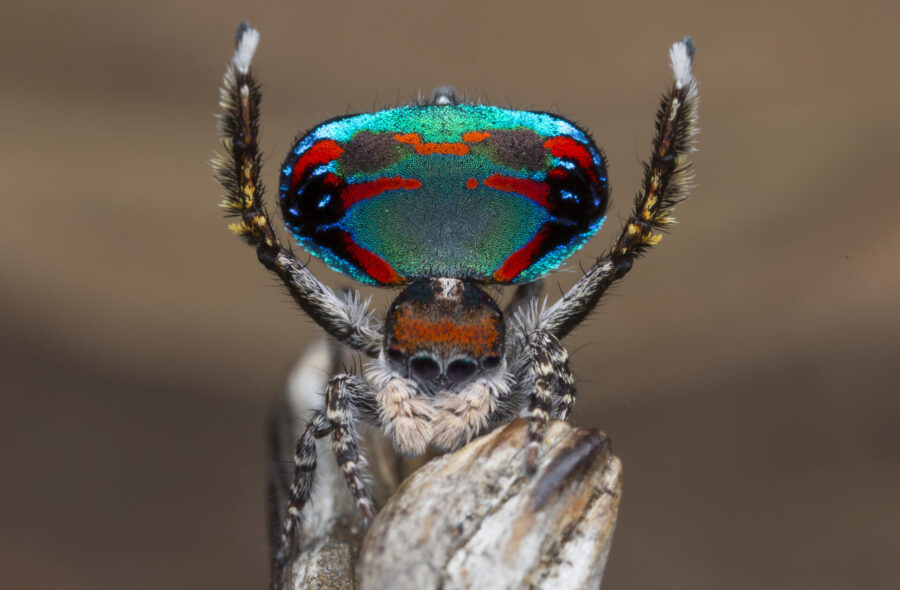
Humans aren’t natural predators for jumping spiders, so they can actually be pretty relaxed around us, turning up on our kitchen bench or bathroom mirror. And anyway, they have bigger fish to fry – namely, each other. The males are so afraid of being mistaken as prey by the females that they have to perform an elaborate mating dance from a distance in order to identify themselves, raising their abdomen and waving and stamping and drumming on the ground to get the female’s attention.
If successful, the male gets to mate. If the female is simply hungry, he will become the very prey he was trying desperately to differentiate himself from.
Australia is known for a particular type of jumping spider – the peacock spider. Named for their brilliant colouring, the peacock spiders of the genus Maratus are found nowhere else on earth. There are now more than 110 described species of peacock spider from eastern and southern Australia, and the small group of scientists who study them have been working fast: back in 2011, there were just seven species on record.
So, if you encounter one in the wild, it might just be an undescribed species. And here is a great resource you can use to try and identify your new friend.