Spare a thought for female Australian fur seals

Bec Crew
Bec Crew

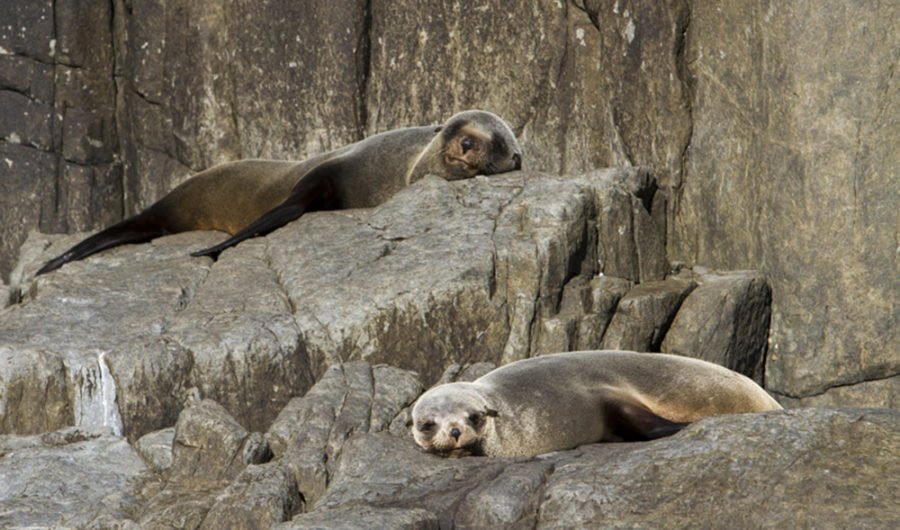
Females are either pregnant, nursing, or both at the same time for their entire adult lives. They exist in a group of nine or 10 (or 40!) females to a single dominant male. And did I mention that some have been experiencing strange patterns of hair loss?
The Australian fur seal (Arctocephalus pusillus doriferus) is a subspecies of the South African fur seal (Arctocephalus pusillus). It’s the largest of all fur seals, with the biggest males growing to a whopping 360kg and females weighing between 40–110kg.
Australian fur seals live mostly in the warm coastal waters of south-eastern Australia and its nearby islands. Bass Strait is an important breeding ground – most of the Australian fur seal population breeds on islands here, including Seal Rocks and Kanowna Island. Smaller breeding colonies also exist around Tasmania’s coast.

Image credit: shutterstock
Once Australian fur seal females reach sexual maturity, at around three or four years old, they give birth to a pup – sometimes two – almost every single year. Pups are born in the summer months (late October to December), and just 6–10 days later, the females will mate again. A fertilised egg will remain dormant in the female for weeks before implanting and gestating for nine months – a process known as delayed implantation. Why? So the female can time the birth of her next pup with the return of the summer months.
And here’s the kicker: they give birth to the heaviest pups of any fur seal species – up to 8kg for males and 7kg for females. Ouch.
Maybe it’s the stress of it all, but alopecia (hair loss) has been recorded in female Australian fur seals with surprising frequency. As many as 50 per cent of all young females in the Lady Julia Percy Island breeding colony were losing their hair, according to a 2011 report. No one really knows why, but it does seem pretty on-brand for poor female Australian fur seals.

Not that it’s much better for the males – they have a shorter lifespan than the females, and only the dominant males can mate. Subordinate males might never mate, which is a pretty miserable fate when you’re supposed to be passing on your genes.
But don’t worry too much – Australian fur seals are glass-half-full kind of animals. Nicknamed ‘the dogs of the sea’, they’re curious, playful, and mostly friendly with the humans they encounter.
So, next time you spot one basking on a rock, remember: behind that sun-soaked smile is a life of hustle, high stakes and no real days off. A bit of fun is exactly what these iconic creatures need.