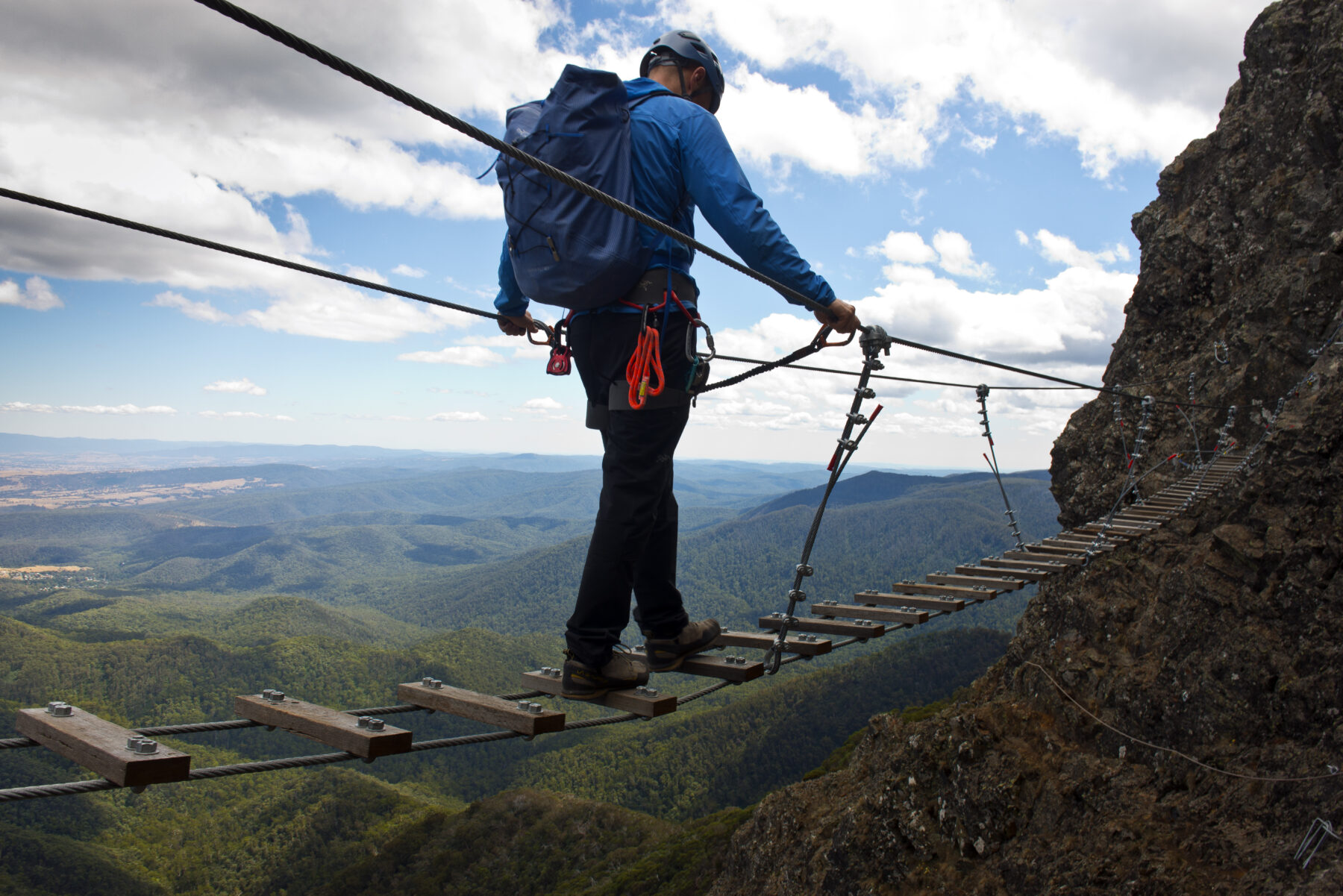
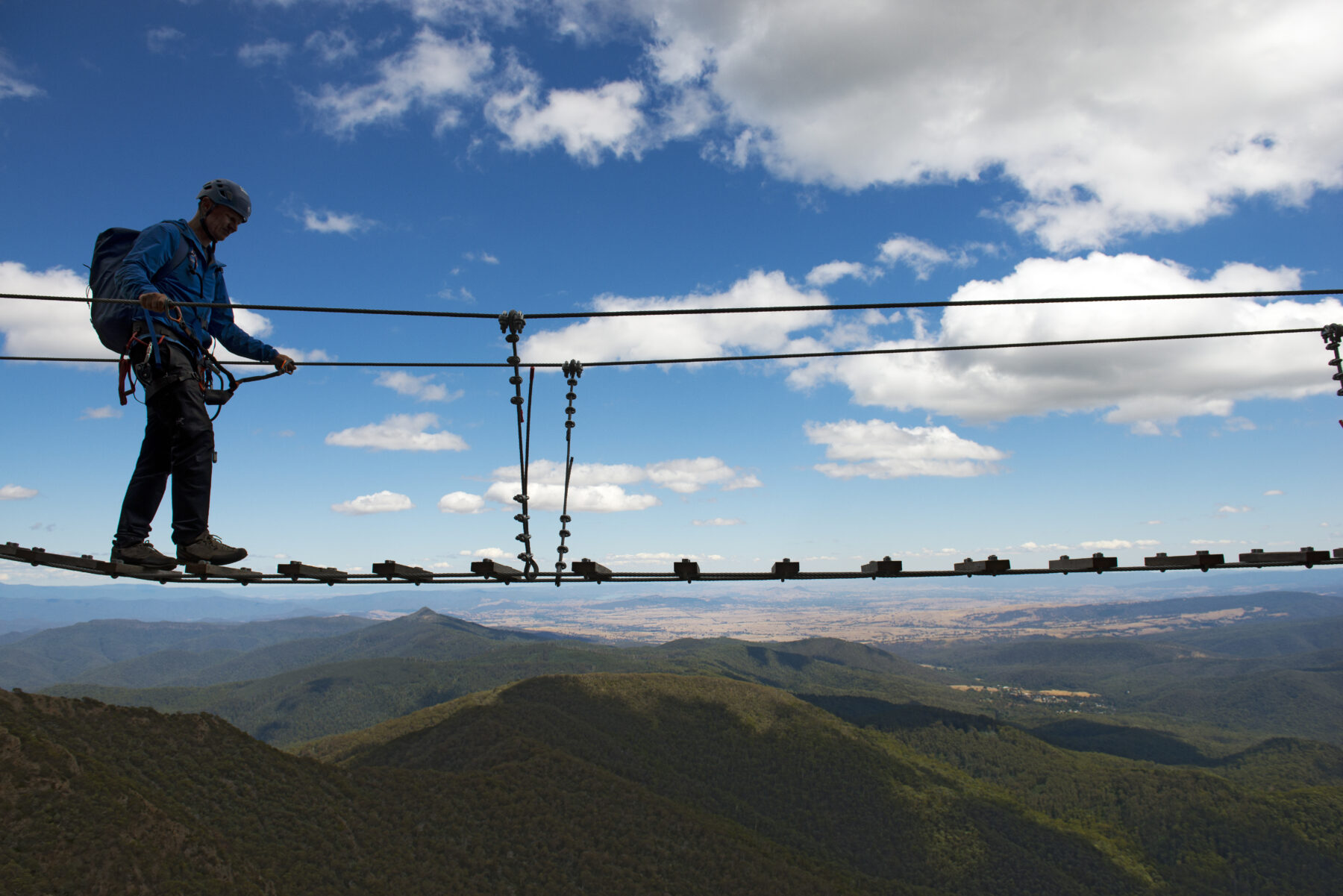
I’m pulling myself up over a slightly overhanging section of rock. Below me is a drop of maybe 80m. A fall here would almost certainly be fatal. With me is James Webb, mountaineer and founder of RockWire – Australia’s first and so far only via ferrata, or ‘iron path’, experience. He’s guiding me through the vertical world of Mt Buller’s west face in the Victorian Alps.
Secured onto a steel cable using a lanyard system, I’m safe from plunging down to the scree fields below. Artificial hand and footholds make this passage negotiable even for non-rock climbers. These artificial climbing routes are historically associated with the Dolomites in Northern Italy. The peaks and spires there were frontline during World War I, and to get soldiers and weapons into strategic positions, steel cables, ladders, and hand and footholds were fixed to the sheer rock walls of these rugged mountains. Today they form an essential part of alpine activities in the Dolomites. James, however, got his idea to introduce this concept into Australia not in Northern Italy but in Whistler, Canada, where a popular via ferrata attracts scores of non-climbers and thrillseekers in summer.
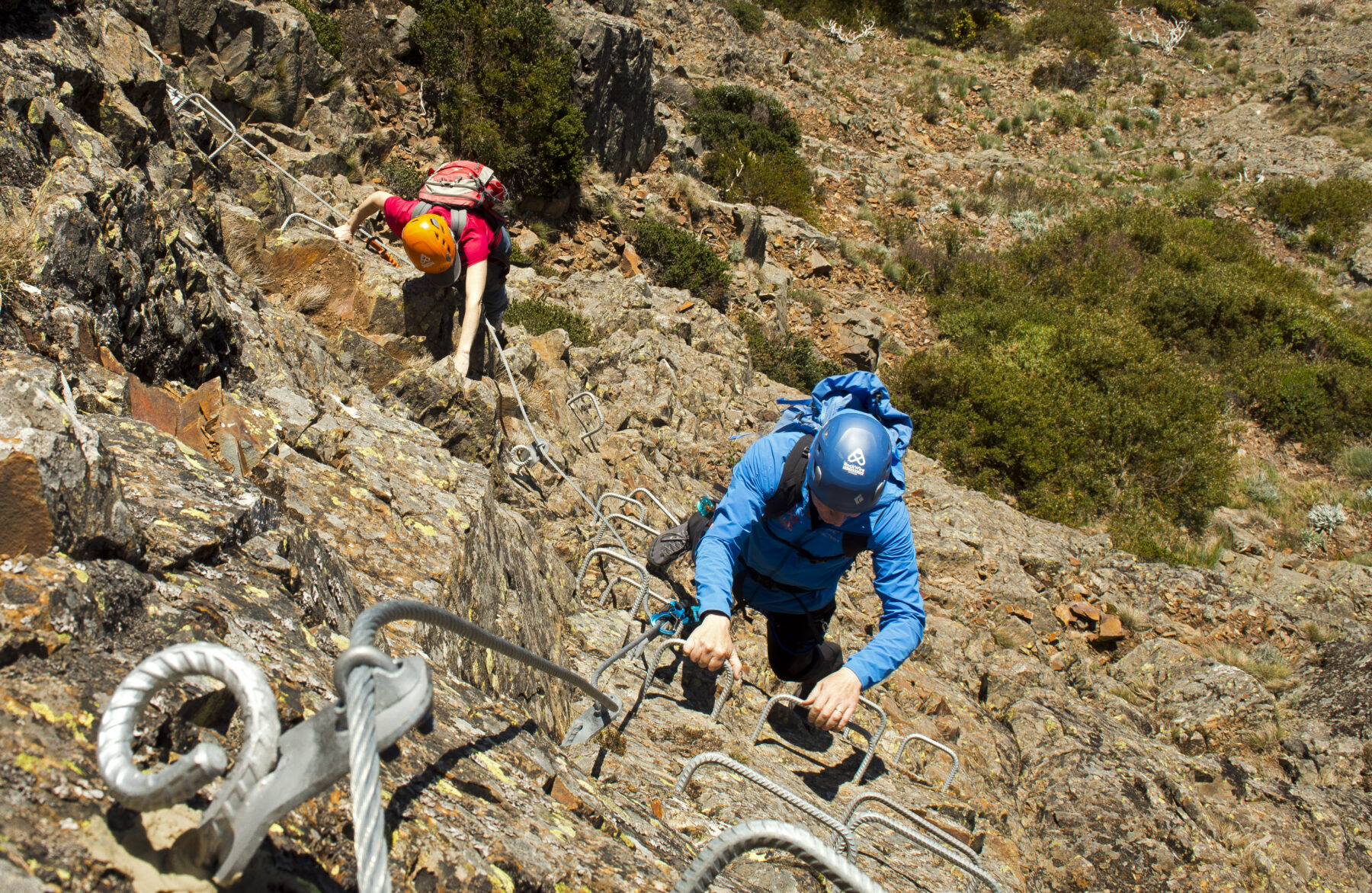
James’s new venture on Mt Buller now has two of the three planned routes finalised. He’s hoping his business provides the push Mt Buller needs to become a bigger summer destination. “Here you come into summer and it’s dead,” James says. “It’s a real shame because we have all this infrastructure and no-one comes to visit.” More investment in summer-specific attractions, he reckons, is the missing ingredient. “No-one is willing to put the money down. So, I’m gonna do it!”
It might be the circuit breaker Mt Buller needs. Rik Lo Nigro, managing director and part owner of the Arlberg House Hotel, hopes so. He’s actively promoting the via ferrata, and for good reason. Winters in Australia are becoming increasingly unpredictable due to a changing climate. Projections
for the future are dire. Climate data from CSIRO shows that, in the Victorian ski fields, the decline in maximum snow depth during the past 25 years is about 38 per cent. While snowfall fluctuates wildly from season to season, the trend is undoubtedly downwards. Ski seasons are getting shorter.
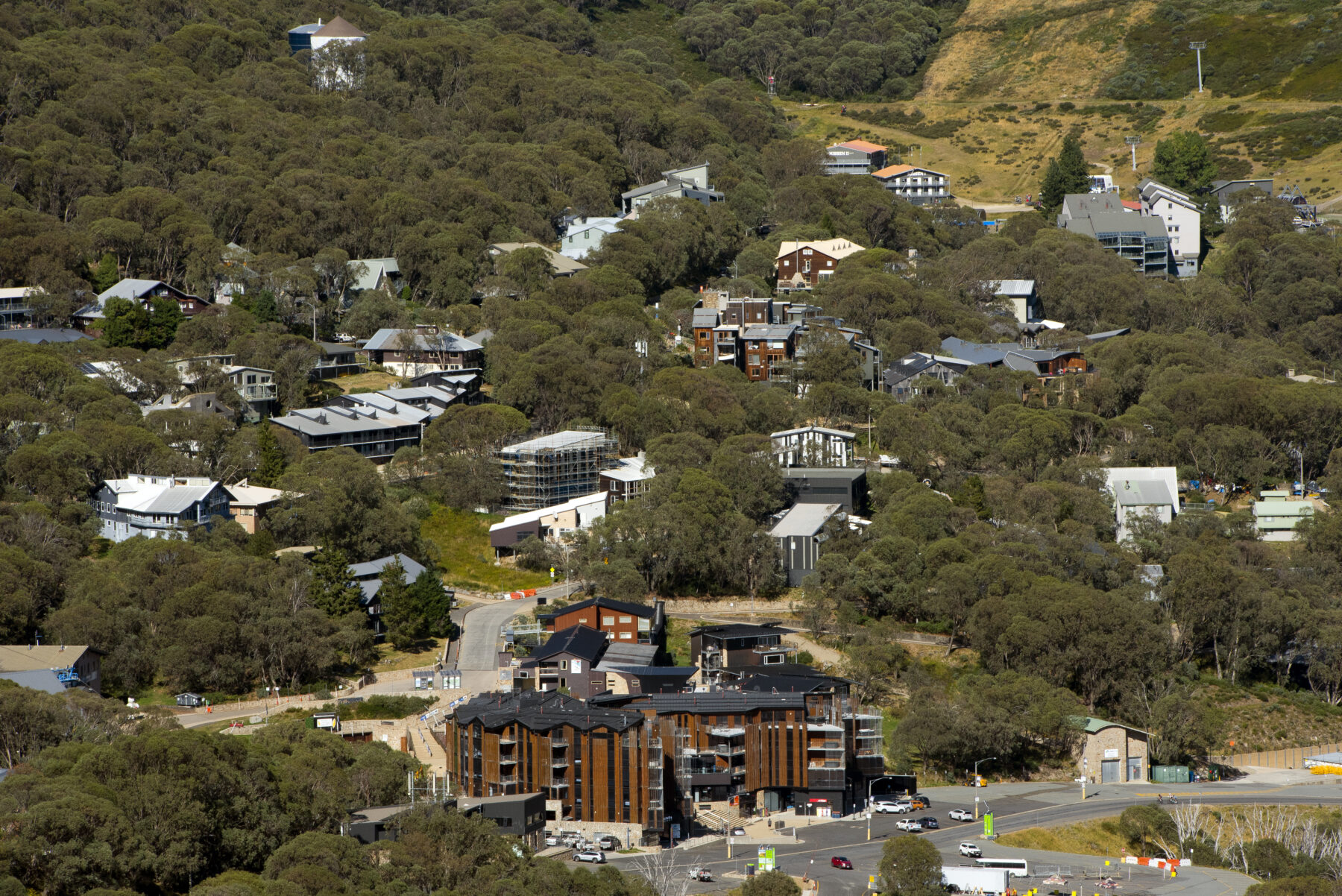
The last few seasons are a case in point. In 2025, they had a bumper winter compared to two meagre previous years. The 2024 season in particular was a massive blow for Mt Buller. No snow in June meant the resort didn’t get much early-season trade. The back end of the season was also cut short by four weeks. On average, they’ve had just 6–7 weeks of trade over the past two winters. “So, I made the decision to stay open all year round and rebuild Mt Buller along with other people, such as [James from] RockWire, who spent a lot of money on infrastructure.”
Rik, who has spent much of his professional life in the mountains, remembers a time when Mt Buller was a year-round business. “Summer was always good to us,” he says. “There were a lot of people, a lot of activities and the mountain was just as busy in the off-season as it was in the winter season.”
Summertime change
For Victoria’s three main alpine resorts – Mt Buller, Falls Creek, Mt Hotham – change is on the way. Traditionally winter destinations, the three resorts are now looking for ways to attract more visitors in the summer season as well.
Leading the charge is Falls Creek. This resort, about 30km from Mt Beauty village, took several economic hits in recent years: two poor ski seasons, COVID, and a landslide that blocked the access road for a month. And yet, the resort is lively when I visit.
It’s a Friday, and the village is awash with mountain bikers. A shuttle bus with a large bike rack is ferrying riders up the mountains to the trailheads of several tracks. They’re here to do training runs for the Victorian Enduro Tour on the coming weekend. Events like these, spaced closely together, now fill beds over the summer and make it viable for restaurants and cafes to stay open.
“Something like the Peaks Challenge [a bicycle race] brings in 5000 people to the resort,” says Sarah Watt, head of visitor experience at Falls Creek Alpine Resort. “There’s actually a master plan that was written in 2016 for all of the resort that started to look more into the strategic overlay of involving the ‘green season’.”
This long-term plan also looks at developing areas near Rocky Valley Lake or the Nordic Bowl to create a more year-round offering that’s accessible and usable not only in the winter season, but also in the green season as well. “At the moment, the low-hanging fruit is events,” Sarah says. “Over the last 10 years, Falls Creek has built the events calendar.” Seventeen events are now pencilled in through to April. “Those events cover off arts and culture, music events like Feastival, mountain biking, road cycling, trail running, walks, kids events – it’s such a broad range.”
Mountain walks
I’m standing on a rocky outcrop high above Pretty Valley Lake in Alpine National Park, waiting for the sun to rise above the distant hills. An intense glow paints the lake in deep purple hues. Although it’s February, a cool breeze reminds me of the altitude. This is the other aspect of Falls Creek. The resort is surrounded by Alpine NP, and to get a taste of it I’m on a morning walk with Nicole McKilliam. She’s an ultramarathon runner, a walking guide for Falls Creek Guides, and a ski instructor in winter.
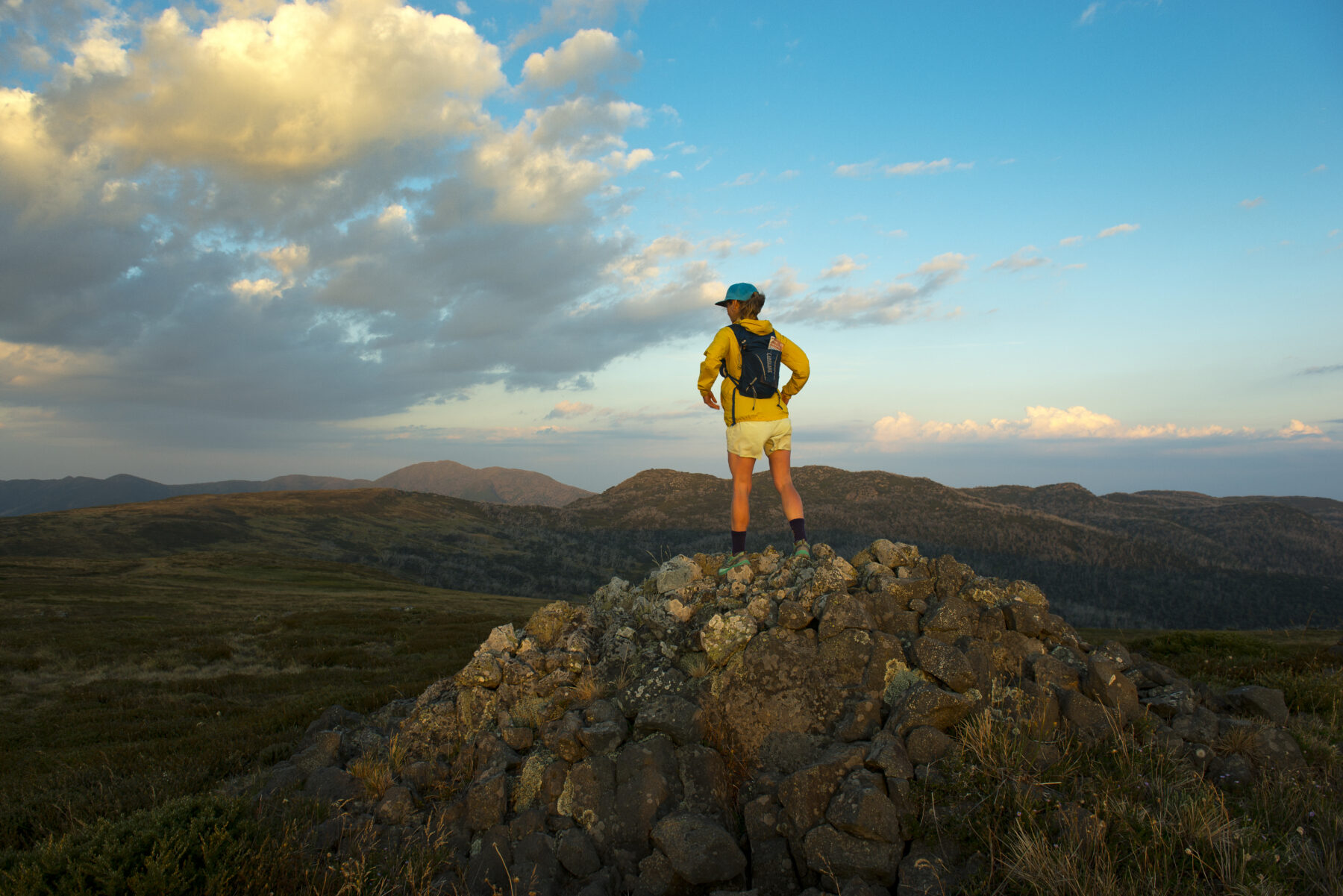
Nicole loves living on the mountain. For her, the mountains and tracks in Alpine NP are more than just a training ground for her passions. “I love the peace and quiet and just the serenity of it,” Nicole says. “I love the fact that it’s not busy. It feels very remote and untouched and easy to get to. I feel very safe in the environment, and what that equates [to] for me is freedom.”
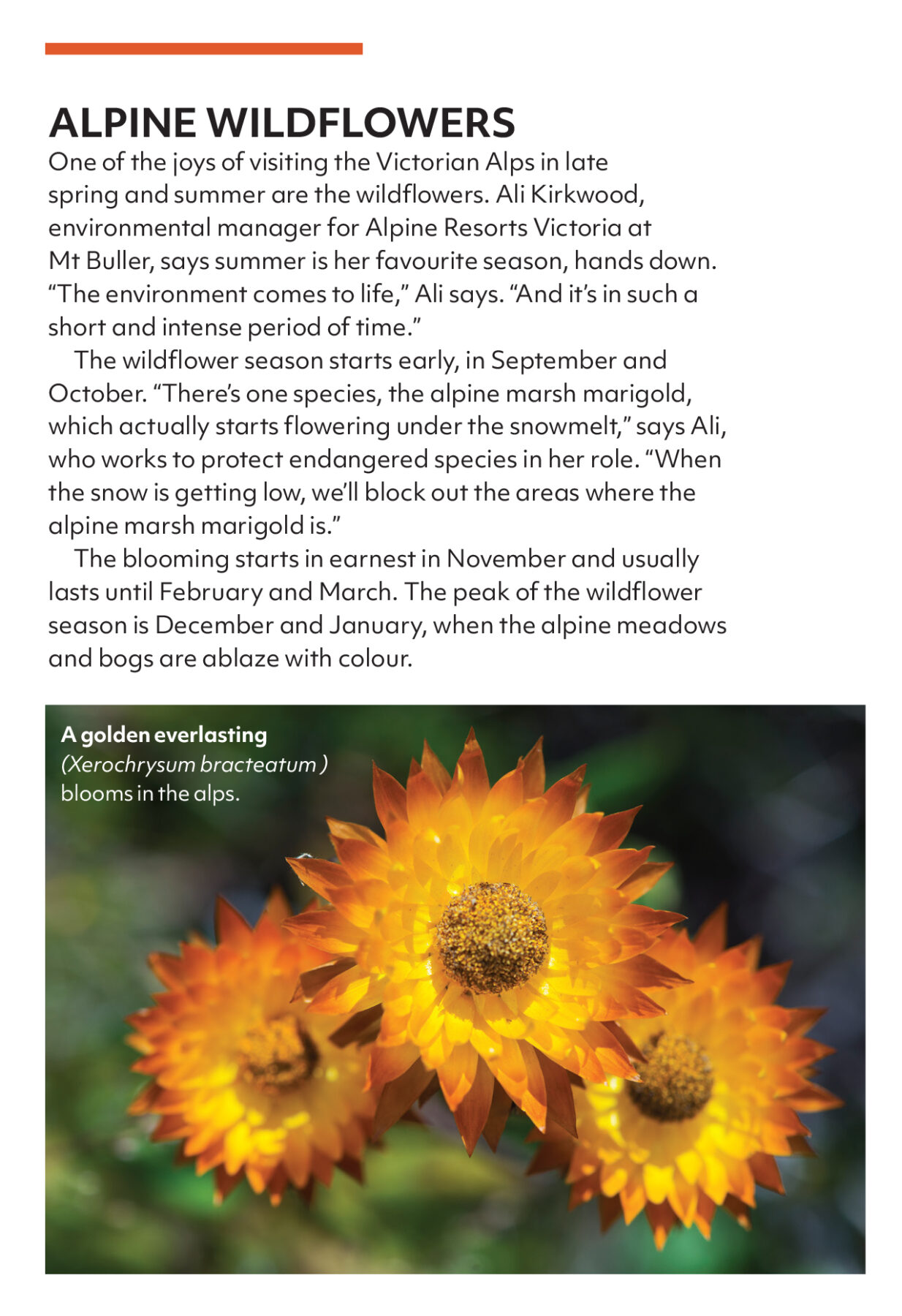
As we walk further up into the mountains, passing alpine meadows ablaze with wildflowers, Nicole explains why she’s excited that more people are beginning to realise Falls Creek isn’t only a winter destination. “There are even more things to do and explore in the summertime,” she says. “In summer it’s a completely different mountain and a completely different resort. There are definitely people who are starting to see that.
“We get a lot of walking groups up here that base themselves out of Falls Creek. We’re a central hub for the Bogong High Plains and the Alpine National Park. There’s another whole expanse of walking trails [and] huts to visit.” These huts include the iconic Wallace and Cope huts, both nestled in copses of gnarly snow gums.
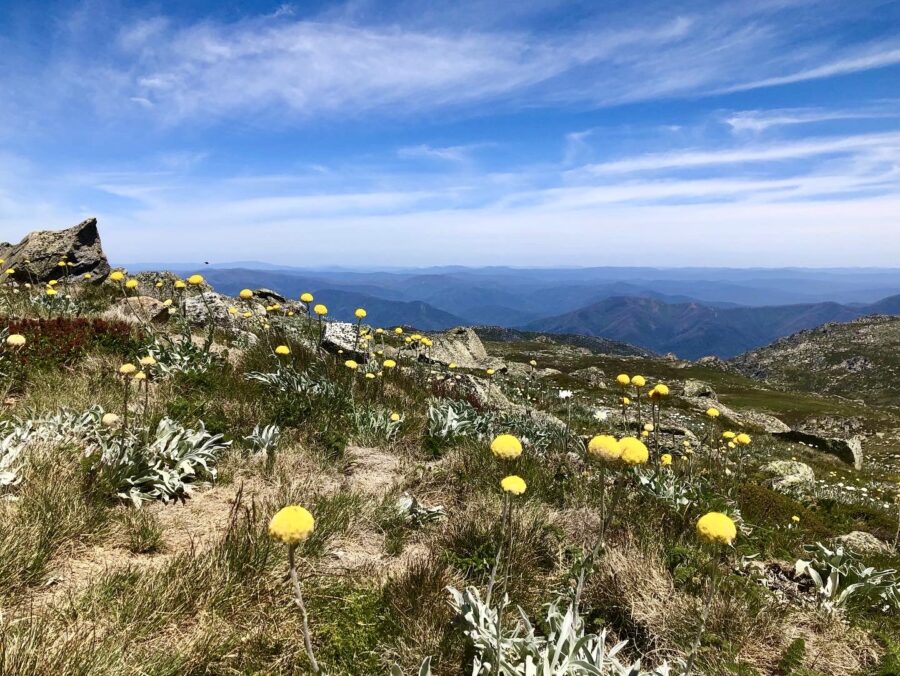
Rocky Valley Lake is another unique attraction not far from Falls Creek village. The lake is a perfect playground for paddleboarding, kayaking and trout fishing. Even swimming is possible during the warm summer weeks. There’s also Mt McKay – Australia’s highest driveable peak, at 1842m. The summit is a dream destination for sunset connoisseurs.
Embracing the green season
Compared to Hotham Alpine Resort, Falls Creek is a long way ahead in embracing the green season. Hotham still has a long way to go. In summer, the village is like a ghost town. The Hotham Central Precinct, the resort’s commercial hub, is mothballed. Parking lots are empty. Shops, cafes and restaurants are closed.
“Hotham has typically always been behind the other resorts. It’s really seen as an extreme skiing destination in winter,” says Steve Belli, president of the Hotham Chamber of Commerce and owner of several local businesses.
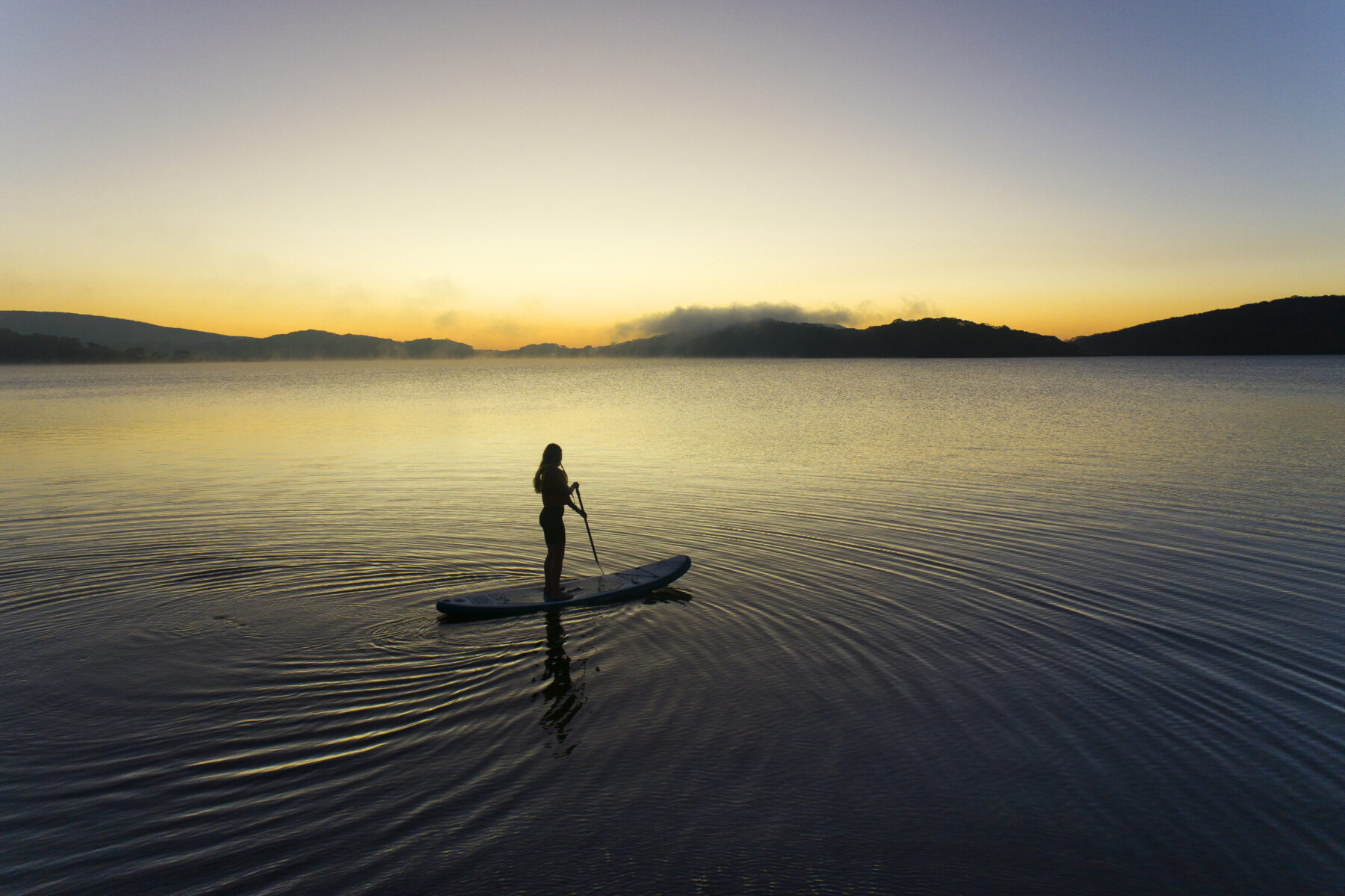
Mt Hotham usually does well in winter, so there was less need to attract visitors during the off-season. That’s now changing. Steve is the driving force behind the budding transformation from a winter-only destination to a summer destination as well. “There has been a fair amount of investment in the last five or six years here,” he says. “There’s new infrastructure at the Gateway. The brand-new visitor centre is now open. And further down the road you’ve got what we call the Moth – that’s the Biathlon range.”
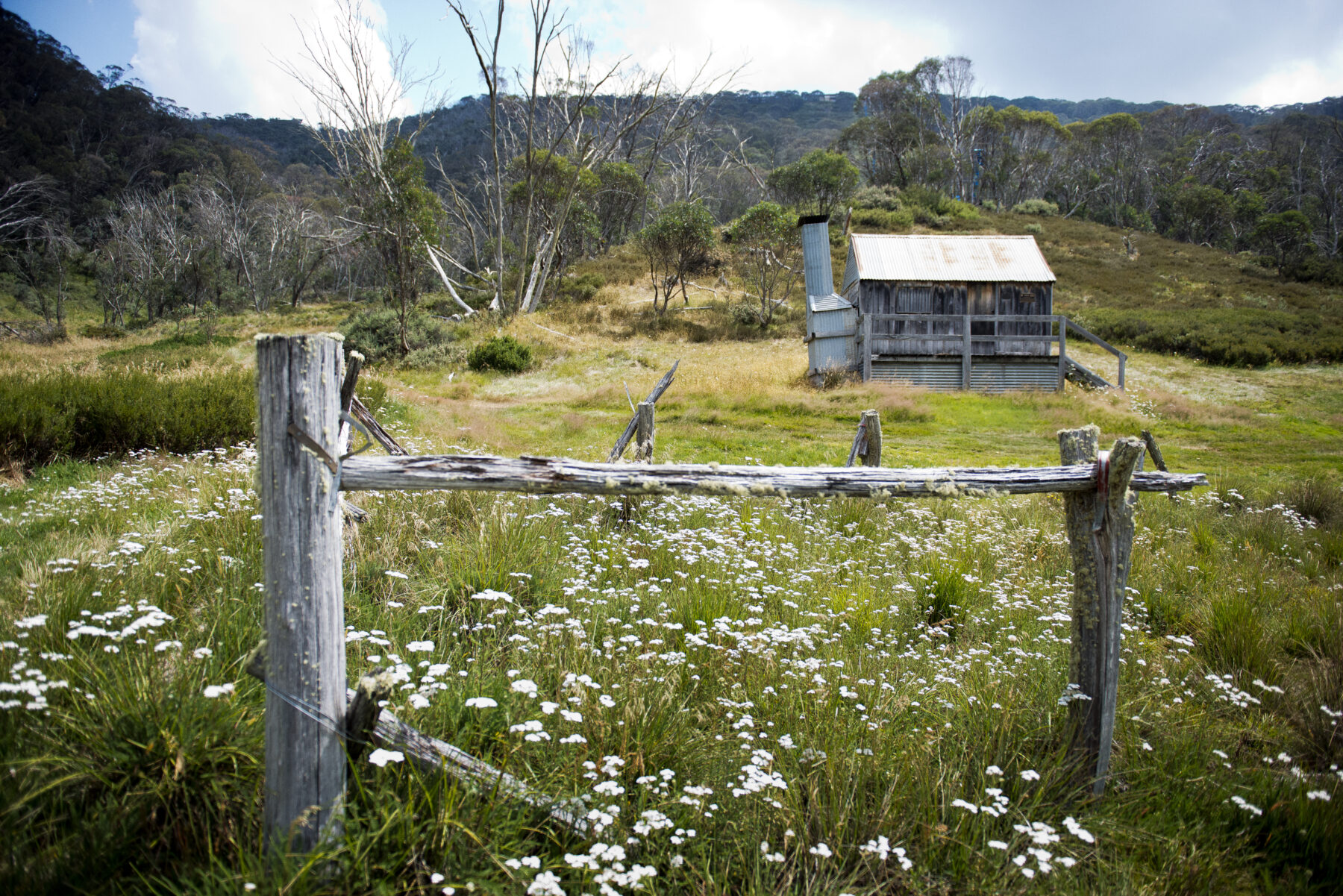
Steve plans to launch a new tour called the Hotham Buggy Experience. “The idea is to make the bush accessible to people that can’t walk or have some sort of a disability but want to go out into the bush,” he says. Steve will drive his guests in a buggy down to the picturesque Silver Brumby Hut, which was built for a movie shoot in 1992, and dish out a sumptuous lunch.
The Silver Brumby Hut, near Swindlers Creek, is usually only accessible to walkers in summer. It’s on the trail of the Huts Walk, the premier walk around Hotham. Besides the Silver Brumby Hut, the walk incorporates historic Spargo’s Hut, a miner’s hut, and Derrick Hut, which was built as a shelter for backcountry skiers and walkers.
Frenchman Jean-Francois Rupp, founder of tourism company Alpine Nature Experience, offers guided walking tours along this trail. He’s also a keen supporter of an extension into the green season. “Hotham does need to transition from a solely skiing destination to a year-long destination,” Jean-Francois says. “The skiing industry, unfortunately – as much as I love skiing – is a dying industry.”
For Mt Hotham to manage the transition to a year-round destination, cooperation between local businesses is key. “I’m not interested in doing my own little thing. If we want this to become a year-long destination, it needs to have an ecosystem of businesses that come together,” Jean-Francois says.
There are many reasons to come up the mountain in summer. “When it’s hot in the valley, it’s much cooler here. We get epic sunsets, we get a real sense of being remote, and it’s equally as pretty as it is in winter,” Jean-Francois says.
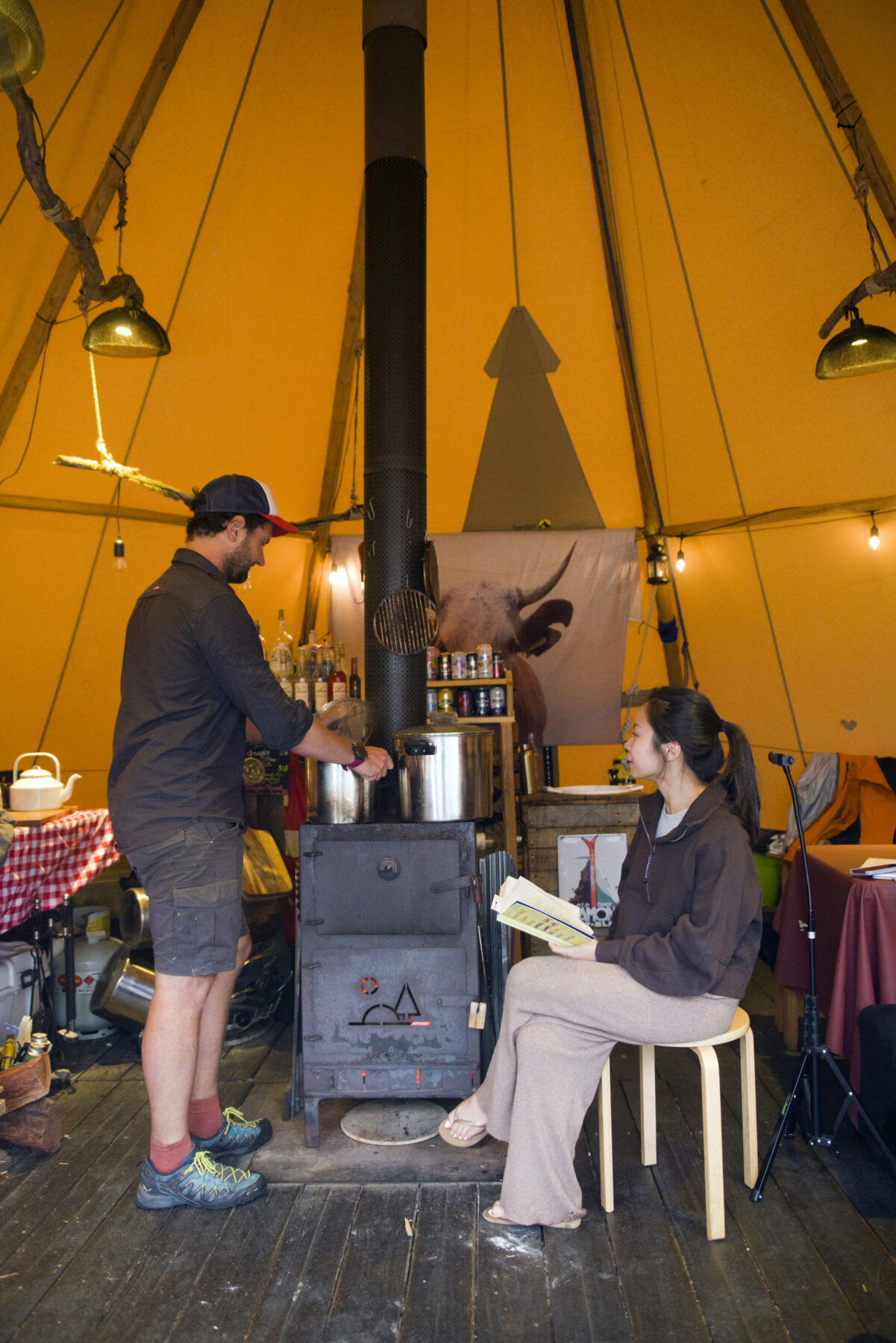
Alpine Nature Experience offers a unique style of accommodation: Hypedomes. These igloo-like structures, which have clear roofs, are hidden away among snow gums on a spur high above the Dargo Valley. There’s no car access, so guests have to walk the short distance to get to them. Guests can gather and eat meals at the central tipi (or teepee).
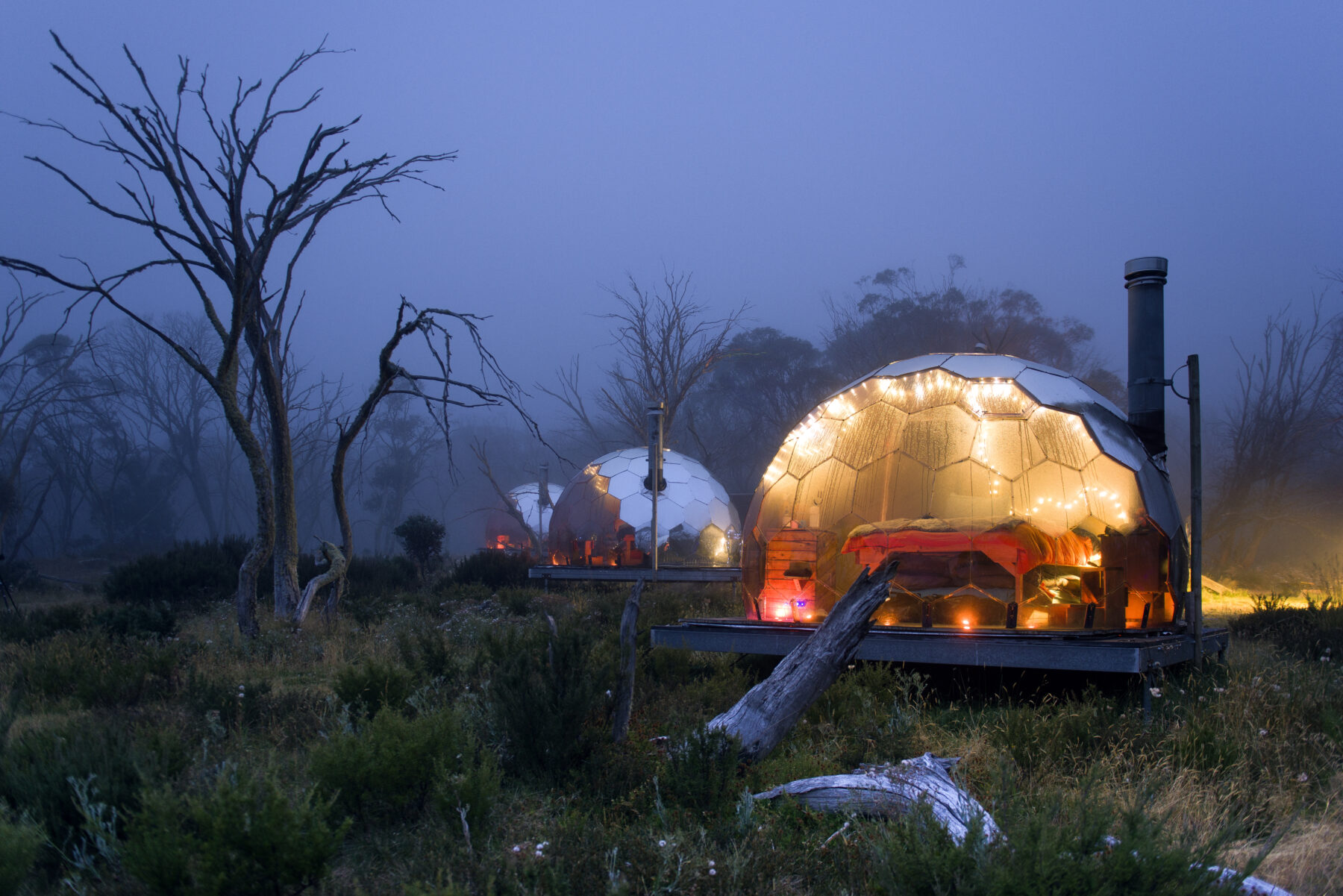
When I stayed in one of the Hypedomes, thunderstorms rolled over the mountain during the night. Safely tucked away in a comfortable double bed, I observed the incredible lightshow through the clear panels of the dome.
Staying here is an intense nature experience, with a touch of sustainable luxury. “The idea was always to strip down everything you think you need, and then from that add what actually really matters,” Jean-Francois says. “It makes you appreciate the simple things that are actually bringing you luxury. Here we make sure you have amazing views. You are warm with a nice fire. We’ve got some really nice food.”
Exploring the events market
Promoting Mt Hotham as a walking destination is part of the road map for making it a viable summer destination. The infrastructure is in place. Several walks lead away from the ski lifts into the back country. The key for this to succeed, however, is affordable accommodation for walkers. “There’s a local site
(hothamlodges.com.au) offering lodges,” Steve says. “A few of the lodges got together and organised a central booking engine. So, you’re looking at the cheaper end at $35 a night. That’s pretty reasonable, because a lot of the commercial accommodation is quite expensive up here. That’s also a problem in trying to get people to come up the hill. No-one spends $300 a night on accommodation. The summer prices haven’t come down enough, in my opinion.”
Like the other resorts, Hotham Alpine Resort is also hoping to dip into the event market. “Hotham and stakeholders try to attract events and make it easier for event organisers to host their events up here,” Steve says.
These resorts have the support of the Victorian Government. “Victoria’s alpine resorts are some of our most treasured natural assets and we’re backing them to attract visitors across the whole year, including the warmer months,” says the Minister for Tourism, Sport and Major Events, Steve Dimopoulos. He counts the upgrade of the Falls to Hotham Alpine Crossing, a 37km long trekking route, and the support for Feastival in Falls Creek as examples of this commitment.
Mt Hotham Alpine Resort has decided not to venture into the mountain biking tourism market. To establish tracks on the mountain is seen as too costly. Mountain biking, however, forms a big part of the summer activities on Mt Buller. To get a taste of it, I go on an exhilarating downhill run from the Mt Buller village to Mirimbah, down to the Delatite River. On this run, mountain bikers descend more than 1000 vertical metres.
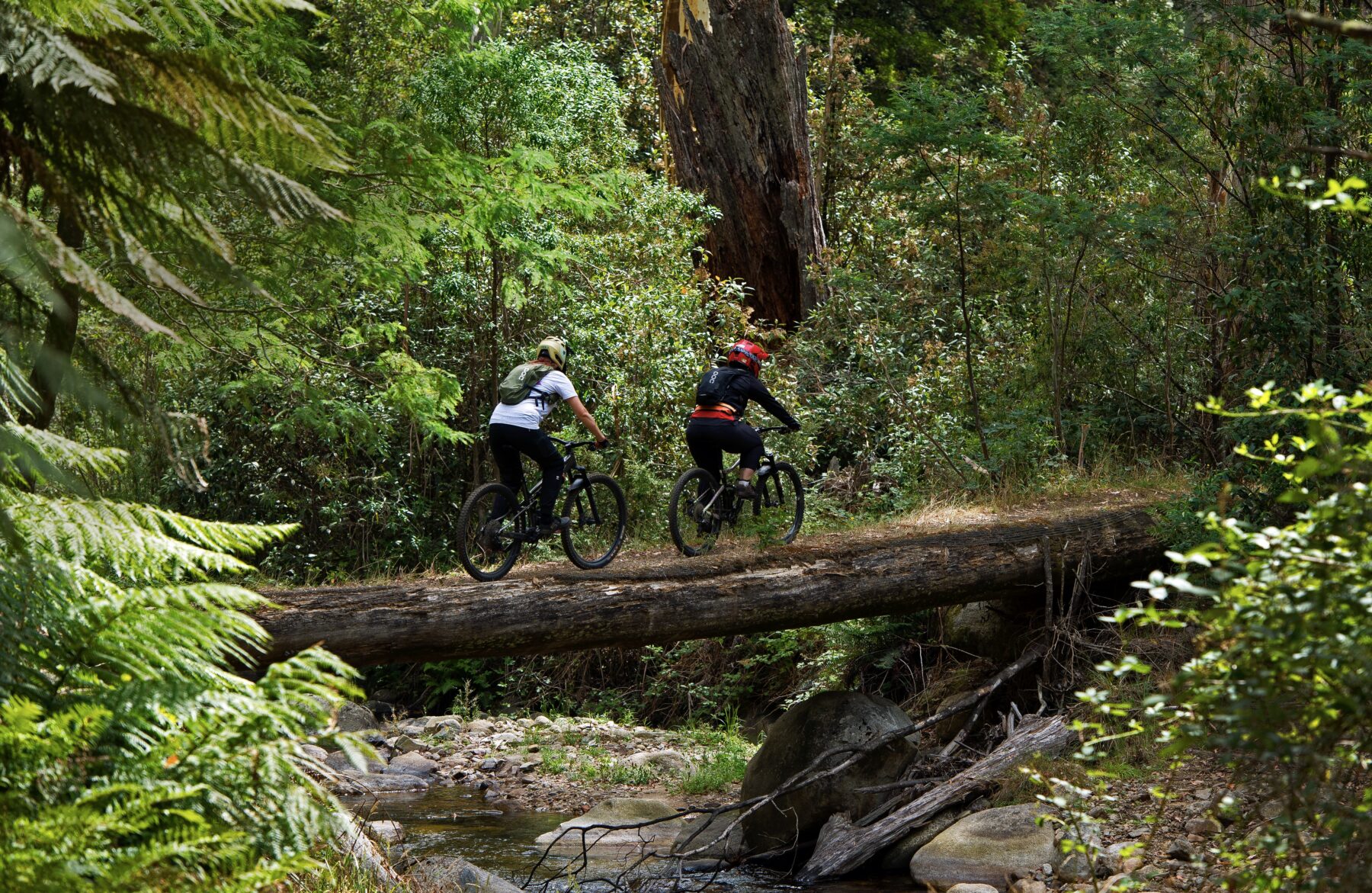
Joining me is Katie Gannaway and her friend Tarsha Autio. Katie manages the Mt Buller side of Blue Dirt, a mountain biking company that also operates in Falls Creek. After a 5km run along the sealed Mt Buller Tourist Road, a gravel road leads into tall mountain ash forests. Lush ferns form the understorey. Further down, the trail follows the swift-flowing Delatite River, where many narrow log bridges demand concentration and add thrills. This trail is part of the 120km of trails that form Mt Buller mountain bike playground. The jewel in the crown is the Australian Alpine Epic, a world-class 51km mountain biking trail that connects Mt Buller with Mt Stirling and the deep valley where the Delatite River flows.
While the downhill run is for almost everyone, it’s the gravity runs that attract the more advanced crowd. Gravity runs are only downhill, with no climbs in between. Currently Blue Dirt, operating Friday to Monday during summer and extended days during school holidays, is supplying the shuttle service for riders. There are talks, however, that one day, the lift company will open the Northside Express lift during the summer months to transport the riders back up the mountain. This would bring Mt Buller another step closer to becoming a viable summer destination.