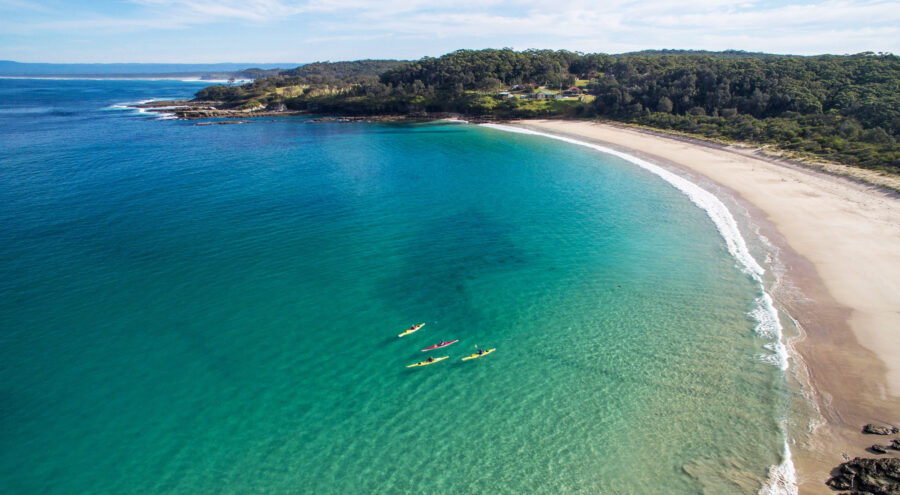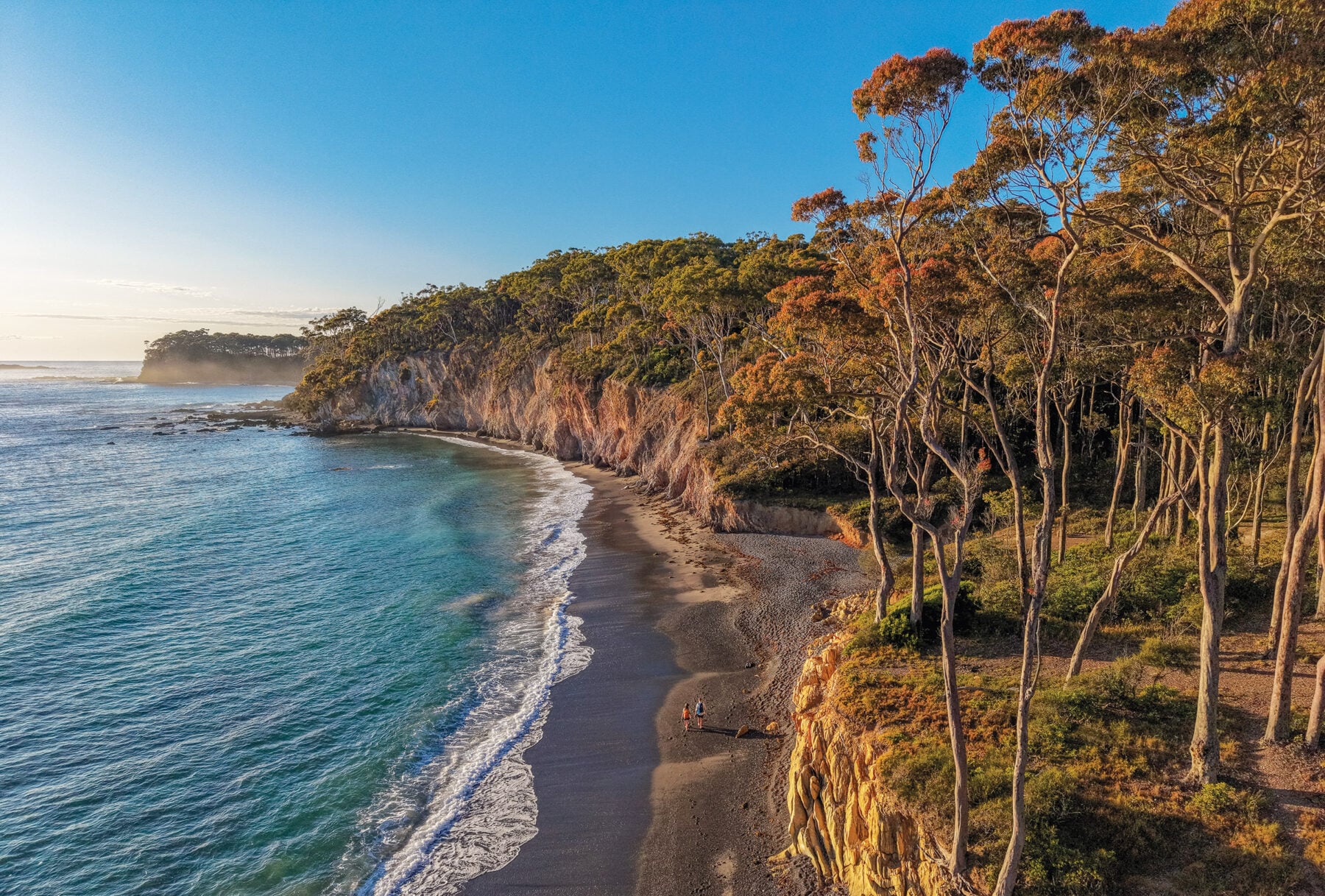
The Munjip Trail is the NSW South Coast’s newest coastal walk. It’s a 15-18km route linking beaches, rocky headlands and townships from Batehaven to McKenzies Beach, just south of Batemans Bay. Graded at a moderate Level 3, it’s designed for day walkers who want more than a beach stroll but less than a wilderness epic. It can be tackled in hours by trail runners, a single day by most hikers (including families), or stretched across multiple days by those who prefer to linger snorkelling, swimming, casting a line, or just soaking in the coastline. The trail weaves between surf breaks and backyards, where white-bellied sea eagles (mirida) soar overhead, whales (muriyira) breach dramatically offshore, and local Aboriginal culture is threaded through creative artworks, interpretive signage, and audio posts developed in collaboration with Walbunja Yuin Elders.
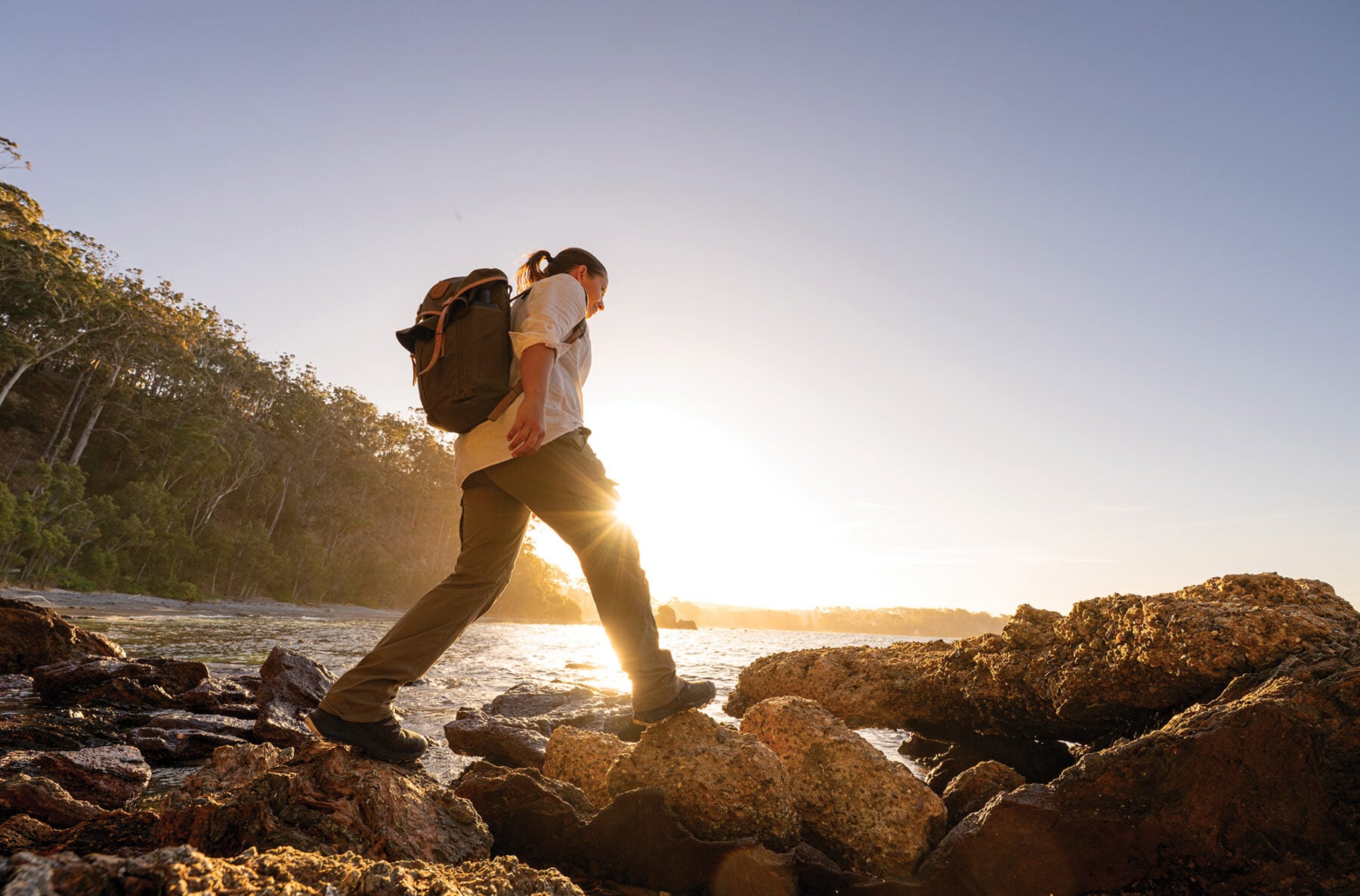
I barely let my partner, Loz, catch her breath before blurting, “We’re going hiking.” I’d just been offered the job, but she was jet lagged, having just flown in from South America. An unimpressed eyebrow lifted – until I mentioned this walk was less “ultralight tent” and more “culture by the ocean,” with retreat-style digs at The Bower at Broulee and a gin tasting at Mogo’s Foxdog Distillery. Ten minutes later, a bag sat by the door: hiking boots and pants wedged beside a bikini, an evening dress, a beach towel, and a down jacket. “I’m ready,” she said. Neither of us knew exactly what we were in for.
The Munjip Trail, we soon learned, is where ocean meets coastal holidays and Country speaks in the language of salt, sand and sky. It doesn’t demand conquest; it invites a slower pace. North to south or south to north, the only rule is to look, listen, and let the place set the tempo.
Morning glory
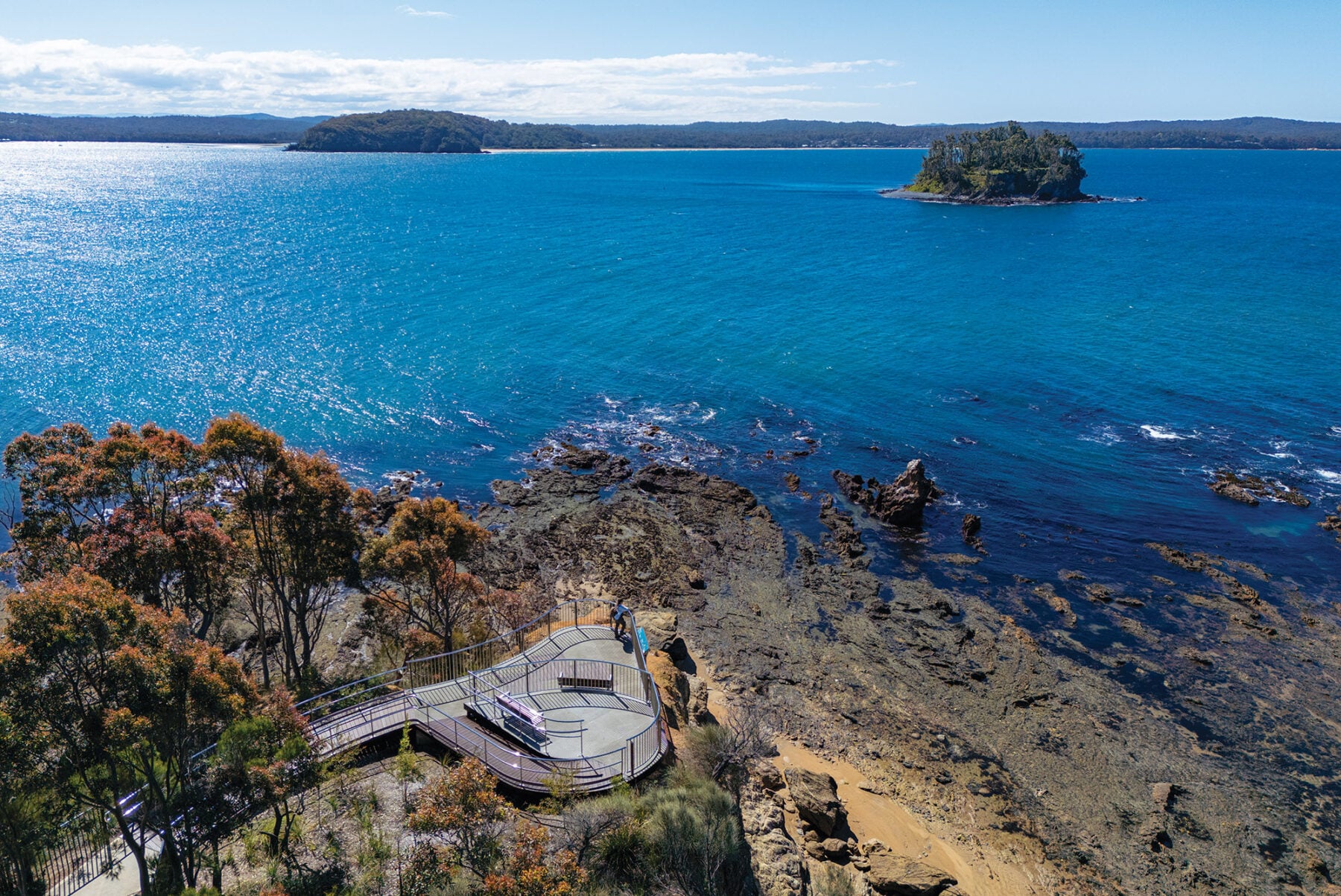
Launching from Observation Point Lookout on a cloudless morning, the landscape feels like a Garden of Eden. It’s no wonder it’s a special place for the Walbunja traditional custodians, who have resided here for countless generations. Abundance here is spiritual, cultural and practical; food, story and geography meet at the edge of land and sea. The story unfolds in every direction.
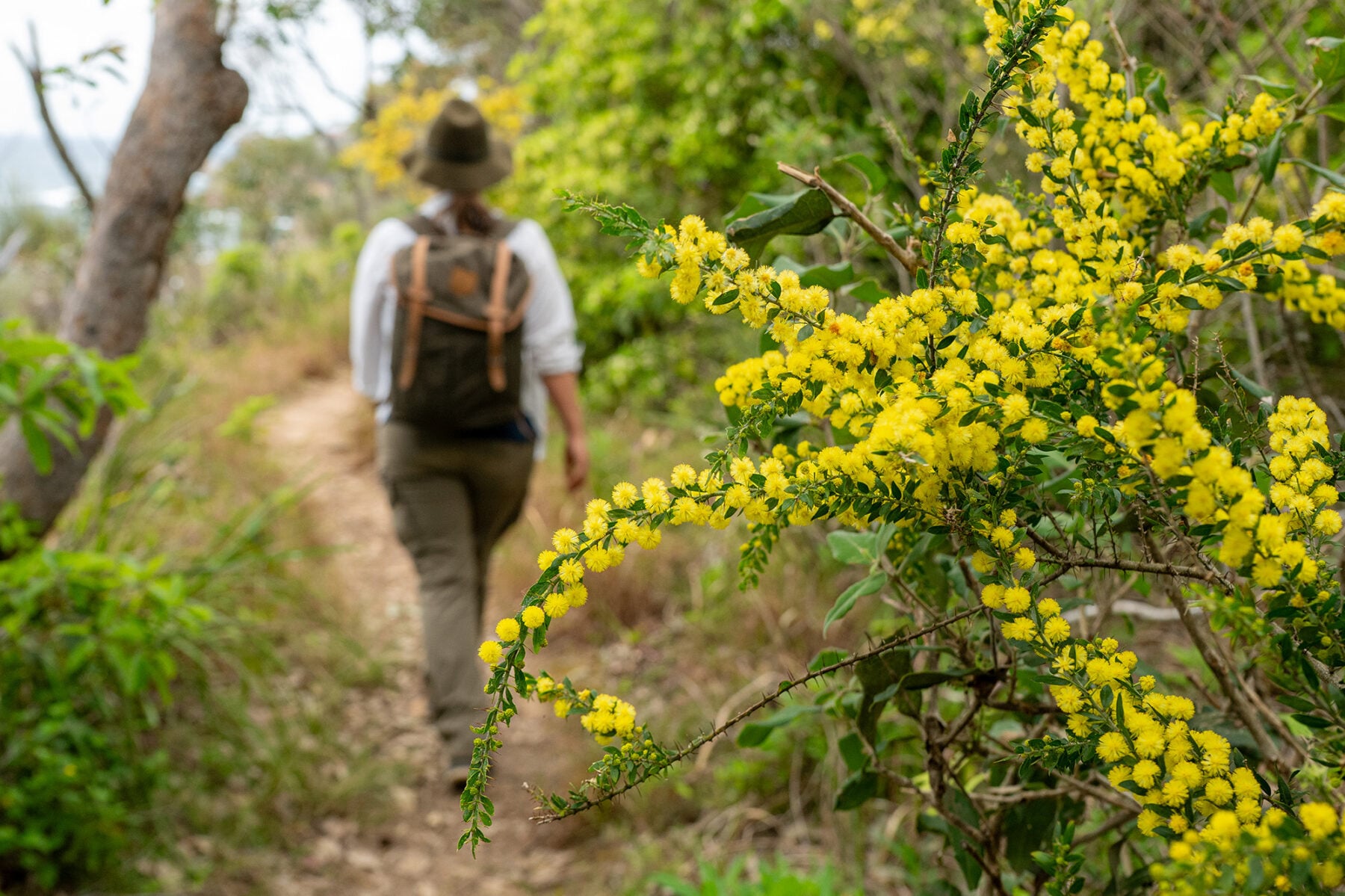
From the headland, the view fans out: west to the Great Dividing Range, with Pigeon House Mountain Didthul a cultural compass point; north to the Clyde River estuary and its oyster sheds; east to Snapper and the Tollgate islands, where penguins nest, fur seals laze, and dolphins ride the bow-waves of whale-watching boats; and south to the white arc of Caseys Beach, headlands rising behind with their ancient spotted gums standing tall beyond the edges of suburbia. In spring, wattles glow yellow among muted greens, with an undergrowth smattering of golden banksias, crimson grevillea, white rice-flowers, and the purple spill of native sarsaparilla.
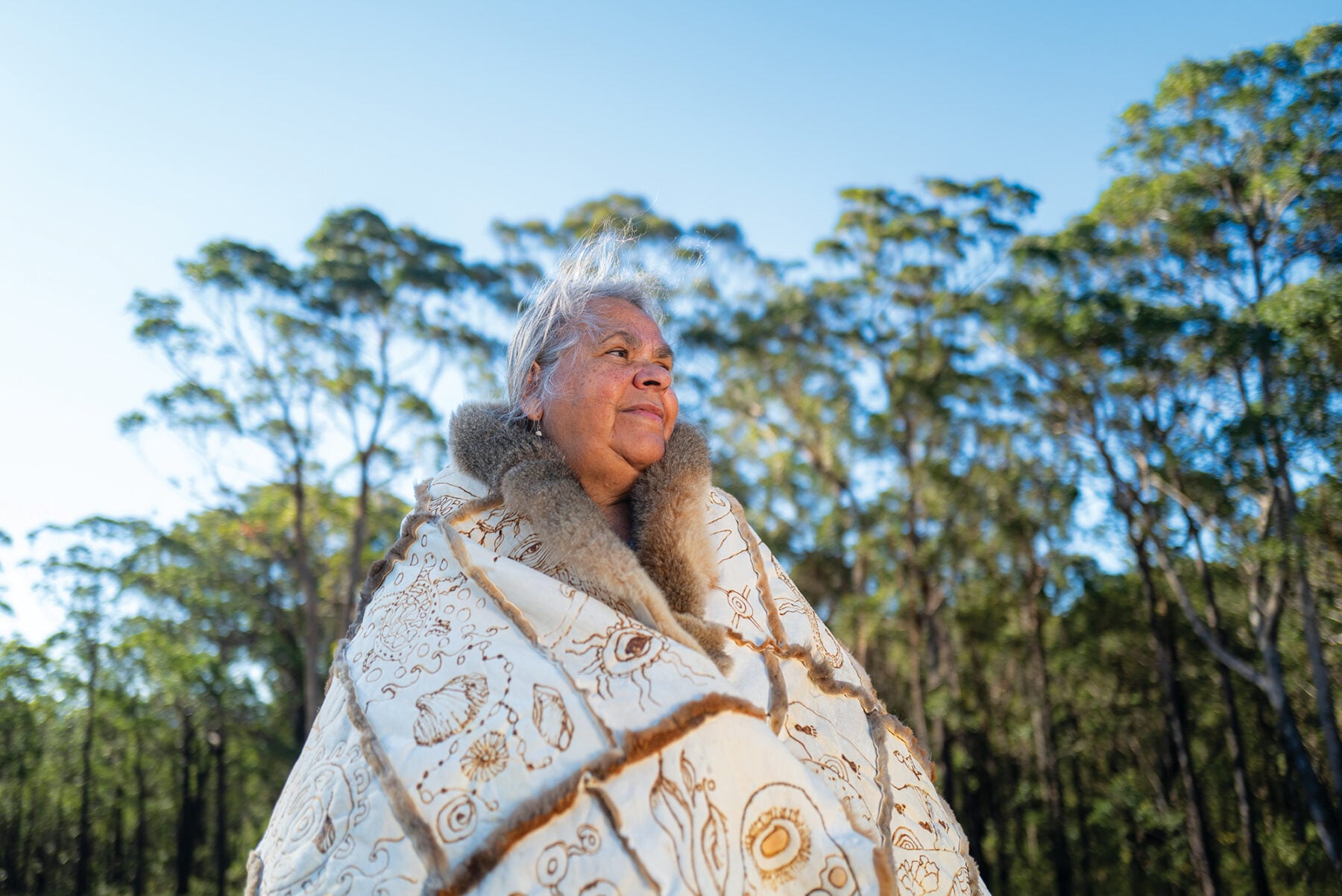
Beyond its beauty, Walbunja custodian Aunty Loretta Parsley later reminds me the Walbunja Yuin thrived here, drying sarsaparilla leaves into bush tea; a powerful reminder that every colour on Country holds stories and sustenance.
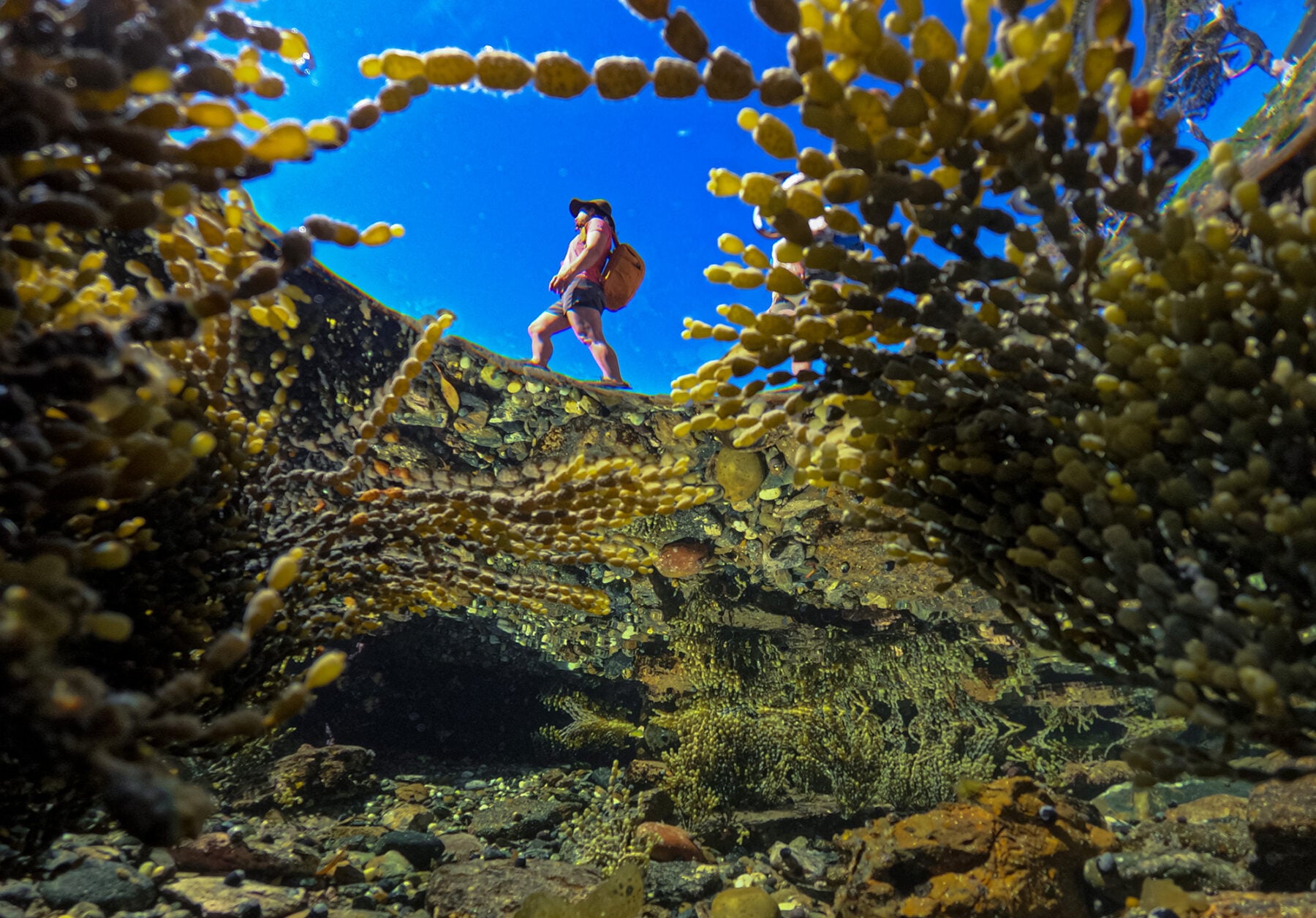
Leaving the lookout, the path skirts coastal bushland between holiday houses and cliffs, the water a sheet of blue sheet beneath. This becomes the trail’s rhythm: beach to headland, sometimes ducking to a shaded footpath before re-emerging on the cliffline, then dropping to another cove. Each bay carries its own mood, threading along the shore like differing shells on a Walbunja Yuin necklace.
Culture on the coast
We contour Sunshine Bay and Denhams before reaching Surf Beach, where coffee awaits at the aptly named Surf Beach Cafe. There are new amenities and picnic shelters found between Caseys Beach, through to Wimbie Beach and Lilli Pilli that feature custom laser cut artwork screens by artist Timeika Reena Slockee, titled Coastline Connections (gadu gurrad). South at low tide, the reef towards Wimbie Beach reveals weed beds and rockpools. At Wimbie itself, the yarning circle stops us in our tracks. Walbunja artist Natalie Bateman’s mural ripples with marine life and family tradition, binding the space to saltwater stories.
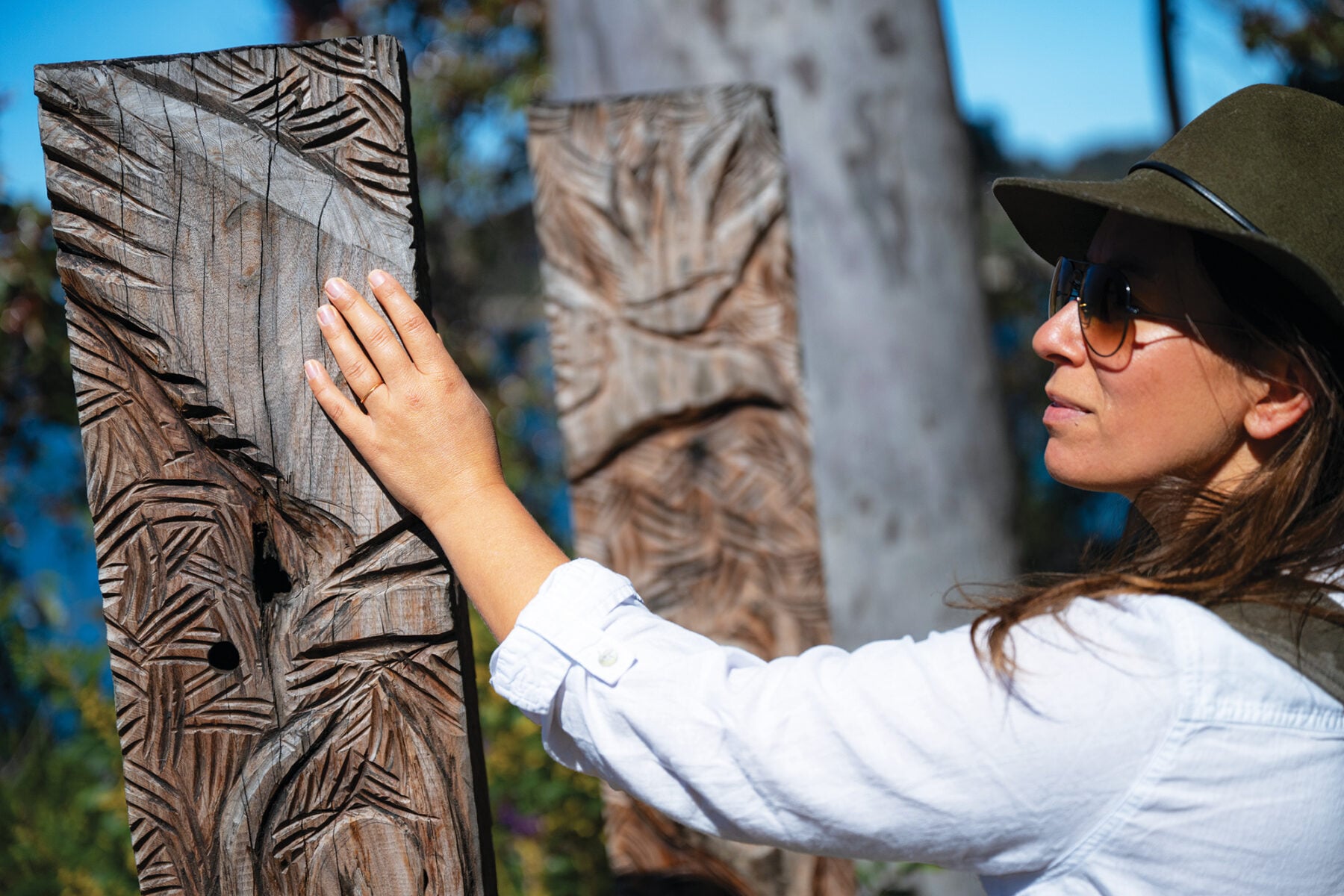
Art and language weave throughout the walk: Leanne Brook’s Mirida-wara (Two Sea Eagles) artwork at the trailhead, Bronwen Smith and Gavin Chatfield’s community mural at Caseys Beach, Nigel Stewart’s Gadu – Umbarra – Gadu Dreaming mural at Malua Bay Park, and timber message poles that carry dhurga words, themes and motifs for the trail. Goanna (burnaaga) is one feature at Wimbie. Contemporary expression sits in dialogue with ancient practice – a reminder that Munjip, in dhurga, means “walking together, let’s go.”
Onward to Grandfathers Gully (Bulday Gagurr) with its scar trees and ochre quarry, before Lilli Pilli, Mosquito Bay and Malua Bay. Then the white sand gives way to rocky ledges and, step by step, the rhythm deepens.
At Pretty Point, with Didthul etched on the skyline, four sea eagles (mirida) lift into view, wings spread wide, soaring in formation and arrowing directly towards the mountain. I’ve never seen four together like this. For a moment, it feels less like chance and more like ceremony. The pace softens. We’re nearing the end, but now the land and the sky above it set the tempo.
A wild welcome
Later, Aunty Loretta gives those moments meaning. “They were welcoming you,” she says. “We see them as a welcoming, and a good omen for being on Country. Maybe mirida is your totem?”
From then on, every step carried different weight. This isn’t just a coastal track edging communities; it’s a reminder that every breeze, bird and ripple carries a story.
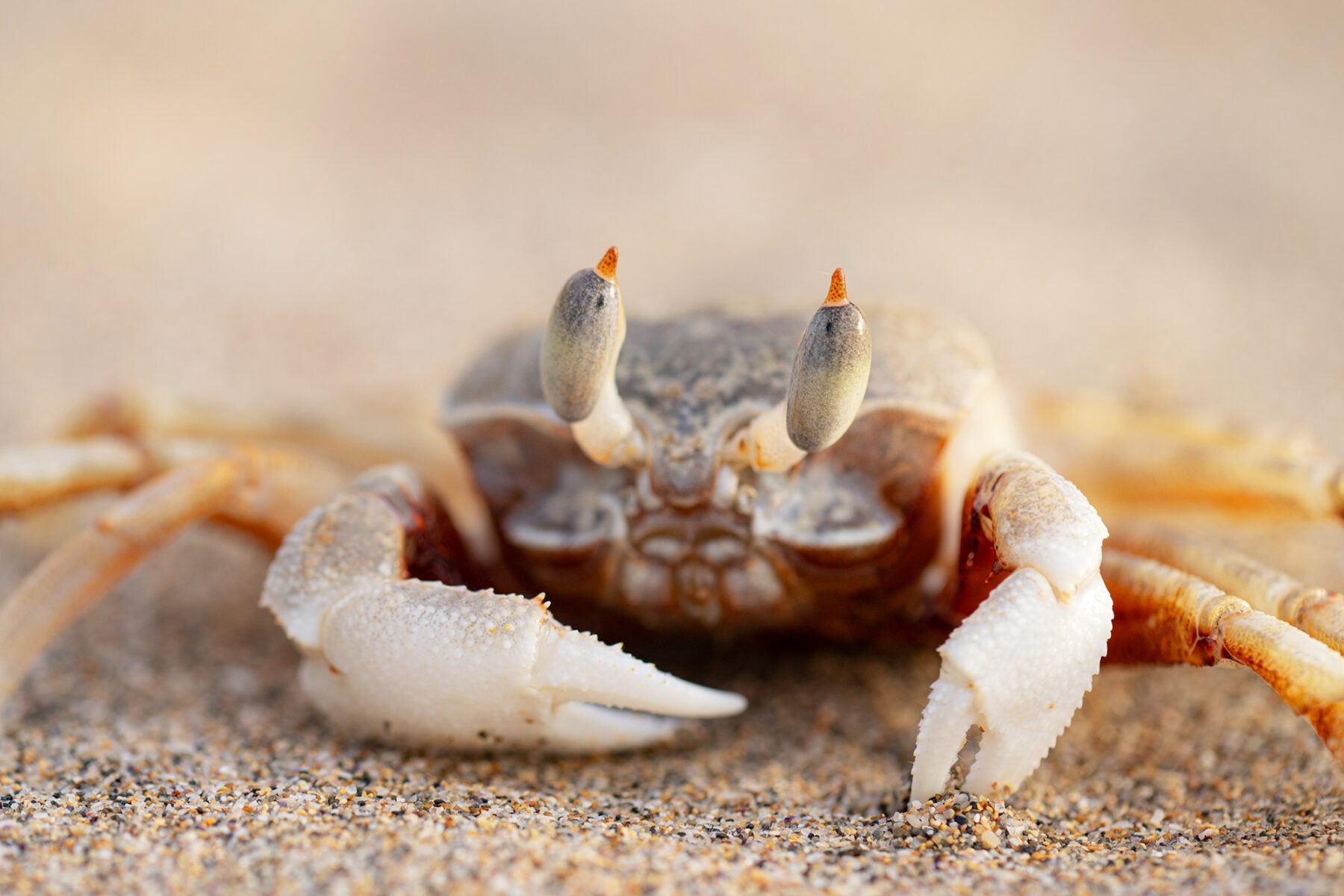
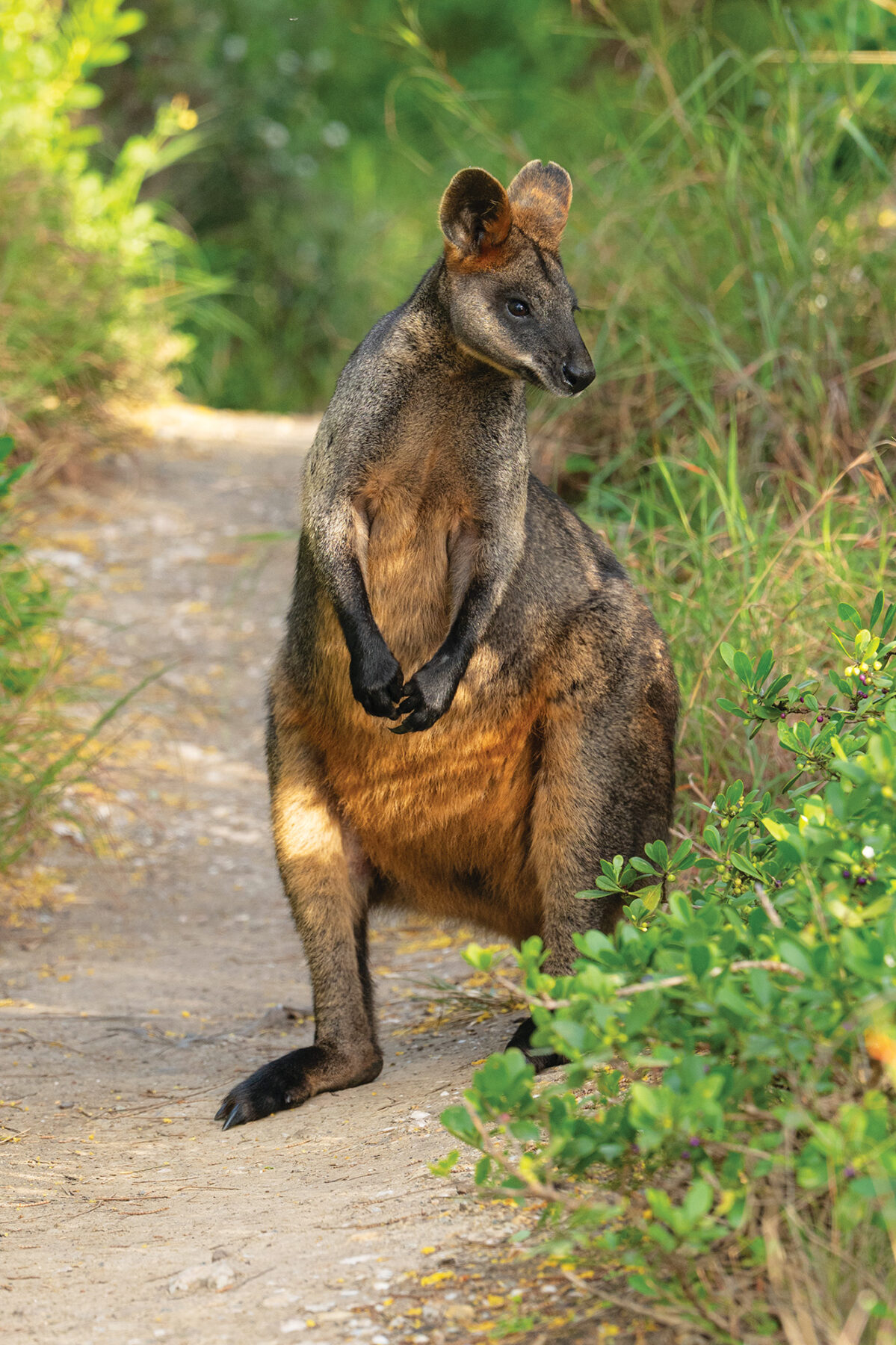
Returning from Pretty Point, we find ourselves in the company of kin. A swamp wallaby bounds nearby, curious and unafraid. A blue-tongue lizard shuffles from the rocks, slow and deliberate. A tiny jacky dragon freezes in the sunlight like a miniature sentinel. An echidna (dganagubadj) curls tight at the track’s edge. And from the cliffs, whales (muriyira) lift their tails as if to mark our passing.
By McKenzies Beach, the last image we carry is that of a whale (muriyira) tail vanishing into the sea, only to be mirrored minutes later by the ‘Whale returns to the ocean (muriyira wali)’ steel whale tail sculpture by Daryl Harbrow at trail’s end. A perfect echo. A parting gift. We sit bemused on the sand, realising the walk had never been about distance. It was about rhythm. About being welcomed. About learning, however briefly, to walk with Country, not just across it.
Fact file
Where We Stayed (trip supporters)
NRMA Broulee Holiday Park: We stayed in a glamping tent tucked behind the dunes. Options range from basic tent sites to large family cabins.
Hipcamp: Sites range from $30 tent pitches to luxe nature stays.
The Bower at Broulee: Luxury eco and wellness retreat. Private cabins, spas and wildlife at your deck.
Do More
Whales: Batemans Bay Wild offers two-hour whale-watching cruises from Batemans Bay during the annual whale migration which peaks August to November; weekends (and weekdays in school holidays and busy periods), weather dependent; book ahead.
Surf: Broulee (beginner/intermediate/advanced); Surf Beach (beginners).
Snorkel: Hidden coves (Sunshine Cove, Guerilla Bay, Orangestone Cove).
Kayak: The Clyde estuary and coast, Broulee Island, Tomaga River.
Mountain Bike: Mogo and Narooma trails.
Food and Drink (our picks)
Crumb Cafe (Batehaven): Pre/post-trail coffee.
Three66 Espresso Bar (Mosquito Bay): Mid-trail coffee.
The Mossy Cafe (Mossy Point): Pre/post-trail coffee.
Killibinbin Cafe (Broulee): Low-key, loved by locals.
Broulee Brewhouse (Broulee): Post-hike crafties.
Foxdog Distillery (Mogo): Gin tastings, cocktails and wood-fired pizza.
The Oyster Shed on Wray (Batemans Bay): Freshly shucked oysters on the banks of the Clyde River.
EUROBODALLA
For more info on this spectacular region see Eurobodalla.